From the NIOSH Director's Desk
The changing employment relationship and its impact on worker well-being
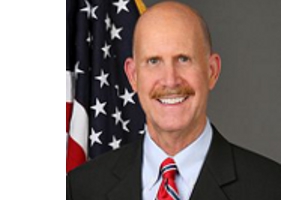 John Howard, M.D., Director of the National Institute for Occupational Safety and Health (NIOSH), explores how organizational practices influence risk factors for illness and injury at work:
Work as we know it in 2015 is dramatically different from the 9-to-5 certainty of full-time, uninterrupted, lifetime employment that most people in their twenties could expect a generation ago. The employment relationship is being transformed by various economic and organizational pressures not under the control of any one employer. These pressures arise from financial markets that incentivize corporations to shed all but their core business to contractors. Fierce competition in the globalized world of commerce pressures employers to structure work in the most efficient or leanest way possible. Today’s workplace operates very differently from the workplace of yesterday.
These pressures are changing our traditional concept of the employment relationship. No longer is working for the same employer for one's entire working lifetime expected; nor is having a defined benefit pension plan that ensures stable retirement income expected; nor is having an employer-sponsored health insurance benefit plan expected. Even the relationship between an employer and a worker has changed dramatically since the 1970s and, according to David Weil in his 2014 book The Fissured Workplace, has led to "declining wages, eroding benefits, inadequate health and safety conditions, and ever-widening income inequality."
Frustration and confusion
For broad segments of the workforce in virtually every industrial sector, the changing employment relationship can be synonymous with frustration and confusion. Increased workplace stress may lead to significant challenges to the safety, health, and well-being of workers. Increasing numbers of workers enjoy only nonpermanent or part-time contract work or "contingent employment." Known variously as temporary workers, contract workers, contingent workers, freelancers, or consultants, these workers have many faces. These workers may have to work two jobs just to make ends meet, they may be a single working mother who scrambles to find child care when unexpectedly asked to put in mandatory overtime, or they may be a 55-year-old man who wonders what will happen to his retirement benefits when his company outsources his job, is acquired by a private equity firm and downsizes, or declares bankruptcy. As the employment relationship continues to undergo change, stress related to work organization, scheduling, and staffing may heighten risks for worker injury or illness.
New work arrangements -> stress -> risk
Today, concerns such as these organizational factors determine workplace health just as strongly as the presence of the traditional risks of chemical, physical, and biological hazards. While still tasked to prevent injury and illness from legacy hazards, we must increasingly give comparable attention to the interactions among changing employment patterns and how these new work arrangements impact the safety, health, and well-being of affected workers. For many years, NIOSH’s Work Organization and Stress-related Disorders Program has conducted research aimed at the elimination of occupational stress arising from work organization issues. The rapid increase in variety of new employment arrangements and their relationship to safety and health requires us to study these changing organizational practices and how they influence risk factors for illness and injury at work.
Financial impact heaviest for most vulnerable workers
The need for this type of research is growing. As the Occupational Safety and Health Administration (OSHA) underscored in a recent report, Adding Inequality to Injury: The Costs of Failing to Protect Workers on the Job (www.dol.gov/osha/report/20150304-inequality.pdf ), the financial impact of an injury or illness falls especially hard on working men and women who already are the most vulnerable in today’s economy. Often, these are the workers who face minimum-wage or entry-level pay, face bleak prospects for re-employment if they lose their current job or suffer an injury, and have little or no savings to fall back on. If injured at work or sick from work, they may lack access to adequate workers' compensation benefits or other health insurance. Loss of a paycheck can spell financial catastrophe. “For many injured workers and their families, a workplace injury creates a trap which leaves them less able to save for the future or to make the investments in skills and education that provide the opportunity for advancement. These injuries and illnesses contribute to the pressing issue of income inequality: they force working families out of the middle class and into poverty, and keep the families of lower-wage workers from entering the middle class,” OSHA stated in the report.
The risk for disadvantaged workers is compounded by the changing structure of work in which “more and more, workers are not actual employees of the employer who owns or controls the workplace where they work,” an arrangement that “reduces the incentives for companies to assume responsibility for providing safe working conditions,” the OSHA report contends. At the same time, pressures on workers’ compensation systems designed decades ago “have made it increasingly difficult for injured workers to receive the full benefits” and have shifted costs to injured workers, their families, and to the taxpayer as help is sought from other social services. A recent series of articles by ProPublica, a center for investigative journalism, sounded similar themes (www.propublica.org/series/workers-compensation).
Total Worker Health Program
Over the past few years, NIOSH has begun to recognize the need to design and conduct research in a number of social science areas that will be truly responsive to the new needs of today's changing workplace. NIOSH has directed attention to the intersection of the changing employment relationship with worker injury and illness. As a result, NIOSH has made investments and stimulated research that will help policymakers effectively meet the challenges that we collectively face in the new employer-worker arrangements of the 21st century. Three new NIOSH programs that grew from the long-standing NIOSH Work Organization Program address the research needs of the 21st century world of work:
Total Worker HealthTM Program supports research to better understand the implications of changing work practices, organizational structures, worker demographics, and employment patterns on worker safety, health, and well-being (www.cdc.gov/niosh/twh/). This research has particular importance for those workers who face the greatest economic setbacks when faced with illness and injury as employer-worker relationships erode; companies restructure, downsize, and merge; and adverse work organization factors increase. By bringing strong science to bear on the problem, we are better able to develop validated recommendations for interventions that can benefit individuals and organizations alike.
The costs of injury, illness
NIOSH’s Economic Research Program leads innovative research partnerships to better identify and measure the costs of occupational injury and illness—both direct and indirect—and to better understand who bears the burden of those costs. These costs often are under-recognized and under-valued because they have not traditionally been reflected in the standard and limited measurements of cost (www.cdc.gov/niosh/programs/econ/). These studies are generating a rich body of evidence that provides new insights into issues central to the changing nature of employment. From data-driven analyses about the uncompensated consequences of work-related injuries and illnesses to the mitigating influence of paid sick leave on the risk of occupational injury and illness, the Economics Research Program provides essential data to inform planning, discussions, and negotiations that may have life-changing consequences for workers. As the private and public sector investigates the ramifications of injury and illness in our modern economy, the work of the Economics Research Program will improve their ability to define the burden of cost-shifting between workers' compensation systems and other health and social insurance programs. These insights are particularly cogent for assuring we recognize both the dollar value as well as the human value of preventing injury and illness on the job.
Workers' comp
NIOSH’s Center for Workers’ Compensation Studies provides concerted planning, support, and execution of surveillance and research that integrates our goal of injury and illness prevention with a deeper understanding of workers’ compensation systems that are intended to provide loss prevention services and medical and wage benefits to workers who have suffered work-related injury or illness (www.cdc.gov/niosh/topics/workercomp/cwcs/default.html). By mining the rich, but often overlooked, lode of data from workers’ compensation programs, we and our partners can identify trends and critical risk factors that help us better prevent future losses to workers and their families. For example, several states have been successful in using workers’ compensation data trends to identify risks and develop effective interventions. Workers’ compensation systems also provide important ways to reach employers with safety/health services, training, and messaging. NIOSH has a current extramural grant to encourage state-based departments of health and workers’ compensation bureaus to collaborate further and expand the use of workers’ compensation data and systems for prevention of workplace injury and illness (grants.nih.gov/grants/guide/pa-files/PAR-14-227.html).
I invite you to become familiar with these newer NIOSH programs and consider how you might partner with us to protect, preserve, and promote the well-being of workers in the changing workplace.
John Howard, M.D.
NIOSH Director
Looking for a reprint of this article?
From high-res PDFs to custom plaques, order your copy today!