ISHN logo
search
cart
facebook twitter linkedin youtube
  • Sign In
  • Create Account
  • Sign Out
  • My Account
ISHN logo
  • NEWS
    • Today's News
    • Global Safety News
    • Government Regulations
  • PRODUCTS
    • Product Innovations
    • Featured Products
  • TOPICS
    • Environmental Health and Safety
    • Facility Safety
    • Workplace Health
    • Occupational Safety
    • PPE
    • More Topics
  • CONSTRUCTION
  • TECHNOLOGY
  • COLUMNS
    • Best Practices
    • Dave Johnson: What’s going on
    • Editorial Comments
    • Leading Safety
  • MULTIMEDIA
    • ISHN Podcast
    • Videos
    • Cold Stress Education Quiz
    • Webinars
    • White Papers
  • MORE
    • Buyer's Guide
    • Newsletters
    • Convention Companion
    • Polls
    • Events
    • ISHN Store
    • Sponsor Insights
  • EMAGAZINE
    • eMagazine
    • Archived Issues
    • Contact
    • Advertise
  • JOIN TODAY!
ColumnsOSHA

Machine guard violations can cause serious injury

Consequences: amputations, lacerations, crushing injuries & death

By Benita Mehta
October 1, 2015

In fiscal year 2014, OSHA issued 2,396 citations and almost $7 million ($6,891,521)in penalties for violations of its machine guard standard (1910.212), making it the ninth-most violated standard in the time period.

The most-cited industries: machine shops – screw, nut and bolt manufacturing; architectural and structural metals manufacturing; and plastic product manufacturing. Other frequently-cited industries: fabricated metals manufacturing; wood products; printing; and motor vehicle parts manufacturing.

According to OSHA, workers who operate and maintain machinery suffer approximately 18,000 amputations, lacerations, crushing injuries, abrasions and more than 800 deaths per year.

The general requirement 1910.212 (a)(1) states that one or more methods of machine guarding must be used to protect operators and other employees from hazards including those created by point of operation, in-going nip points, rotating parts, flying chips and sparks.

Hazardous actions

Identifying hazards is the first step toward protecting workers. According to OSHA, the basic types of hazardous mechanical motions are:

• Rotating: Even smooth, slowly rotating shafts can grip clothing, and through skin contact, force an arm or hand into a dangerous position. Collars, couplings, cams, clutches, flywheels, shaft ends, spindles and horizontal or vertical shafting are examples of common hazardous rotating mechanisms.

• Reciprocating: This causes a back-and-forth or up-and-down action that can strike a worker or catch a worker between a moving and a stationary part.

• Transversing: Movement in a straight, continuous line; moving parts can catch or strike a worker in a pinch point or shear point.

The basic types of hazardous actions are:

• Cutting: Rotating, reciprocating or transverse motion, where finger, head and arm injuries can occur and where flying chips and scrap material can strike a worker’s eyes or face. Cutting actions are dangerous with bandsaws, circular saws and boring or drilling machines.

• Punching: When power is applied to a slide for the purpose of blanking, drawing or stamping metal. The danger occurs where stock is inserted, held and withdrawn by hand as with power presses.

• Shearing: Applying power to a shear or knife to trim or shear materials. The danger is where stock is inserted, held and withdrawn as with hydraulically or pneumatically powered shears.

• Bending: Power is applied to a slide to draw or stamp metal or other material. This is a threat where stock is inserted, held and withdrawn, with equipment such as power presses.

Safeguards

• Prevent contact: The safeguard must prevent hands, arms or any other part of a worker’s body from making contact with dangerous moving parts.

• Be secure: Workers should not be able to easily remove or tamper with the safeguard.

• Protect from falling objects: The safeguard should ensure that no objects can fall into moving parts.

• Create no new hazards: A safeguard defeats its purpose if it creates a hazard such as a shear point, a jagged edge or an unfinished surface.

• Create no interference: Any safeguard that impedes a worker from performing a job quickly and comfortably might soon be bypassed or disregarded.


KEYWORDS: machine guarding OSHA violations

Share This Story

Looking for a reprint of this article?
From high-res PDFs to custom plaques, order your copy today!

Benita mehta 200

Benita Mehta is chief editor of ISHN. She has been with ISHN since 2015 and has been chief editor since 2020. 

Recommended Content

JOIN TODAY
to unlock your recommendations.

Already have an account? Sign In

  • forklift safety

    Exploring the latest technologies in forklift safety

    With more staff and more stock in warehousing now more...
    Facility Safety
    By: Josh Cramer
  • welding

    All about welder’s flash or arc eye

    A flash burn is a painful inflammation of the cornea,...
    Environmental Health and Safety
  • dangerous jobs

    The 10 most dangerous jobs in the U.S.

    On-the-job deaths have been rising — hitting the highest...
    Transportation Safety
    By: Benita Mehta
Manage My Account
  • eMagazine Subscriptions
  • ISHN Newsletter & Other Newsletter Alerts
  • Online Registration
  • Manage My Preferences
  • Subscription Customer Service

More Videos

Sponsored Content

Sponsored Content is a special paid section where industry companies provide high quality, objective, non-commercial content around topics of interest to the ISHN audience. All Sponsored Content is supplied by the advertising company and any opinions expressed in this article are those of the author and not necessarily reflect the views of ISHN or its parent company, BNP Media. Interested in participating in our Sponsored Content section? Contact your local rep!

close
  • man wearing the the Sundström SR200 Full Face Mask Respirator
    Sponsored byOHD

    5 Fit Testing Mistakes That Could Cost You

  • This image shows Magid AcuSpex polarized blue mirrored safety glasses.
    Sponsored byMagid Glove and Safety

    Construction PPE Guide: What Crews Need for Each Task

  • lone worker in confined space
    Sponsored byAlphasense Ltd.

    GET THE LEAD OUT of your Safety Oxygen Sensors!

Popular Stories

SpaceX 7 launch

OSHA Investigating Fatal Fall at SpaceX Starbase

Automated loading dock equipment

After March 2026 Rivian Death, Safety Managers Reassess Loading Dock Systems Under OSHA's Warehouse Emphasis Program

chemical safety

It Was Just Sugar: Catastrophic Safety Failures in Louisville

top 10 most dangerous jobs

Poll

Seasonal Readiness

With the federal heat stress prevention rule on the horizon, which area of your safety program needs the most attention?
View Results Poll Archive

Products

Surviving an OSHA Audit A Management Guide, 2nd Edition

Surviving an OSHA Audit A Management Guide, 2nd Edition

See More Products

ISHN Podcasts

Related Articles

  • megacomfort-feature-image-forWeb.jpg

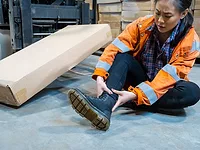
    Look out for seemingly innocent hazards that can cause serious injuries

    See More
  • Hand injury treatment and prevention

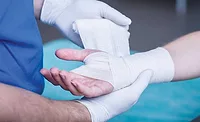
    Hand injuries can restrict movement, cause serious damage

    See More
  • After serious injury, safety violations continue at Ohio co.

    See More

Related Products

See More Products
  • 1118645685.jpg

    Advanced Safety Management: Focusing on Z10 and Serious Injury Prevention, 2nd Edition

  • Top Ten Pitfalls in OSHA Recordkeeping and How to Avoid Them

See More Products

Related Directories

  • BrimGuard

    BrimGuard fits over most any North American style hard hat (cap or full brim) and provides a highly visible color-coded identification for your new hires. With BrimGuard, you can: -Reduce the risk of accidents and injuries by making new hires stand out from the crowd -Increase the accountability and responsibility of new hires by making them easily recognizable -Enhance the communication and collaboration between new hires and seasoned workers by facilitating mentoring and feedback -Save time and money by eliminating the need for stickers, decals, or separate hard hats for new hires -Improve the morale and retention of new hires by making them feel welcome and supported BrimGuard is made of durable, lightweight, and washable reusable silicone that can withstand harsh work environments. It comes in safety colors to suit your needs.
×

Become a Leader in Safety Culture

Build your knowledge with ISHN, covering key safety, health and industrial hygiene news, products, and trends.

JOIN TODAY
  • RESOURCES
    • Advertise
    • Contact Us
    • Directories
    • Manufacturing Division
    • Store
    • Want More
  • SIGN UP TODAY
    • Create Account
    • eMagazine
    • Newsletters
    • Customer Service
    • Manage Preferences
  • SERVICES
    • Marketing Services
    • Reprints
    • Market Research
    • List Rental
    • Survey/Respondent Access
  • STAY CONNECTED
    • LinkedIn
    • Facebook
    • YouTube
    • X (Twitter)
  • PRIVACY
    • PRIVACY POLICY
    • TERMS & CONDITIONS
    • DO NOT SELL MY PERSONAL INFORMATION
    • PRIVACY REQUEST
    • ACCESSIBILITY

Copyright ©2026. All Rights Reserved BNP Media, Inc. and BNP Media II, LLC.

Design, CMS, Hosting & Web Development :: ePublishing