High-visibility materials offer extra protection
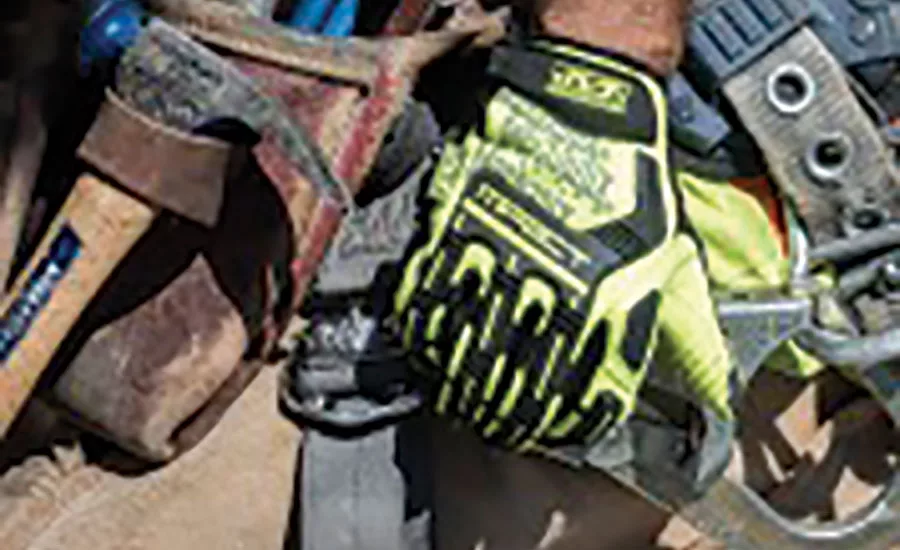
High-visibility clothing is intended to clearly distinguish its wearer from his or her environment (and we’re not talking about that ruffled, powder blue prom tux). Your basic high-visibility garment most often includes two components: a bright background base and retroreflective accents. On some garments, especially gloves, you’ll find a third component—a performance material offering enhanced protection (referred to as ANSI/ISEA 107-2010 in industry-speak).
Back in the 1500s, a peculiar, yet naturally occurring blue opalescence caught the eye of Nicolás Monardes, and a few hundred years later in 1852, George Gabriel Stokes noted the ability of fluorspar and uranium glass to shift UV light to a higher wavelength of blue light. We now know this phenomenon as fluorescence.
We don’t condone wearing a safety vest made of uranium, but the idea of a bright, retroreflective garment constructed of fluorescent material is a great idea for anyone who really needs to be seen.
1964
Experimental use of high-visibility clothing began on the rail system of the Scottish Region. Bright “Fluorescent Orange” jackets, known as "fire-flies," were issued to rail workers. The first version of Hi-Viz (HV) clothing used then was simple, yet effective—a yellow or orange poncho-type garment was visible for half a mile in normal weather conditions. And after its proven visual success, “Safety or Blaze Orange,” became the shade of orange required by United States law to be on the tips of barrels of replica guns such as airsoft and cap guns. Safety first.
2009
An Australian study found that fluorescent vests were not a significant improvement on black clothing at night. So when it’s pitch black outside, a bright orange vest alone isn’t the best choice. Then what is best? The International High Visibility Clothing Association (IHVCA) did a bit of research and came up with the following conclusion: use retroreflective safety garments at night. Retroreflective is a fancy word for anything that bounces a light source back to itself (reflective, on the other hand, means that something simply reflects light—so anything you can see is technically reflective; we’ll stop the physics lesson here). The “silver”, retroreflective accents found on just about every pair of running shoes are perfect examples of materials made to reflect light.
Standards
Worker safety is of the utmost importance, and accordingly, there are established standards for apparel and personal protective equipment (PPE).
The ANSI Standard requirements include color, retroreflection, and minimum areas, as well as the recommended configurations of the materials and design. The standard or approved amount of background and retroreflective material has evolved over time and is split into 3 Classes. Each class is required to illustrate a defined amount of visibility. Class 1 vests and Class 2 vests and garments must now have retroreflective material in the highly visible shoulder area. The objective of this change is to provide greater visibility when a worker is bending over, or at angles that could be potentially missed on a garment without "vertical" reflective material over the shoulders. Class 3 standards require the user to wear an upper and lower garment.
European Standard EN 471:2003 defines a specific amount and placement of reflective “banding” and the associated Class standard as pertaining to the combination of apparel worn.
As with several other PPE standards that ISEA develops, ANSI/ISEA 107-2004 is being publicized and distributed to federal, state, and local governments. OSHA encourages the development of voluntary industry consensus standards and is an advocate for their use.
Hand protection
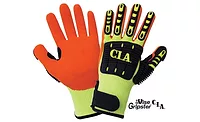
Interestingly, your hands are not required to be covered in retroreflectivity or be highly visible, but many EHS managers are adopting high-visibility PPE to further protect workers in hazardous environments.
For example, hand and finger injuries in the oil and gas industry are second to falls and back injuries. Data from IADC’s 2009 Incident Statistics Program (ISP) indicate that 34 percent of recordable incidents and 20 percent of lost-time incidents fall into this category.
As the issuing standards and testing organizations have all confirmed that a contrasting, high-visible base material combined with a retroreflective panel or strip placed in an area of movement and activity is critical for user safety in low-light work environments, what better place to bring attention to than your always-working and always-moving hands?
So turn the clock back to 1989. Throw on your day-glow yellow tank top, a pair of neon orange SideOut volleyball shorts, your retroreflective gloves and be the safest dude on the jobsite. Oh yeah man, we see you, and your hands.
Looking for a reprint of this article?
From high-res PDFs to custom plaques, order your copy today!