ISHN logo
search
cart
facebook twitter linkedin youtube
  • Sign In
  • Create Account
  • Sign Out
  • My Account
ISHN logo
  • NEWS
    • Today's News
    • Global Safety News
    • Government Regulations
  • PRODUCTS
    • Product Innovations
    • Featured Products
  • TOPICS
    • Environmental Health and Safety
    • Facility Safety
    • Workplace Health
    • Occupational Safety
    • PPE
    • More Topics
  • CONSTRUCTION
  • TECHNOLOGY
  • COLUMNS
    • Best Practices
    • Dave Johnson: What’s going on
    • Editorial Comments
    • Leading Safety
  • MULTIMEDIA
    • ISHN Podcast
    • Videos
    • Cold Stress Education Quiz
    • Webinars
    • White Papers
  • MORE
    • Buyer's Guide
    • Newsletters
    • Convention Companion
    • Polls
    • Events
    • ISHN Store
    • Sponsor Insights
  • EMAGAZINE
    • eMagazine
    • Archived Issues
    • Contact
    • Advertise
  • JOIN TODAY!
Today's Safety NewsWorkplace Health

Lack of fresh food choices linked to signs of early heart disease
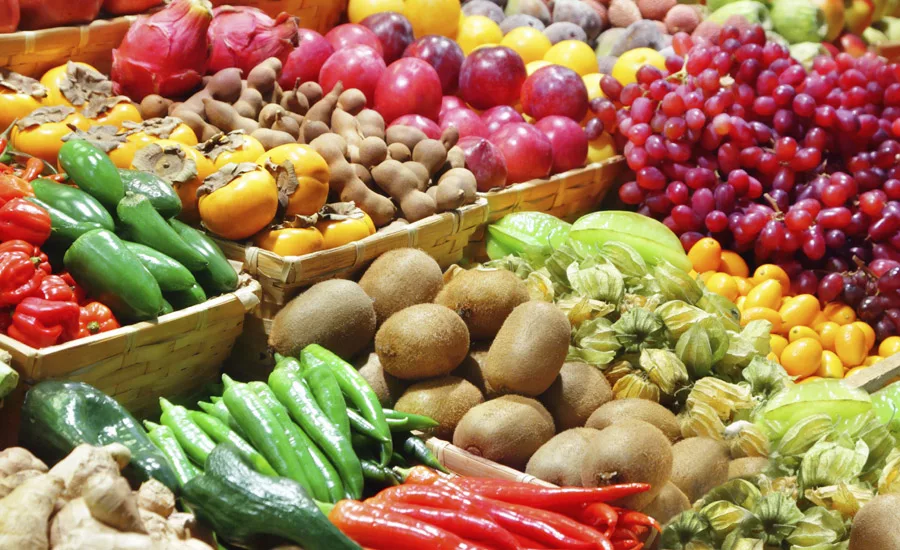
produce
August 16, 2016

A lack of access to nearby stores selling fresh food may increase residents’ risk of developing the signs of early heart disease, according to new research in the American Heart Association’s (AHA) journal Circulation.

“The lack of healthy food stores may help explain why people in these neighborhoods have more heart disease,” said Jeffrey Wing, Ph.D., M.P.H., co-lead author and assistant professor in the Department of Public Health at Grand Valley State University, Grand Rapids, Michigan. “The thought is that greater access to healthier foods may have promoted healthier diets and, in turn, less coronary plaque formation.”

Poorer health in poorer neighborhoods

Past studies found that limited fresh food choices and/or numerous fast food restaurants in poorer neighborhoods were linked to unhealthy diets. Residents in these neighborhoods have a greater likelihood of early atherosclerosis(a disease that hardens arteries and underlies many types of heart disease), but no studies have examined which factors might cause this.

In this study, researchers explored how the limited availability of recreational facilities, healthy food stores, neighborhood walkability, and social environments may contribute to the early stages of atherosclerosis in 5,950 adults enrolled in the Multi-Ethnic Study of Atherosclerosis (MESA) over a 12 year follow-up period.

Coronary artery calcium can be measured by a CT scan to detect the amount of atherosclerosis in a person’s arteries. All participants underwent a CT scan at the start of the study. Of MESA participants studied, 86 percent had coronary artery calcium readings at three different times, with an average of 3.5 years between measurements.

The common thread

After researchers excluded other features in these communities, including recreational centers, the data suggested that decreased access to heart-healthy food stores is the common thread in more rapid progression of coronary atherosclerosis in middle-aged and older individuals.

“We found that healthy food stores within one mile of their home was the only significant factor that reduced or slowed the progression of calcium buildup in coronary arteries,” said Ella August, Ph.D., co-lead author who initiated the study and clinical assistant professor of epidemiology at the University of Michigan in Ann Arbor. “Our results point to a need for greater awareness of the potential health threat posed by the scarcity of healthy grocery options in certain neighborhoods.”

Researchers said future studies should examine the impact of specific interventions, such as promoting the location of healthy food stores and how neighborhood characteristics may interact with individual risk factors and genetic predispositions.

MESA is an ongoing study sponsored by the National Heart and Lung Institute of the National Institutes of Health. It has provided data for more than 1,000 published papers on a range of health issues in addition to heart disease.

How to eat healthy

The American Heart Association recommends following a heart-healthy diet high in fruits, vegetables, whole grains, legumes, beans, nuts, low-fat dairy, skinless poultry and fish. It encourages eating foods low in saturated and trans fats and sodium, and limiting added sugars and red meats.

Other co-authors are Sara D. Adar, Sc.D., M.H.S.; Andrew L. Dannenberg, M.D., M.P.H.; Anjum Hajat, Ph.D., M.P.H.; Brisa N. Sánchez, Ph.D.; James H. Stein, M.D.; Matthew C. Tattersall, D.O.; and Ana V. Diez Roux, M.D., Ph.D., M.P.H. Author disclosures are on the manuscript.

This research was funded by the National Heart, Lung, and Blood Institute.

KEYWORDS: American Heart Association (AHA) cholesterol health and wellness nutrition

Share This Story

Looking for a reprint of this article?
From high-res PDFs to custom plaques, order your copy today!

Recommended Content

JOIN TODAY
to unlock your recommendations.

Already have an account? Sign In

  • forklift safety

    Exploring the latest technologies in forklift safety

    With more staff and more stock in warehousing now more...
    Workplace Training Strategies
    By: Josh Cramer
  • welding

    All about welder’s flash or arc eye

    A flash burn is a painful inflammation of the cornea,...
    Environmental Health and Safety
  • dangerous jobs

    The 10 most dangerous jobs in the U.S.

    On-the-job deaths have been rising — hitting the highest...
    Occupational Safety
    By: Benita Mehta
Manage My Account
  • eMagazine Subscriptions
  • ISHN Newsletter & Other Newsletter Alerts
  • Online Registration
  • Manage My Preferences
  • Subscription Customer Service

More Videos

Sponsored Content

Sponsored Content is a special paid section where industry companies provide high quality, objective, non-commercial content around topics of interest to the ISHN audience. All Sponsored Content is supplied by the advertising company and any opinions expressed in this article are those of the author and not necessarily reflect the views of ISHN or its parent company, BNP Media. Interested in participating in our Sponsored Content section? Contact your local rep!

close
  • man wearing the the Sundström SR200 Full Face Mask Respirator
    Sponsored byOHD

    5 Fit Testing Mistakes That Could Cost You

  • This image shows Magid AcuSpex polarized blue mirrored safety glasses.
    Sponsored byMagid Glove and Safety

    Construction PPE Guide: What Crews Need for Each Task

  • lone worker in confined space
    Sponsored byAlphasense Ltd.

    GET THE LEAD OUT of your Safety Oxygen Sensors!

Popular Stories

SpaceX 7 launch

OSHA Investigating Fatal Fall at SpaceX Starbase

Worker Impairment

How to Tell When a Co-Worker is Impaired? A Safety Pro’s Challenge

Automated loading dock equipment

After March 2026 Rivian Death, Safety Managers Reassess Loading Dock Systems Under OSHA's Warehouse Emphasis Program

top 10 most dangerous jobs

Poll

Seasonal Readiness

With the federal heat stress prevention rule on the horizon, which area of your safety program needs the most attention?
View Results Poll Archive

Products

Surviving an OSHA Audit A Management Guide, 2nd Edition

Surviving an OSHA Audit A Management Guide, 2nd Edition

See More Products

ISHN Podcasts

Related Articles

  • Stress at work is linked to heart disease (1/28)

    See More
  • Heart disease common among firefighters who die of cardiac arrest

    See More
  • Standing too much at work doubles your risk of heart disease

    See More

Related Products

See More Products
  • 1119906652.webp

    Alive and Well at the End of the Day: The Supervisor's Guide to Managing Safety in Operations, 2E

See More Products

Events

View AllSubmit An Event
  • October 18, 2017

    ACGIH® TLV® For Audible Sound – Understanding the Proposed Notice of Intended Change to The Acgih® Tlv® for Noise

    Occupational noise exposures represent an important but under-recognized cause of disease and disability in the United States. Now titled as Audible Sound, the ACGIH® Threshold Limit Values for Physical Agents (TLV®-PA) Committee has proposed a revision to the TLV® for Noise.
View AllSubmit An Event

Related Directories

  • American Heart Association

  • Association of American Railroads (AAR)

    Since 1934, AAR has been the leading voice for the U.S. freight rail industry, driving policy, research, and technology to enhance safety and efficiency. Freight rail is a cornerstone of the U.S. economy, powering industries, facilitating trade, and supporting some of America’s safest and highest paid jobs—all while operating on a privately funded infrastructure that eases congestion on taxpayer-funded roads. From bulk commodities to intermodal freight, rail ensures the seamless movement of goods nationwide, serving as a vital link in global supply chains.
×

Become a Leader in Safety Culture

Build your knowledge with ISHN, covering key safety, health and industrial hygiene news, products, and trends.

JOIN TODAY
  • RESOURCES
    • Advertise
    • Contact Us
    • Directories
    • Manufacturing Division
    • Store
    • Want More
  • SIGN UP TODAY
    • Create Account
    • eMagazine
    • Newsletters
    • Customer Service
    • Manage Preferences
  • SERVICES
    • Marketing Services
    • Reprints
    • Market Research
    • List Rental
    • Survey/Respondent Access
  • STAY CONNECTED
    • LinkedIn
    • Facebook
    • YouTube
    • X (Twitter)
  • PRIVACY
    • PRIVACY POLICY
    • TERMS & CONDITIONS
    • DO NOT SELL MY PERSONAL INFORMATION
    • PRIVACY REQUEST
    • ACCESSIBILITY

Copyright ©2026. All Rights Reserved BNP Media, Inc. and BNP Media II, LLC.

Design, CMS, Hosting & Web Development :: ePublishing