ISHN logo
search
cart
facebook twitter linkedin youtube
  • Sign In
  • Create Account
  • Sign Out
  • My Account
ISHN logo
  • NEWS
    • Today's News
    • Global Safety News
    • Government Regulations
  • PRODUCTS
    • Product Innovations
    • Featured Products
  • TOPICS
    • Environmental Health and Safety
    • Facility Safety
    • Workplace Health
    • Occupational Safety
    • PPE
    • More Topics
  • CONSTRUCTION
  • TECHNOLOGY
  • COLUMNS
    • Best Practices
    • Dave Johnson: What’s going on
    • Editorial Comments
    • Leading Safety
  • MULTIMEDIA
    • ISHN Podcast
    • Videos
    • Cold Stress Education Quiz
    • Webinars
    • White Papers
  • MORE
    • Buyer's Guide
    • Newsletters
    • Convention Companion
    • Polls
    • Events
    • ISHN Store
    • Sponsor Insights
  • EMAGAZINE
    • eMagazine
    • Archived Issues
    • Contact
    • Advertise
  • JOIN TODAY!
PPE

Consider different eye protection options for your workplace
By George Watlington
Consider different eye protection options for your workplace
January 26, 2017

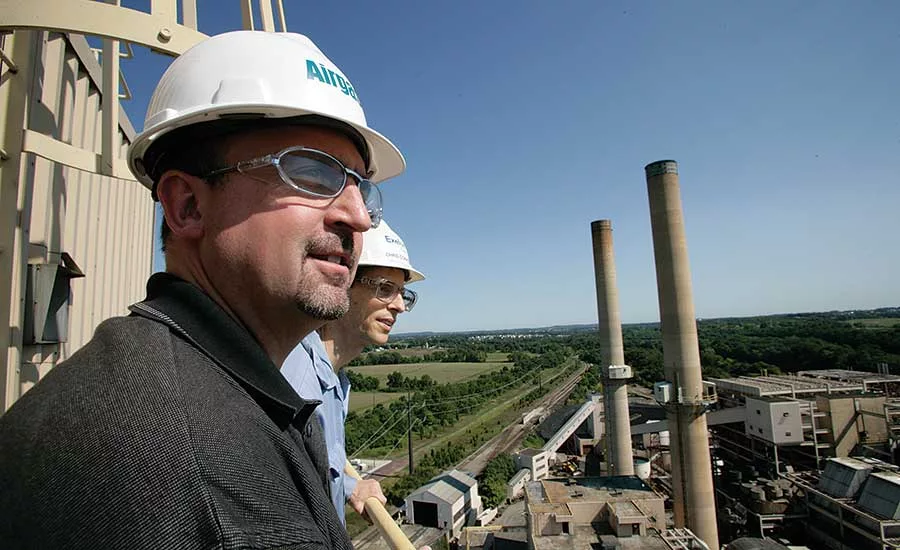
In a number of industries, one of the most important safety measures an employer must adhere to is taking proper precautions with eye safety. OSHA estimates that over three million U.S. workers are at risk for job-related eye injuries and more than 2,000 are actually injured every business day. Of these injuries, 10 to 20 percent result in temporary or permanent vision loss. In fact, each year, between $300 and $500 million is spent in the U.S. as a result of eye injuries. The good news is that approximately 90 percent of these injuries are preventable with proper eye protection. OSHA requires employers to make sure that all employees use appropriate eye protection. It is a necessary and worthwhile investment.

  When choosing the right eyewear for employees, it is important to consider the following:

  • Common eye injury risks in the industry or workplace
  • The various eye protection options for the specific work environment
  • Options for ensuring all employees are provided with the correct fit and adjustment for their safety lenses

Recognizing common symptoms

Because eye injuries can often lead to permanent damage, it is critical for employers to know what these types of injuries look like and how to properly handle the situation if an accident occurs. According to the American Academy of Ophthalmology (AAO), there are telltale signs that can help employers recognize both minor and severe eye injuries in the workplace. Common eye injury symptoms are redness, glassiness or swelling around the eye from flying object impact, chemical or liquid splash, or dust or debris particles. Less commonly known symptoms to look for include one eye not moving as well as the other, an atypical pupil shape or size, or if the person has something in the eye or under the lid that cannot be manually removed.

Choosing the right protection

After assessing the eye risks of the work environment, it’s time to choose the correct protective eyewear to fit these needs. When it comes to the appropriate eye protection for a worksite, AAO recommends the following: “If your work area has particles, flying objects or dust, safety glasses with side protection such as shields alongside either lens is an added safety bonus. If you are working with chemicals, goggles are absolutely a must and, if you are working near hazardous radiation (welding, lasers or fiber optics), you must use special-purpose safety glasses, goggles, face shields or helmets specifically designed for this type of work.”

An assortment of lenses is available to fit the needs of many different industries and job applications. Some of the most popular lenses on the market today include clear or gray options and indoor/outdoor clear mirror lenses. Clear lenses provide excellent optics for general applications and are popular because they allow the majority of light to pass through without distorting the visible color spectrum. Gray or mirror silver/blue lenses do the opposite and reduce the amount of light that passes through the lens. Similar to a polarized lens, they are commonly used in construction and outdoor worksites where sunlight and glare could cause eyestrain. Falling in the range between these two lenses are indoor/outdoor clear mirror lenses, which are best for workers such as forklift drivers who are most likely to be both inside and outside.

Other lenses to consider for the workplace and employees are amber-tinted lenses. These lenses allow for 80 percent of light to be transmitted and are designed for lowlight situations. The amber lens color blocks virtually all blue light to reduce haze and glare. Blue light makes it very difficult to focus and minimizes the contrast on cloudy days, in the fog and at dusk. Amber lenses reduce the haze that typically accompanies blue light, providing the feeling of a clearer and brighter sight in daytime situations. In situations where welding or infrared radiation are of concern, filter shade lenses and specific welding filter shades provide optimum protection. 

Finding the right fit

Once the best lenses have been selected for the job, it’s important to ensure the eye protection has the right fit for each employee. Eyewear that fits correctly is essential for comfort, performance and most importantly, protection. If safety glasses do not fit securely or there are large gaps in coverage, there is a risk of serious eye injury from flying debris or particles. To ensure eyewear fits properly, some styles offer adjustment features or are available in multiple sizes to accommodate a variety of facial shapes for a customized fit. Don’t forget that those who wear prescription eyewear on a daily basis will need lenses that comply with their vision needs.

  In addition to OSHA requirements, ANSI is the recognized entity that sets forth manufacturing standards in the U.S. The current ANSI Z87 standard requires that safety glasses and goggles provide:

  • adequate protection from the hazards for which they were designed;
  • reasonable comfort;
  • a secure fit without interfering with movement or vision;
  • the ability to easily be cleaned and disinfected;
  • durability, and
  • the ability to fit over or incorporate prescription eyewear.

Visit ANSI online at www.ansi.org.

From construction workers and forklift drivers to welders and lab employees, the risk of eye injury is prevalent across many industries. Following proper eye safety protection protocols in the workplace is of extreme importance -- it can reduce the risk of these injuries occurring and could save someone’s vision. With proper research and consideration for the needs of employees, a solution can be found to prevent injuries and accidents. 

Learn more at www.Airgas.com.

KEYWORDS: Eye Protection injuries

Share This Story

Looking for a reprint of this article?
From high-res PDFs to custom plaques, order your copy today!

George Watlington is Product Manager of Hardgoods for Airgas, Inc. Airgas, an Air Liquide company, is the nation's leading single-source supplier of gases, welding and safety products. Learn more at www.Airgas.com.

Recommended Content

JOIN TODAY
to unlock your recommendations.

Already have an account? Sign In

  • forklift safety

    Exploring the latest technologies in forklift safety

    With more staff and more stock in warehousing now more...
    Workplace Training Strategies
    By: Josh Cramer
  • welding

    All about welder’s flash or arc eye

    A flash burn is a painful inflammation of the cornea,...
    Environmental Health and Safety
  • dangerous jobs

    The 10 most dangerous jobs in the U.S.

    On-the-job deaths have been rising — hitting the highest...
    Occupational Safety
    By: Benita Mehta
Manage My Account
  • eMagazine Subscriptions
  • ISHN Newsletter & Other Newsletter Alerts
  • Online Registration
  • Manage My Preferences
  • Subscription Customer Service

More Videos

Sponsored Content

Sponsored Content is a special paid section where industry companies provide high quality, objective, non-commercial content around topics of interest to the ISHN audience. All Sponsored Content is supplied by the advertising company and any opinions expressed in this article are those of the author and not necessarily reflect the views of ISHN or its parent company, BNP Media. Interested in participating in our Sponsored Content section? Contact your local rep!

close
  • man wearing the the Sundström SR200 Full Face Mask Respirator
    Sponsored byOHD

    5 Fit Testing Mistakes That Could Cost You

  • This image shows Magid AcuSpex polarized blue mirrored safety glasses.
    Sponsored byMagid Glove and Safety

    Construction PPE Guide: What Crews Need for Each Task

  • lone worker in confined space
    Sponsored byAlphasense Ltd.

    GET THE LEAD OUT of your Safety Oxygen Sensors!

Popular Stories

SpaceX 7 launch

OSHA Investigating Fatal Fall at SpaceX Starbase

Worker Impairment

How to Tell When a Co-Worker is Impaired? A Safety Pro’s Challenge

Automated loading dock equipment

After March 2026 Rivian Death, Safety Managers Reassess Loading Dock Systems Under OSHA's Warehouse Emphasis Program

top 10 most dangerous jobs

Poll

Seasonal Readiness

With the federal heat stress prevention rule on the horizon, which area of your safety program needs the most attention?
View Results Poll Archive

Products

Surviving an OSHA Audit A Management Guide, 2nd Edition

Surviving an OSHA Audit A Management Guide, 2nd Edition

See More Products

ISHN Podcasts

Related Articles

  • Consider different eye protection options for your workplace

    Consider different eye protection options for your workplace

    See More
  • Seize the opportunities ergonomics can mean for your workplace

    See More
  • Spring Office building

    Spring into action: 8 ergonomic strategies for revitalizing your workplace

    See More

Related Directories

  • Da Brim

    Da Brim's construction helmet brims keep your team cool and promote heat stress safety with innovative PPE. All brims and visors are UPF50+, water resistant and designed specifically for construction and climbing safety helmets. Offered in different brim widths with hi-vis and reflective options available for added safety.
  • EssilorLuxottica Prescription Safety Eyewear

    Our Prescription Safety Eyewear division is proud to introduce SightProtect—a next-generation safety eyewear program designed to elevate workplace eye protection. Built on three core pillars missing from many of today’s existing Prescription Safety Eyewear Programs—SightProtect delivers a seamless, electronically managed, and brand-rich experience for employers, their teams, and our eyecare provider partners. With our unmatched portfolio of trusted brands and a vertically integrated model, we make it easier than ever to protect vision on the job—without compromising on style, comfort, or performance.
×

Become a Leader in Safety Culture

Build your knowledge with ISHN, covering key safety, health and industrial hygiene news, products, and trends.

JOIN TODAY
  • RESOURCES
    • Advertise
    • Contact Us
    • Directories
    • Manufacturing Division
    • Store
    • Want More
  • SIGN UP TODAY
    • Create Account
    • eMagazine
    • Newsletters
    • Customer Service
    • Manage Preferences
  • SERVICES
    • Marketing Services
    • Reprints
    • Market Research
    • List Rental
    • Survey/Respondent Access
  • STAY CONNECTED
    • LinkedIn
    • Facebook
    • YouTube
    • X (Twitter)
  • PRIVACY
    • PRIVACY POLICY
    • TERMS & CONDITIONS
    • DO NOT SELL MY PERSONAL INFORMATION
    • PRIVACY REQUEST
    • ACCESSIBILITY

Copyright ©2026. All Rights Reserved BNP Media, Inc. and BNP Media II, LLC.

Design, CMS, Hosting & Web Development :: ePublishing