ISHN logo
search
cart
facebook twitter linkedin youtube
  • Sign In
  • Create Account
  • Sign Out
  • My Account
ISHN logo
  • NEWS
    • Today's News
    • Global Safety News
    • Government Regulations
  • PRODUCTS
    • Product Innovations
    • Featured Products
  • TOPICS
    • Environmental Health and Safety
    • Facility Safety
    • Workplace Health
    • Occupational Safety
    • PPE
    • More Topics
  • CONSTRUCTION
  • TECHNOLOGY
  • COLUMNS
    • Best Practices
    • Dave Johnson: What’s going on
    • Editorial Comments
    • Leading Safety
  • MULTIMEDIA
    • ISHN Podcast
    • Videos
    • Cold Stress Education Quiz
    • Webinars
    • White Papers
  • MORE
    • Buyer's Guide
    • Newsletters
    • Convention Companion
    • Polls
    • Events
    • ISHN Store
    • Sponsor Insights
  • EMAGAZINE
    • eMagazine
    • Archived Issues
    • Contact
    • Advertise
  • JOIN TODAY!
Facility Safety

Knife injuries are often caused by dull blades
By Benita Mehta
ISHN0417_F11_pic.jpg
April 1, 2017

The first use that comes to mind when you think of knives is food and kitchen applications, but most workplaces use box cutters and utility knives. Knife safety is important in all industries.

Common cases of accidents

The most common cause of accidents related to box cutters occurs when an employee uses a regular knife instead of a box cutter and is distracted or slips while cutting the top of a box, cutting himself. Tips to keep in mind include:1

  • Approach work in a balanced body position.
  • Turn the item to be cut 5 degrees to the left so you are cutting away from the body.
  • Look at the cut line — never look away or become distracted by talking with someone.
  • Place your other hand on the opposite side of the case away from the cutting line.

Knife injuries often happen when the knife slips during cutting or trimming. In most cases the blade comes into contact with the worker’s other hand, causing a laceration to the hand and/or fingers. Injuries can also occur to other parts of the body, including the hand operating the knife.

The type of knife used and how it is handled, sharpened and maintained are very important to ensure worker safety and preventing injuries. The type of injuries that occur from the unsafe use of knives range from small nicks to serious disabling cuts.

OSHA says using a dull knife is one of the most common mistakes.2 According to OSHA, using a dull knife will cause you to use greater force, which increases your chance of several kinds of injury, such as cuts, amputations, stabbing wounds into your leg, arm or body, and increasing joint and nerve pain from repetitive motions that can be a warning sign of permanent crippling injury.

Utility knives

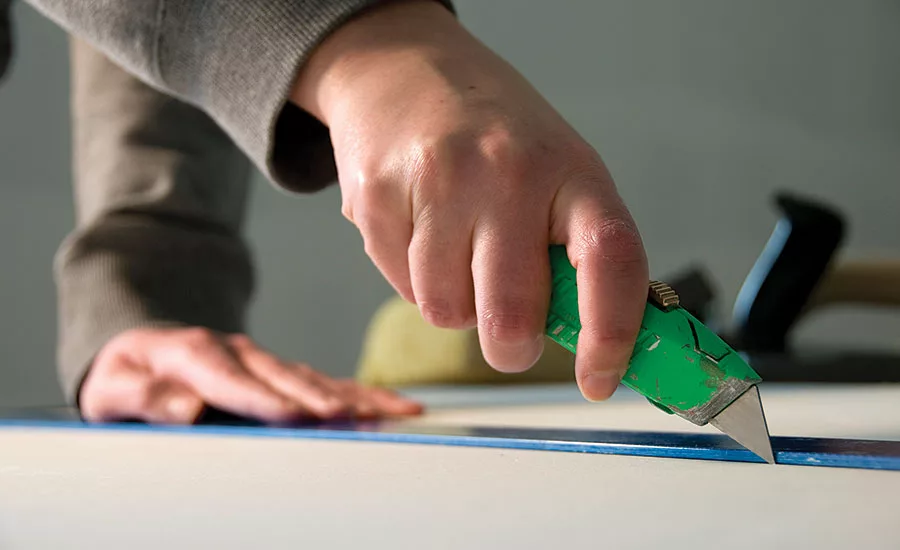
Employees use utility knives to cut open boxes, tear away shrink-wrap from packages, cut drywall, and open bags. Injuries typically occur because of improper use or the use of the wrong type of utility knife for the job. More than $300 million is spent each year for hand lacerations alone, according to OSHA.3

It’s important for workers to use the proper size blades or replace defective retraction mechanisms. Some companies use self-retracting utility knives – the blade automatically retracts into the handle when not in use.

Basic knife-handling tips

  • Keep knives sharpened, and let other staff know when knives are newly-sharpened.
  • Never touch knife blades.
  • Use a knife only for its intended purpose; use the appropriate knife for the cutting job.
  • Place a damp cloth under a cutting board to prevent slipping of the board.
  • When interrupted, stop cutting and place knife down on a flat and secured surface.
  • Never place knives near the edge of a countertop.
  • Never leave a knife soaking in a sink of water.
  • Let a falling knife fall. Step back, warn others. Do not try to catch the knife.
  • Carry knives with the cutting edge angled slightly away from your body.
  • To hand a knife to someone else, place it down on a clean surface and let the other person pick it up.
  • Store knives properly in racks or knife sheaths.

References:

1. www.safetytoolboxtopics.com/Small-Tools

2. http://www.hse.gov.uk/pubns/ppis12.pdf

3. https://www.bwc.ohio.gov

KEYWORDS: cut protection cutting safety injuries safety knives

Share This Story

Looking for a reprint of this article?
From high-res PDFs to custom plaques, order your copy today!

Benita mehta 200

Benita Mehta is chief editor of ISHN. She has been with ISHN since 2015 and has been chief editor since 2020. 

Recommended Content

JOIN TODAY
to unlock your recommendations.

Already have an account? Sign In

  • forklift safety

    Exploring the latest technologies in forklift safety

    With more staff and more stock in warehousing now more...
    Facility Safety
    By: Josh Cramer
  • welding

    All about welder’s flash or arc eye

    A flash burn is a painful inflammation of the cornea,...
    Environmental Health and Safety
  • dangerous jobs

    The 10 most dangerous jobs in the U.S.

    On-the-job deaths have been rising — hitting the highest...
    Occupational Safety
    By: Benita Mehta
Manage My Account
  • eMagazine Subscriptions
  • ISHN Newsletter & Other Newsletter Alerts
  • Online Registration
  • Manage My Preferences
  • Subscription Customer Service

More Videos

Sponsored Content

Sponsored Content is a special paid section where industry companies provide high quality, objective, non-commercial content around topics of interest to the ISHN audience. All Sponsored Content is supplied by the advertising company and any opinions expressed in this article are those of the author and not necessarily reflect the views of ISHN or its parent company, BNP Media. Interested in participating in our Sponsored Content section? Contact your local rep!

close
  • man wearing the the Sundström SR200 Full Face Mask Respirator
    Sponsored byOHD

    5 Fit Testing Mistakes That Could Cost You

  • This image shows Magid AcuSpex polarized blue mirrored safety glasses.
    Sponsored byMagid Glove and Safety

    Construction PPE Guide: What Crews Need for Each Task

  • lone worker in confined space
    Sponsored byAlphasense Ltd.

    GET THE LEAD OUT of your Safety Oxygen Sensors!

Popular Stories

chemical safety

It Was Just Sugar: Catastrophic Safety Failures in Louisville

Automated loading dock equipment

After March 2026 Rivian Death, Safety Managers Reassess Loading Dock Systems Under OSHA's Warehouse Emphasis Program

psychology in the workplace

Most Workplaces Measure Psychological Safety, Ignoring Psychosocial Risks

top 10 most dangerous jobs

Poll

Seasonal Readiness

With the federal heat stress prevention rule on the horizon, which area of your safety program needs the most attention?
View Results Poll Archive

Products

Surviving an OSHA Audit A Management Guide, 2nd Edition

Surviving an OSHA Audit A Management Guide, 2nd Edition

See More Products

ISHN Podcasts

Related Articles

  • Many health care worker injuries caused by patient transfers

    See More
  • Industrial hygiene practices are often overlooked on oil and gas fields

    See More
  • Report finds workplace arc flash injuries caused by insufficient PPE

    See More

Related Directories

  • The Safety Knife Co. LLC

    The Safety Knife Company has developed a quality range of safety knives for all industries. These knives have no exposed blades and only cut cardboard deep, protecting employees against lacerations as well as product.
×

Become a Leader in Safety Culture

Build your knowledge with ISHN, covering key safety, health and industrial hygiene news, products, and trends.

JOIN TODAY
  • RESOURCES
    • Advertise
    • Contact Us
    • Directories
    • Manufacturing Division
    • Store
    • Want More
  • SIGN UP TODAY
    • Create Account
    • eMagazine
    • Newsletters
    • Customer Service
    • Manage Preferences
  • SERVICES
    • Marketing Services
    • Reprints
    • Market Research
    • List Rental
    • Survey/Respondent Access
  • STAY CONNECTED
    • LinkedIn
    • Facebook
    • YouTube
    • X (Twitter)
  • PRIVACY
    • PRIVACY POLICY
    • TERMS & CONDITIONS
    • DO NOT SELL MY PERSONAL INFORMATION
    • PRIVACY REQUEST
    • ACCESSIBILITY

Copyright ©2026. All Rights Reserved BNP Media, Inc. and BNP Media II, LLC.

Design, CMS, Hosting & Web Development :: ePublishing