ISHN logo
search
cart
facebook twitter linkedin youtube
  • Sign In
  • Create Account
  • Sign Out
  • My Account
ISHN logo
  • NEWS
    • Today's News
    • Global Safety News
    • Government Regulations
  • PRODUCTS
    • Product Innovations
    • Featured Products
  • TOPICS
    • Environmental Health and Safety
    • Facility Safety
    • Workplace Health
    • Occupational Safety
    • PPE
    • More Topics
  • CONSTRUCTION
  • TECHNOLOGY
  • COLUMNS
    • Best Practices
    • Dave Johnson: What’s going on
    • Editorial Comments
    • Leading Safety
  • MULTIMEDIA
    • ISHN Podcast
    • Videos
    • Cold Stress Education Quiz
    • Webinars
    • White Papers
  • MORE
    • Buyer's Guide
    • Newsletters
    • Convention Companion
    • Polls
    • Events
    • ISHN Store
    • Sponsor Insights
  • EMAGAZINE
    • eMagazine
    • Archived Issues
    • Contact
    • Advertise
  • JOIN TODAY!
Safety TechnologyConstruction Industry Safety and Health

The silica rule: What you need to know about OSHA’s standard

By Mark H. Stromme
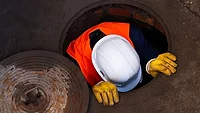
OSHA's new standard on silica exposure
March 1, 2018

Exposure to respirable crystalline silica is nothing new for employees on construction sites. However, this exposure can cause serious health issues. In response to these concerns, OSHA issued a new rule on exposure to silica in construction (29 CFR 1926.1153). The PEL is now 50 micrograms per cubic meter of air (μg/m3) for an 8-hour time-weighted average (TWA).  The action level of airborne silica is 25 μg/m3, calculated as an 8-hour TWA. The action level (set at half the PEL) triggers requirements for exposure assessment. 

The standard does not apply where silica exposures will remain low under any foreseeable conditions. This includes tasks like mixing mortar; pouring concrete footers, slab foundation and foundation walls; and removing concrete formwork.

Employer options

Employers can either use a control method laid out in Table 1 of the construction standard, or they can measure workers’ exposure to silica and independently decide which dust controls work best.

Table 1 matches common construction tasks with dust control methods to help employers limit worker exposures to silica. The table includes methods known to be effective, like using water to prevent airborne dust or using ventilation to capture dust. In some operations, respirators may also be needed.

Where an employee performs more than one task on Table 1 during a shift, and the duration of all tasks combined is more than four hours, employers must use the respiratory protection specified for more than four hours per shift.  If the combined duration of all tasks on Table 1 is less than four hours, employers may use the respiratory protection specified for less than four hours per shift.

Alternative exposure control methods

For tasks not listed in Table 1, or where the employer does not fully and properly implement the engineering controls, work practices, and respiratory protection described in Table 1, the employer must:

  • Measure silica exposures that may be at or above an action level of 25 μg/m3, averaged over an eight-hour day.
  • Protect workers from exposures above the PEL of 50 averaged over an eight-hour day.
  • Use dust controls to protect workers from silica exposures above the PEL.
  • Provide respirators to workers when dust controls cannot limit exposures to the PEL.

Additional requirements

  • Where required, the employer must provide each employee a respirator that complies with the requirements of 1926.1153(e) and 1910.134.
  • Employers must have a written exposure control plan that contains at least the elements in 1926.1153(g).
  • A designated competent person must inspect jobsites, materials, and equipment to implement the written exposure control plan.• Medical surveillance at no cost must be available for each employee required to use a respirator for 30 or more days per year.
  • Employees must be trained when they are assigned to a position involving exposure to respirable crystalline silica.
  • Employers must include respirable crystalline silica in Hazard Communication Program requirements.
  • Employees must demonstrate knowledge and understanding of: 1) silica exposure health hazards; 2) tasks that could result in exposure;  3) related engineering controls, work practices, and respirators to be used; 4) the contents of 1926.1153; 5) the designated competent person; and 6) the medical surveillance program.
KEYWORDS: OSHA permissible exposure limits OSHA standards silica

Share This Story

Looking for a reprint of this article?
From high-res PDFs to custom plaques, order your copy today!

Mark Stromme is a workplace safety editor with J. J. Keller & Associates, Inc., 3003 Breezewood Ln., Neenah, WI 54957; (920) 722-2848; Email: mstromme@jjkeller.com; Internet: jjkeller.com.

Recommended Content

JOIN TODAY
to unlock your recommendations.

Already have an account? Sign In

  • forklift safety

    Exploring the latest technologies in forklift safety

    With more staff and more stock in warehousing now more...
    Workplace Training Strategies
    By: Josh Cramer
  • welding

    All about welder’s flash or arc eye

    A flash burn is a painful inflammation of the cornea,...
    Environmental Health and Safety
  • dangerous jobs

    The 10 most dangerous jobs in the U.S.

    On-the-job deaths have been rising — hitting the highest...
    Construction Industry Safety and Health
    By: Benita Mehta
Manage My Account
  • eMagazine Subscriptions
  • ISHN Newsletter & Other Newsletter Alerts
  • Online Registration
  • Manage My Preferences
  • Subscription Customer Service

More Videos

Sponsored Content

Sponsored Content is a special paid section where industry companies provide high quality, objective, non-commercial content around topics of interest to the ISHN audience. All Sponsored Content is supplied by the advertising company and any opinions expressed in this article are those of the author and not necessarily reflect the views of ISHN or its parent company, BNP Media. Interested in participating in our Sponsored Content section? Contact your local rep!

close
  • man wearing the the Sundström SR200 Full Face Mask Respirator
    Sponsored byOHD

    5 Fit Testing Mistakes That Could Cost You

  • This image shows Magid AcuSpex polarized blue mirrored safety glasses.
    Sponsored byMagid Glove and Safety

    Construction PPE Guide: What Crews Need for Each Task

  • lone worker in confined space
    Sponsored byAlphasense Ltd.

    GET THE LEAD OUT of your Safety Oxygen Sensors!

Popular Stories

chemical safety

It Was Just Sugar: Catastrophic Safety Failures in Louisville

psychology in the workplace

Most Workplaces Measure Psychological Safety, Ignoring Psychosocial Risks

Workers in high-visibility clothing descending stairs in an industrial facility.

Faster evacuations and lower operating costs with the SST Series Solution from WatchGas Detection

top 10 most dangerous jobs

Events

July 21, 2026

When Dust Becomes a Disaster

In this webinar, attendees will gain a foundational understanding of combustible dust hazards, including the conditions that lead to fires and explosions, common ignition sources, and high-risk processes found throughout industry.

View All Submit An Event

Poll

Seasonal Readiness

With the federal heat stress prevention rule on the horizon, which area of your safety program needs the most attention?
View Results Poll Archive

Products

Surviving an OSHA Audit A Management Guide, 2nd Edition

Surviving an OSHA Audit A Management Guide, 2nd Edition

See More Products

ISHN Podcasts

Related Articles

  • forklift

    What you need to know about OSHA’s increased focus on warehouse safety

    See More
  • full-body harness standard

    What you need to know about the recently revised full-body harness standard

    See More
  • Confined space safety

    What you need to know about the Z117.1 Standard

    See More

Related Products

See More Products
  • Top Ten Pitfalls in OSHA Recordkeeping and How to Avoid Them

  • 0470387408.jpg

    Preparing for OSHA s Voluntary Protection Programs: A Guide to Success

See More Products

Related Directories

  • Magid Glove and Safety

    As your true partner in safety, our mission is to provide the expertise and revolutionary innovations in PPE that help you keep your workers safe. The relationships we build with our customers drive everything we do as we get to know you and your unique needs. Our skilled manufacturing provides the latest innovations and technologies in PPE that you can’t get anywhere else. Our worldwide network of suppliers gives you access to the top brands in safety. We have everything you need to increase safety, reduce spend, and supercharge your workers! Since 1946, fourth generation and family-owned, safety isn't just a job, it's our legacy.
  • MSA - The Safety Co.

    WE KNOW WHAT'S AT STAKE. Unpredictable work environments are often part of the job. That's why it's critically important to have the right safety equipment at the moment it matters most. MSA's complete lines of safety solutions help protect those workers at the heart of your operation.
×

Become a Leader in Safety Culture

Build your knowledge with ISHN, covering key safety, health and industrial hygiene news, products, and trends.

JOIN TODAY
  • RESOURCES
    • Advertise
    • Contact Us
    • Directories
    • Manufacturing Division
    • Store
    • Want More
  • SIGN UP TODAY
    • Create Account
    • eMagazine
    • Newsletters
    • Customer Service
    • Manage Preferences
  • SERVICES
    • Marketing Services
    • Reprints
    • Market Research
    • List Rental
    • Survey/Respondent Access
  • STAY CONNECTED
    • LinkedIn
    • Facebook
    • YouTube
    • X (Twitter)
  • PRIVACY
    • PRIVACY POLICY
    • TERMS & CONDITIONS
    • DO NOT SELL MY PERSONAL INFORMATION
    • PRIVACY REQUEST
    • ACCESSIBILITY

Copyright ©2026. All Rights Reserved BNP Media, Inc. and BNP Media II, LLC.

Design, CMS, Hosting & Web Development :: ePublishing