ISHN logo
search
cart
facebook twitter linkedin youtube
  • Sign In
  • Create Account
  • Sign Out
  • My Account
ISHN logo
  • NEWS
    • Today's News
    • Global Safety News
    • Government Regulations
  • PRODUCTS
    • Product Innovations
    • Featured Products
  • TOPICS
    • Environmental Health and Safety
    • Facility Safety
    • Workplace Health
    • Occupational Safety
    • PPE
    • More Topics
  • CONSTRUCTION
  • TECHNOLOGY
  • COLUMNS
    • Best Practices
    • Dave Johnson: What’s going on
    • Editorial Comments
    • Leading Safety
  • MULTIMEDIA
    • ISHN Podcast
    • Videos
    • Cold Stress Education Quiz
    • Webinars
    • White Papers
  • MORE
    • Buyer's Guide
    • Newsletters
    • Convention Companion
    • Polls
    • Events
    • ISHN Store
    • Sponsor Insights
  • EMAGAZINE
    • eMagazine
    • Archived Issues
    • Contact
    • Advertise
  • JOIN TODAY!
Occupational SafetyEnvironmental Health and SafetyPPERisk Management

Special safety glasses protect against dust & particles

Avoid irritated eyes
By Brent Motchan
Eye protection against irritants
September 28, 2018

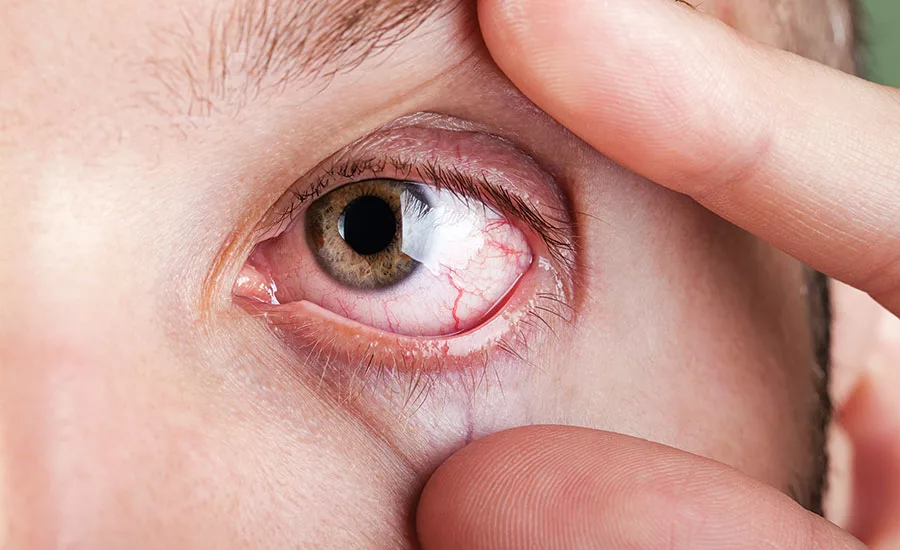
Dry eyes are a common condition in the United States. Most often, people who have Dry Eye Syndrome are middle-aged or older. An estimated 4.88 million Americans over the age of 50 have dry eyes. Although Dry Eye Syndrome is more common to middle age and beyond, younger industrial workers often are subjected to conditions that cause the same symptoms.

Dry Eye Syndrome, Dry Eye Disease or Dry Eye, is a common condition that result in itchy, scratchy eyes and can affect your ability to see well and can evolve to more serious eye problems.

Symptoms include: stinging, burning, irritation, itchiness, grittiness, redness, watery eyes, sensitivity to light, blurred vision, eye fatigue, sore eyes, feeling of something in your eyes. 

Causes include: allergies, antihistamines, inflammation, medications, contacts, poor lighting, bright lights, dry conditions, aging, hormonal changes, gender, weather, prolonged reading, stress, smoking, health conditions, physiological, air pollution, CVS-Computer Vision Syndrome, industrial conditions.

Tears are a good thing

Healthy tears help lubricate, heal and protect the surface of the eye. Poor quality tears can contribute to inflammation and progressive disease.

Each tear component is produced by different glands on or near the eye:

  • The oily component is produced by meibomian glands in the eyelids.
  • The watery component is produced by lacrimal glands located behind the outer aspect of the upper eyelids.
  • The mucin component is produced by goblet cells in the conjunctiva that covers the white of the eye (sclera).1

A problem with any of these sources of tear film components can result in tear instability and dry eyes, and there are different categories of dry eyes, depending on which component is affected. For example, if the meibomian glands don't produce or secrete enough oil (meibum), the tear film may evaporate too quickly — a condition called “evaporative dry eye.” 2

Guard against dust & particles

Safety glasses have been worn for decades and were first introduced to reduce the incidents of a direct projectile reaching the eye. Now workers are not only concerned about direct impacts to the eyes but also eliminating eye injuries due to dusty atmosphere and particulates in the workplace.

Frames with brow guards or dust dams on the inside top of the frames help reduce particulate from reaching the eye from the top of the frame. Another type of protection and sometimes mandated by certain companies, is a full-surround protection. It’s made of rubber or foam and placed on a major portion of the inside of the front of the frame and gives maximum protection from particulates.

It should be noted that while additional protection is gained with using brow guards and full seal gaskets, this protection is not fool-proof and may add additional issues. With this additional protection, air circulation to the eye may be lessoned and fogging of the lenses may occur.

Specific safety eyewear can help moderate certain causes of Dry Eye Syndrome, however, it may be necessary to consult an eye doctor for the best result. The specific type of dry eye often will determine the type of treatment your eye doctor recommends giving you relief from your dry eye symptoms.


References:

  1. https://www.allaboutvision.com/resources/sclera.htm
  2. https://www.allaboutvision.com/conditions/meibomian-gland.htm


KEYWORDS: eye hazards Eye Protection vision

Share This Story

Looking for a reprint of this article?
From high-res PDFs to custom plaques, order your copy today!

Brent Motchan is President of SafeVision, LLC, a recognized innovator in the safety eyewear industry and a veteran-owned business.

Recommended Content

JOIN TODAY
to unlock your recommendations.

Already have an account? Sign In

  • forklift safety

    Exploring the latest technologies in forklift safety

    With more staff and more stock in warehousing now more...
    Facility Safety
    By: Josh Cramer
  • welding

    All about welder’s flash or arc eye

    A flash burn is a painful inflammation of the cornea,...
    Environmental Health and Safety
  • dangerous jobs

    The 10 most dangerous jobs in the U.S.

    On-the-job deaths have been rising — hitting the highest...
    Transportation Safety
    By: Benita Mehta
Manage My Account
  • eMagazine Subscriptions
  • ISHN Newsletter & Other Newsletter Alerts
  • Online Registration
  • Manage My Preferences
  • Subscription Customer Service

More Videos

Sponsored Content

Sponsored Content is a special paid section where industry companies provide high quality, objective, non-commercial content around topics of interest to the ISHN audience. All Sponsored Content is supplied by the advertising company and any opinions expressed in this article are those of the author and not necessarily reflect the views of ISHN or its parent company, BNP Media. Interested in participating in our Sponsored Content section? Contact your local rep!

close
  • man wearing the the Sundström SR200 Full Face Mask Respirator
    Sponsored byOHD

    5 Fit Testing Mistakes That Could Cost You

  • This image shows Magid AcuSpex polarized blue mirrored safety glasses.
    Sponsored byMagid Glove and Safety

    Construction PPE Guide: What Crews Need for Each Task

  • lone worker in confined space
    Sponsored byAlphasense Ltd.

    GET THE LEAD OUT of your Safety Oxygen Sensors!

Popular Stories

SpaceX 7 launch

OSHA Investigating Fatal Fall at SpaceX Starbase

Worker Impairment

How to Tell When a Co-Worker is Impaired? A Safety Pro’s Challenge

Automated loading dock equipment

After March 2026 Rivian Death, Safety Managers Reassess Loading Dock Systems Under OSHA's Warehouse Emphasis Program

top 10 most dangerous jobs

Poll

Seasonal Readiness

With the federal heat stress prevention rule on the horizon, which area of your safety program needs the most attention?
View Results Poll Archive

Products

Surviving an OSHA Audit A Management Guide, 2nd Edition

Surviving an OSHA Audit A Management Guide, 2nd Edition

See More Products

ISHN Podcasts

Related Articles

  • Camfil Farr's new spark arrestor protects against dust

    See More
  • New Stinger™ explosion isolation valve protects against dust collector explosions

    See More
  • BrickingSolutions_SafetyCages_2.jpg

    The benefits of utilizing safety cages to protect against falling debris

    See More

Related Products

See More Products
  • ANSI/ASSE A10.13-2011 & Comparison Document - Special Combo Package Deal

  • 1119010160.jpg

    Guidelines for Combustible Dust Hazard Analysis

See More Products

Related Directories

  • Specialized Safety Products

    Protect your workers and stay OSHA-compliant! The Jet-Kleen Series of Personnel Blow-off & De-Dusting Systems is manufactured in the US by Specialized Safety Products and provides safe, economical, and effective removal of residues – such as dust, fiber, water – from people, surfaces, or environments. The Jet-Kleen Series provides a safe, efficient alternative to compressed air, consuming less energy and emitting less noise.
  • Scientific Dust Collectors

    Scientific Dust Collectors (SDC) began in 1981 when our first patent for improving filter cleaning was issued. Our patented UniFlow Supersonic Nozzle -based cleaning system is where it all starts. Combined with our High Side Inlets, Wide Filter Spacing, and Inlet Baffling, we are able to guarantee performance, efficiency, and filter life. ASHRAE 199 Test Lab on site.
×

Become a Leader in Safety Culture

Build your knowledge with ISHN, covering key safety, health and industrial hygiene news, products, and trends.

JOIN TODAY
  • RESOURCES
    • Advertise
    • Contact Us
    • Directories
    • Manufacturing Division
    • Store
    • Want More
  • SIGN UP TODAY
    • Create Account
    • eMagazine
    • Newsletters
    • Customer Service
    • Manage Preferences
  • SERVICES
    • Marketing Services
    • Reprints
    • Market Research
    • List Rental
    • Survey/Respondent Access
  • STAY CONNECTED
    • LinkedIn
    • Facebook
    • YouTube
    • X (Twitter)
  • PRIVACY
    • PRIVACY POLICY
    • TERMS & CONDITIONS
    • DO NOT SELL MY PERSONAL INFORMATION
    • PRIVACY REQUEST
    • ACCESSIBILITY

Copyright ©2026. All Rights Reserved BNP Media, Inc. and BNP Media II, LLC.

Design, CMS, Hosting & Web Development :: ePublishing