Research glove performance
Find the right balance of comfort & protection for the correct chemical
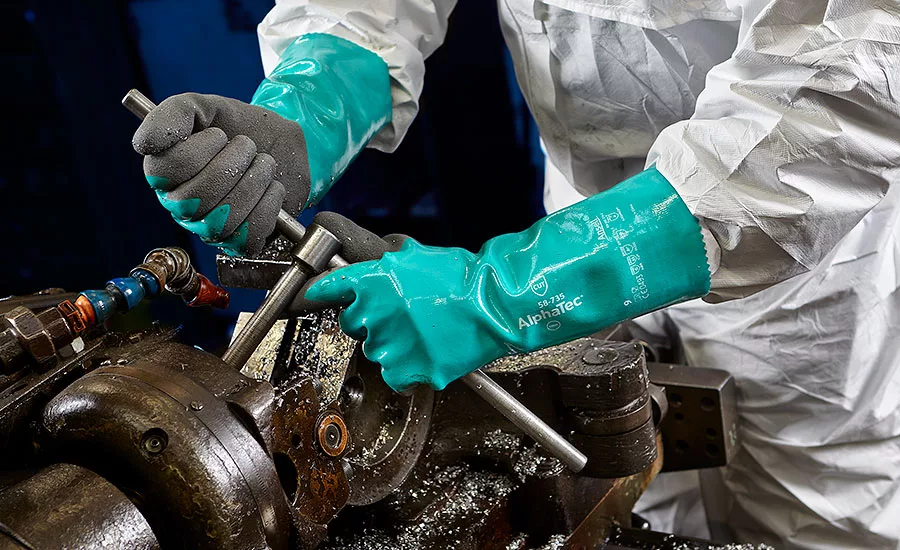
Selecting chemical protective gloves is a crucial, yet challenging task for safety managers worldwide. Complex portfolios are made even more complicated by evolving standards and regulations, making compliance increasingly difficult in today’s work environments.
Many different chemicals and chemical mixtures can be used in a typical production process or facility and every unique set of chemicals requires tailored chemical protection. Moreover, workers interacting with chemicals may also need additional protection from other risks, such as exposure to sharp material or high levels of heat.
Selecting the best chemical protective glove for an application is not an easy task and requires particular attention. However, understanding a few key chemical behaviors — and how they influence glove performance — will help ensure a selection is made that provides both the comfort and protection workers need every day.
Composition counts – understanding the nature of chemicals
To choose an appropriate glove for chemical protection, it’s important to first understand how chemicals work. The inherent properties of each chemical or chemical mixture will determine how quickly they may pass through a glove material/s. For example, a viscous chemical may typically pass through a glove material more slowly than a less viscous chemical of a similar nature.
On the other hand, solid chemicals may contact the glove surface but be restricted from permeation as a consequence of molecular size, the contact surface area, and intermolecular bonding in the solid state between chemical-to-chemical molecules being more energetically favorable than that of the chemical molecules diffusing into the glove material, requiring such chemical-to-chemical bonding forces to be overcome.
Plus, each glove material may react differently depending on the chemical: a specific material may provide no protection at all from one chemical but could be the most appropriate material against another chemical.
Defining permeation
When reviewing potential chemical hand protection solutions, one may hear reference to permeation testing. This test provides a lab scenario and may be useful in comparing one material vs. another against a particular chemical. Permeation breakthrough time can offer a useful benchmark in order for end users to assess the risk associated with using the glove to handle the chemical according to their on-site process/es. The longer the permeation breakthrough time is, the more likely that the glove may provide adequate protection.
Finally, environmental factors are important to consider, as they may affect chemical behavior. For example, a chemical may permeate more quickly through a glove material at an elevated temperature; a known relationship exists which directly correlates such influence of temperature for certain situations. Mechanical factors (such as stretching of a glove) could also influence and reduce the time necessary for the chemical to permeate through the material.
Don’t break the barrier
Potential permeation through glove material is critical when selecting chemical protective gloves; but so is the material itself. Chemical-resistant gloves come in a wide variety of barrier materials, thicknesses and designs. Common materials used as coatings for chemical protective gloves are nitrile rubber, polychloroprene (Neoprene), butyl rubber, Viton, natural rubber latex or vinyl (PVC).
Each of those barrier materials protects against a spectrum of chemical groups, as well as having some “weak points”, i.e. chemical groups where the compatibility and therefore protection offered is weak or very weak. The perfect barrier material which protects against all chemicals and chemical mixtures is virtually non-existent. As such, the specific environment and application for glove use should be considered on a case by case basis to arrive at the best solution with the unique set of chemicals used in the workplace.
The “one-glove-fits-all” mentality
Many industrial settings present a range of hazards that threaten worker safety. This is amplified when multiple risk factors are present, such as exposure to chemical substances coupled with cut risk.
Safety managers are often required or encouraged to employ a “one-glove-fits-all-applications” mentality, or to focus solely on the primary hazard when determining appropriate hand protection. This approach is ultimately flawed — and may even introduce new risks — because it often entails compromise in vital areas such as comfort, dexterity, or grip.
Thanks to advances in material and construction technology, there are now solutions available that provide superior protection against both chemical and cut hazards in one design.
When selecting suitable protection against cut and chemical risk, safety managers should look for a glove that features a suitable barrier against liquids and chemicals, to ensure hands are kept clean and comfortable. A glove that offers an enhanced grip will decrease fatigue and mitigate injury by offering increased control and minimizing the force required to safely handle equipment.
Chemical glove selection
When going through the exercise of determining the most appropriate glove for chemical risks, keep it a scalable and manageable task by focusing on those chemicals that matter most in the application. Most importantly, consider that it doesn’t have to be a solo exercise. A distributor or manufacturer can be a vital partner in assessing all viable options and narrowing the field to the best suited glove options for application requirements – significantly simplifying the chemical glove selection process.
In the end, the above considerations, with each step resulting in more focus, will ensure specific parameters are taken into account to help with selection of the best gloves to fit specific worker comfort, performance, and protection needs.
Looking for a reprint of this article?
From high-res PDFs to custom plaques, order your copy today!