ISHN logo
search
cart
facebook twitter linkedin youtube
  • Sign In
  • Create Account
  • Sign Out
  • My Account
ISHN logo
  • NEWS
    • Today's News
    • Global Safety News
    • Government Regulations
  • PRODUCTS
    • Product Innovations
    • Featured Products
  • TOPICS
    • Environmental Health and Safety
    • Facility Safety
    • Workplace Health
    • Occupational Safety
    • PPE
    • More Topics
  • CONSTRUCTION
  • TECHNOLOGY
  • COLUMNS
    • Best Practices
    • Dave Johnson: What’s going on
    • Editorial Comments
    • Leading Safety
  • MULTIMEDIA
    • ISHN Podcast
    • Videos
    • Cold Stress Education Quiz
    • Webinars
    • White Papers
  • MORE
    • Buyer's Guide
    • Newsletters
    • Convention Companion
    • Polls
    • Events
    • ISHN Store
    • Sponsor Insights
  • EMAGAZINE
    • eMagazine
    • Archived Issues
    • Contact
    • Advertise
  • JOIN TODAY!
Today's Safety NewsGovernment Safety RegulationsTransportation Safety

Feds are working on drone traffic management systems

Tests are promising

September 12, 2019

Traffic signals in the sky? Not quite, but federal agencies are developing a traffic management system that will allow drones to safely fly at low altitudes (below 400 feet) in airspace where Federal Aviation Administration (FAA) air traffic services are not provided – without interfering with other air traffic. The ultimate goal: Ultimately, to define a regulatory framework for drone operations within which third-party providers will operate.

In demonstrations conducted recently as part of a pilot program, the FAA, NASA and partners, drones conducted a variety of operations at three test sites: the Virginia Tech Mid-Atlantic Aviation Partnership (VT MAAP), the Northern Plains UAS Test Site (NPUASTS) in Grand Forks, N.D., and the Nevada Institute for Autonomous Systems (NIAS) in Las Vegas, Nev., that were designed to further that development:

The first demonstration, which involved the VT MAAP, took place at Virginia Tech on June 13. During the demonstration, separate drone flights delivered packages, studied wildlife, surveyed a corn field and covered a court case for TV. Because the flights were near an airport, all four flight plans were submitted through a service supplier and received approval to launch as planned.  While these flights were being conducted, an emergency helicopter needed to quickly transport a car crash victim to a hospital. The helicopter pilot submitted a request for an Unmanned Aircraft Systems (UAS) UAS Volume Reservation (UVR), an alert used to notify nearby drone operators of the emergency. The deliveries were re-routed until the UVR was completed.  The wildlife study, field survey and court coverage continued safely away from the helicopter’s path.  Each operation was conducted without conflict.  

The second demonstration, which involved the Northern Plains UAS Test Site (NPUASTS), took place in Grand Forks on July 10. During the demonstration, which occurred near an airport, a photographer and Part 107 drone operator took photos of firefighter training. An aviation student at the University of North Dakota used a drone to scan for the best tailgating location. Another Part 107 operator, employed at the electric company, used a drone to assess power line damage after recent strong winds. The two Part 107 operators submitted flight plans due to their proximity to an airport, receiving proper approvals. During their flights, they received a UVR alert that a medevac helicopter was transporting a patient to the hospital from the firefighter training area. The operator taking photos of the training landed the drone before the UVR notice became active. The power line survey and the flight over the tailgate area continued at a safe distance.

The third, which involved the Nevada Institute for Autonomous Systems (NIAS), took place in Las Vegas on August 1. During the demonstration, separate UAS flights were conducted to survey a golf course before a tournament, get video footage of a property being sold, and scan a nearby lake for boating opportunities. All three operators accessed UAS Facility Maps and worked with a UAS Service Supplier (USS) to receive the proper approvals to conduct their flights. A fire erupted at one of the golf course clubhouses. First responders sent a helicopter to contain the fire. They submitted a request to a USS to create a UVR. The UVR information is also shared with the FAA. The FAA shares the information with public portals, notifying each of the UAS operators that the firefighting helicopter was on its way to their flying area.    Each of the UAS operators, being properly notified, were able to either land or continue their operations at a safe distance.

The FAA says the UAS Traffic Management Pilot Program (UPP), showed that multiple, Beyond Visual Line of Sight (BVLOS) drone operations can be safely conducted at low altitudes.

As demand for low altitude drone use increases, the FAA, NASA and the UPP partners will continue working together to accommodate these operations safely and efficiently.

The UPP was established in April 2017 as an important component for identifying the initial set of industry and FAA capabilities required to support UAS Traffic Management operations. The analysis of results from the demonstrations will provide an understanding of the level of investment required for each stakeholder's implementation.

The results from the UPP will provide a proof of concept for UAS Traffic Management capabilities currently in research and development, and will provide the basis for initial deployment of UTM capabilities.

Check out our video about the UPP demonstrations.

KEYWORDS: public safety

Share This Story

Looking for a reprint of this article?
From high-res PDFs to custom plaques, order your copy today!

Recommended Content

JOIN TODAY
to unlock your recommendations.

Already have an account? Sign In

  • forklift safety

    Exploring the latest technologies in forklift safety

    With more staff and more stock in warehousing now more...
    Facility Safety
    By: Josh Cramer
  • welding

    All about welder’s flash or arc eye

    A flash burn is a painful inflammation of the cornea,...
    Environmental Health and Safety
  • dangerous jobs

    The 10 most dangerous jobs in the U.S.

    On-the-job deaths have been rising — hitting the highest...
    Construction Industry Safety and Health
    By: Benita Mehta
Manage My Account
  • eMagazine Subscriptions
  • ISHN Newsletter & Other Newsletter Alerts
  • Online Registration
  • Manage My Preferences
  • Subscription Customer Service

More Videos

Sponsored Content

Sponsored Content is a special paid section where industry companies provide high quality, objective, non-commercial content around topics of interest to the ISHN audience. All Sponsored Content is supplied by the advertising company and any opinions expressed in this article are those of the author and not necessarily reflect the views of ISHN or its parent company, BNP Media. Interested in participating in our Sponsored Content section? Contact your local rep!

close
  • man wearing the the Sundström SR200 Full Face Mask Respirator
    Sponsored byOHD

    5 Fit Testing Mistakes That Could Cost You

  • This image shows Magid AcuSpex polarized blue mirrored safety glasses.
    Sponsored byMagid Glove and Safety

    Construction PPE Guide: What Crews Need for Each Task

  • lone worker in confined space
    Sponsored byAlphasense Ltd.

    GET THE LEAD OUT of your Safety Oxygen Sensors!

Popular Stories

SpaceX 7 launch

OSHA Investigating Fatal Fall at SpaceX Starbase

Worker Impairment

How to Tell When a Co-Worker is Impaired? A Safety Pro’s Challenge

Automated loading dock equipment

After March 2026 Rivian Death, Safety Managers Reassess Loading Dock Systems Under OSHA's Warehouse Emphasis Program

top 10 most dangerous jobs

Poll

Seasonal Readiness

With the federal heat stress prevention rule on the horizon, which area of your safety program needs the most attention?
View Results Poll Archive

Products

Surviving an OSHA Audit A Management Guide, 2nd Edition

Surviving an OSHA Audit A Management Guide, 2nd Edition

See More Products

ISHN Podcasts

Related Articles

  • Feds to states: Make sure traffic lights connected to railroad crossings are working

    See More
  • Learning management systems are more than recordkeeping software

    See More
  • ASSP

    ASSP to hold virtual symposium on safety management systems

    See More

Related Products

See More Products
  • 1118645685.jpg

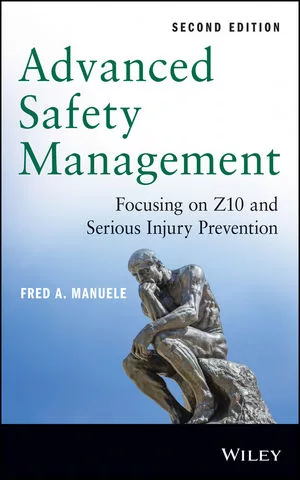
    Advanced Safety Management: Focusing on Z10 and Serious Injury Prevention, 2nd Edition

See More Products

Events

View AllSubmit An Event
  • December 16, 2016

    ASSE to host virtual symposium on new OSHA Walking-Working Standard

    The American Society of Safety Engineers is offering a virtual symposium to help occupational safety and health professionals better understand the sweeping changes OSHA recently made to its final rule on Walking-Working Surfaces and Personal Fall Protection standards in relation to slip, trip and fall hazards.
View AllSubmit An Event
×

Become a Leader in Safety Culture

Build your knowledge with ISHN, covering key safety, health and industrial hygiene news, products, and trends.

JOIN TODAY
  • RESOURCES
    • Advertise
    • Contact Us
    • Directories
    • Manufacturing Division
    • Store
    • Want More
  • SIGN UP TODAY
    • Create Account
    • eMagazine
    • Newsletters
    • Customer Service
    • Manage Preferences
  • SERVICES
    • Marketing Services
    • Reprints
    • Market Research
    • List Rental
    • Survey/Respondent Access
  • STAY CONNECTED
    • LinkedIn
    • Facebook
    • YouTube
    • X (Twitter)
  • PRIVACY
    • PRIVACY POLICY
    • TERMS & CONDITIONS
    • DO NOT SELL MY PERSONAL INFORMATION
    • PRIVACY REQUEST
    • ACCESSIBILITY

Copyright ©2026. All Rights Reserved BNP Media, Inc. and BNP Media II, LLC.

Design, CMS, Hosting & Web Development :: ePublishing