2020 Top Standards: OSHA most frequently violated standards
The Control of Hazardous Energy (Lockout/Tagout) 1910.147
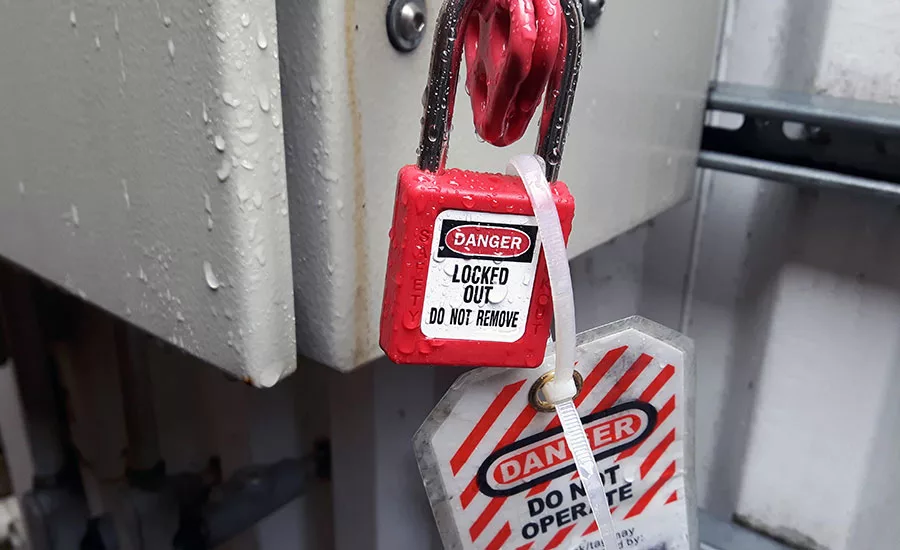
Credit: Getty Images
Lockout/Tagout was the fourth most-frequently cited agency standard in FY 2019.
Enforcement citations FY 2019: 2,612
Number of inspections: 1,486
Proposed penalties: $14,426,565
Most frequently cited industries:
- Manufacturing
- Wholesale Trade
- Other Services (except Public Administration)
- Administrative and Support and Waste Management and Remediation Services
Background
The OSHA standard for The Control of Hazardous Energy (Lockout/Tagout), Title 29 Code of Federal Regulations (CFR) Part 1910.147, addresses the practices and procedures necessary to disable machinery or equipment, thereby preventing the release of hazardous energy while employees perform servicing and maintenance activities. The standard outlines measures for controlling hazardous energies — electrical, mechanical, hydraulic, pneumatic, chemical, thermal, and other energy sources.
The lockout/tagout standard establishes the employer’s responsibility to protect employees from hazardous energy sources on machines and equipment during service and maintenance.
In addition, 29 CFR 1910.333 sets forth requirements to protect employees working on electric circuits and equipment. This section requires workers to use safe work practices, including lockout and tagging procedures. These provisions apply when employees are exposed to electrical hazards while working on, near, or with conductors or systems that use electric energy
Employees need to be trained to ensure that they know, understand, and follow the applicable provisions of the hazardous energy control procedures. The training must cover at least three areas: aspects of the employer’s energy control program; elements of the energy control procedure relevant to the employee’s duties or assignment; and the various requirements of the OSHA standards related to lockout/tagout.
What is hazardous energy?
Energy sources including electrical, mechanical, hydraulic, pneumatic, chemical, thermal, or other sources in machines and equipment can be hazardous to workers. During the servicing and maintenance of machines and equipment, the unexpected startup or release of stored energy can result in serious injury or death to workers.
What are the harmful effects of hazardous energy?
Workers servicing or maintaining machines or equipment may be seriously injured or killed if hazardous energy is not properly controlled. Injuries resulting from the failure to control hazardous energy during maintenance activities can be serious or fatal! Injuries may include electrocution, burns, crushing, cutting, lacerating, amputating, or fracturing body parts, and others.
A steam valve is automatically turned on burning workers who are repairing a downstream connection in the piping. A jammed conveyor system suddenly releases, crushing a worker who is trying to clear the jam. Internal wiring on a piece of factory equipment electrically shorts, shocking worker who is repairing the equipment. Craft workers, electricians, machine operators, and laborers are among the millions of workers who service equipment routinely and face the greatest risk of injury.
What can be done to control hazardous energy?
Proper lockout/tagout (LOTO) practices and procedures safeguard workers from hazardous energy releases. OSHA's Lockout/Tagout Fact Sheet describes the practices and procedures necessary to disable machinery or equipment to prevent hazardous energy release. The OSHA standard for The Control of Hazardous Energy (Lockout/Tagout) (29 CFR 1910.147) for general industry outlines measures for controlling different types of hazardous energy. The LOTO standard establishes the employer's responsibility to protect workers from hazardous energy. Employers are also required to train each worker to ensure that they know, understand, and are able to follow the applicable provisions of the hazardous energy control procedures:
Proper lockout/tagout (LOTO) practices and procedures safeguard workers from the release of hazardous energy. The OSHA standard for The Control of Hazardous Energy (Lockout/Tagout) (29 CFR 1910.147) for general industry, outlines specific action and procedures for addressing and controlling hazardous energy during servicing and maintenance of machines and equipment. Employers are also required to train each worker to ensure that they know, understand, and are able to follow the applicable provisions of the hazardous energy control procedures. Workers must be trained in the purpose and function of the energy control program and have the knowledge and skills required for the safe application, usage and removal of the energy control devices.
All employees who work in an area where energy control procedure(s) are utilized need to be instructed in the purpose and use of the energy control procedure(s), especially prohibition against attempting to restart or reenergize machines or other equipment that are locked or tagged out.
All employees who are authorized to lockout machines or equipment and perform the service and maintenance operations need to be trained in recognition of applicable hazardous energy sources in the workplace, the type and magnitude of energy found in the workplace, and the means and methods of isolating and/or controlling the energy.
Specific procedures and limitations relating to tagout systems where they are allowed. Retraining of all employees to maintain proficiency or introduce new or changed control methods.
Key compliance requirements
The standards establish requirements that employers must follow when employees are exposed to hazardous energy while servicing and maintaining equipment and machinery. Some of the most critical requirements:
- Develop, implement, and enforce an energy control program.
- Use lockout devices for equipment that canbe locked out. Tagout devices may be used in lieu of lockout devices only if the tagout program provides employee protection equivalent to that provided through a lockout program.
- Ensure that new or overhauled equipment is capable of being locked out.
- Develop, implement, and enforce an effective tagout program if machines or equipment are not capable of being locked out.
- Develop, document, implement, and enforce energy control procedures. [See the note to29 CFR 1910.147(c)(4)(i) for an exception to the documentation requirements.]
- Use only lockout/tagout devices authorizedfor the particular equipment or machinery and ensure that they are durable, standardized, and substantial.
- Ensure that lockout/tagout devices identify the individual users.
- Establish a policy that permits only the employee who applied a lockout/tagout device to remove it. [See 29 CFR1910.147(e)(3) for exception.]
- Inspect energy control procedures at least annually.
- Provide effective training as mandated for all employees covered by the standard.
|
2020 Top Standards Article Index ANSI/ISEA 121- Dropped object prevention solutions NFPA 652 standard on fundamentals of combustible dust OSHA most frequently violated standardsFall protection- General Requirements (1926.501) Hazard Communication (1910.1200) The Control of Hazardous Energy (Lockout/Tagout) 1910.147 Respiratory Protection (1910.134) Powered Industrial Trucks (1910.178) |
Looking for a reprint of this article?
From high-res PDFs to custom plaques, order your copy today!