2020 Top Standards: OSHA most frequently violated standards
Fall protection- General Requirements (1926.501)

OSHA’s fall protection standard was the No. 1 most-frequently cited agency standard in fiscal year 2019.
Enforcement citations FY 2019: 6,628
Number of inspections: 6,438
Proposed penalties: $34,620,555
Most frequently cited industries:
- Construction
- Wholesale trade
- Administrative and support and waste management and remediation services
- Manufacturing
Overview
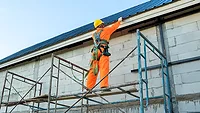
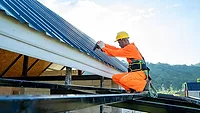
Falls are among the most common causes of serious work related injuries and deaths. Employers must set up the work place to prevent employees from falling off of overhead platforms, elevated work stations or into holes in the floor and walls. OSHA requires that fall protection be provided at elevations of four feet in general industry workplaces, five feet in shipyards, six feet in the construction industry and eight feet in longshoring operations. In addition, OSHA requires that fall protection be provided when working over dangerous equipment and machinery, regardless of the fall distance.
To prevent employees from being injured from falls, employers must:
- Guard every floor hole into which a worker can accidentally walk (using a railing and toe-board or a floor hole cover).
- Provide a guard rail and toe-board around every elevated open sided platform, floor or runway.
- Regardless of height, if a worker can fall into or onto dangerous machines or equipment (such as a vat of acid or a conveyor belt) employers must provide guardrails and toe-boards to prevent workers from falling and getting injured.
- Other means of fall protection that may be required on certain jobs include safety harness and line, safety nets, stair railings and hand rails.
OSHA requires employers to:
- Provide working conditions that are free of known dangers.
- Keep floors in work areas in a clean and, so far as possible, a dry condition.
- Select and provide required personal protective equipment at no cost to workers.
- Train workers about job hazards in a language that they can understand.
Protecting workers
There are a number of ways employers can protect workers from falls, including through the use of conventional means such as guardrail systems, safety net systems and personal fall protection systems, the adoption of safe work practices, and the provision of appropriate training. The use of warning lines, designated areas, control zones and similar systems are permitted by OSHA in some situations and can provide protection by limiting the number of workers exposed. Whether conducting a hazard assessment or developing a comprehensive fall protection plan, thinking about fall hazards before the work begins will help the employer to manage fall hazards and focus attention on prevention efforts. If personal fall protection systems are used, particular attention should be given to identifying attachment points and to ensuring that employees know how to properly use and inspect the equipment.
Fall protection training guide
Questions for employers to ask their workers during training programs:
1. What are the two basic types of fall protection?
- Fall restraint systems, like guardrails. These keep you from falling.
- Fall arrest systems, like safety nets. These break your fall.
- Never use any type of fall protection unless you have been trained.
2. If there are no guardrails, when and where should you tie off with a harness and lines?
Cal/OSHA’s main rule is that you should tie off when the drop is 7½ feet or more. There are exceptions to the 7½ foot rule for some trades, like roofers and ironworkers.
3. When and where should safety nets be used?
Safety nets should be used if it is not practical to tie off. Safety nets should be placed no more than 30 feet below the work area. Nets should extend from 8 to 13 feet beyond the structure you’re working on. No work can proceed unless the net is in place.
4. If you use fall protection equipment, what do you need to check?
- Be sure all equipment is safety-approved. Look for a label showing that it meets American National Standards Institute (ANSI) safety requirements.
- Be sure the equipment is installed and used according to the manufacturer’s instructions.
- Be sure everything is in good condition. Remove from service any lanyard or drop line that has broken someone’s fall, or is frayed or worn.
- Be sure you have the right equipment for the job. For example, safety belts are not allowed in fall arrest systems.
5. Where should you place the anchor end of a lanyard?
Anchor it at a level no lower than your waist. That way, you limit any fall to a maximum of four feet. Anchor it to a substantial structural member, or to a securely rigged catenary or pendant line. Don’t anchor it to a pipe.
6. What are some of the requirements for a drop line?
A drop line (and its anchorage) must be able to support at least 5,000 lbs. Drop lines should be made of synthetic fibers (except near heat or flame). If a drop line is subject to fraying or rock damage, it must have a wire rope center.
7. What if it’s not practical to tie off or use a safety net?
If the usual fall protection measures are impractical or create a greater hazard than they prevent, Cal/OSHA allows an employer to develop a fall protection plan. The plan allows work to be done in a designated area without the normal fall protection. Alternate measures must be used to reduce fall hazards in that area. These include special training for workers, and constant observation of the work by a safety monitor.
8. What are some of the requirements for controlled access zones?
There should be a barrier (ropes, wires, or caution tape) to restrict access to the zone. Warning signs should be posted around the zone. In many cases, there must be a designated safety monitor for the zone, who is in communication with anyone working in the zone at all times.
|
2020 Top Standards Article Index ANSI/ISEA 121- Dropped object prevention solutions NFPA 652 standard on fundamentals of combustible dust OSHA most frequently violated standardsFall protection- General Requirements (1926.501) Hazard Communication (1910.1200) The Control of Hazardous Energy (Lockout/Tagout) 1910.147 Respiratory Protection (1910.134) Powered Industrial Trucks (1910.178) |
Looking for a reprint of this article?
From high-res PDFs to custom plaques, order your copy today!