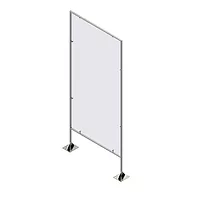
Prevent the spread of COVID-19 with cough and sneeze shields
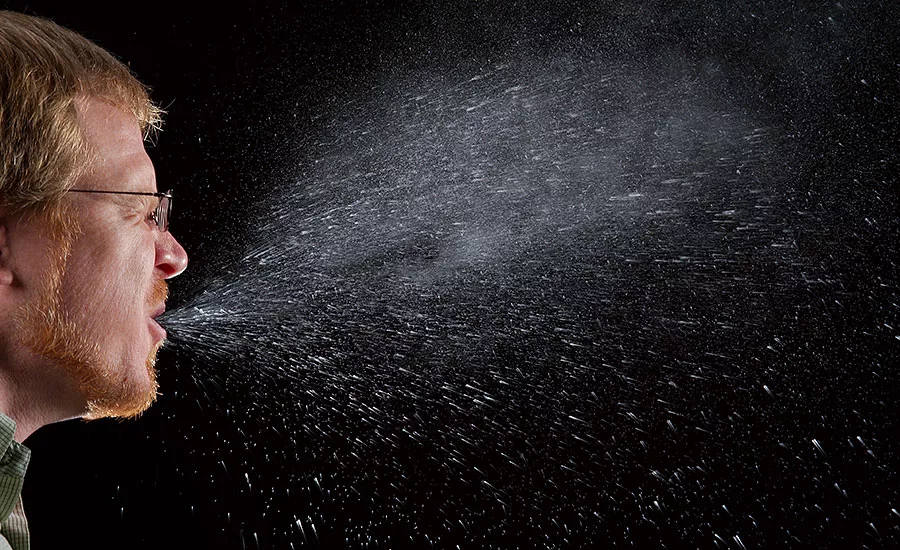
According to the American Lung Association, sneezes and coughs are your body’s way of releasing irritants found in the nose and lungs. In effect, people have a high-speed face cannon capable for expelling all sorts of bugs and germs. Unfortunately, getting rid of irritants in such a violent method means spreading germs in a large spray of saliva, mucus, and germs. A cough can travel as fast as 50 mph and expel almost 3,000 droplets in just one go. Sneezes are even more forceful —they can travel up to 100 mph and create upwards of 100,000 droplets.
Public health experts and elected officials have emphasized again and again that social distancing is the best tool we have to slow the coronavirus outbreak. However, many organizations are unable to effectively manage to keep people six feet or more apart, simply due to the nature of their business. Consider the interactions between a teller and a bank customer, employees in side-by-side cubicles, or assembly-line workers standing shoulder to shoulder in food processing plants. In those situations, and many more, safe social distancing cannot be achieved and a shield may help limit the spread of pathogens.
Restaurants first installed cough and sneeze shields around the “all you can eat” buffets and supper-club salad bars of the 1950s to prevent guests from contaminating food. Today, cough and sneeze guards are being mounted in all types of settings, from grocery stores to post offices, as a blockade against the highly contagious coronavirus (COVID-19).
Sneeze guards are not medical devices, but they have PPE qualities contributing to transmission slowdown — even if a customer and employee aren’t wearing masks. In addition, shields provide customers with an extra reassurance of safety as they cautiously re-enter the so-called new normal of everyday life. Installing shields demonstrates an organization’s dedication to the health of their staff, which helps to retain employees. Shields may also serve as a visual reminder to use proper hygiene to prevent the spread of COVID-19. Like N95 masks and disposable gloves, sneeze shields have become another new icon of the current pandemic.
Sneeze barriers work best when they are used alongside other proven methods including enhanced cleaning and hygiene practices, PPE, social distancing measures, and drastic changes in how services are provided, especially in the hard-hit retail and hospitality industries.
History
Back in 1959, Johnny Garneau, who owned and ran the American Style Smorgasbord chain of restaurants in Ohio and Pennsylvania, filed a patent for the “Food Service Table,” later known as the sneeze shield.
An admitted germaphobe, Garneau couldn't stand customers smelling the entrees and having their noses too close to the food. He installed his invention in each of his restaurants, and as an indirect result, he played a crucial role in food safety initiatives. By the early 1960s, the United States Food and Drug Administration (FDA) regulated the presence of food shields in restaurants across the country. Garneau passed away in 2003 but would certainly have been proud of how his invention has today become instrumental in preventing COVID-19 infections.
Standards
While the CDC recommends the use of shields as protection against COVID-19, there are currently no enforceable government standards or codes requiring shields for this specific purpose. The FDA governs sneeze guards for food safety only, requiring that restaurants with buffets, hospital and school cafeterias, portable food carts and self-serve fast food displays have shields.
Some of the country’s largest unions have recently called for emergency regulations to ensure the safety of essential workers against COVID-19. They have joined together to lobby OSHA to implement enforceable emergency coronavirus workplace regulations for those workers who have continued to punch into work despite COVID-19, including store clerks, machine operators and of course, the healthcare workers on the frontline.
Design
The most effective sneeze guards are tall and wide enough to protect an individual whether they are standing or sitting. These calculations are based on an average-sized customer who is between five and six feet tall. Shields should cover the full interaction.
Cheaply made shields are unlikely to withstand the rigors of daily wear and tear. In clean-room settings, for example, shields need to withstand the rigors of frequent deep cleaning, using very hot temperatures, pressurized wash downs and specific cleaning agents, such as ethanol, hydrogen peroxide, isopropyl alcohol, ammonia and soap solutions, all of which are cleaning agents specifically recommended by the CDC in the fight against the coronavirus. Disinfection should be performed daily.
Materials
Although some manufacturers opt to use tempered glass or plexiglass, shields constructed of polycarbonate hold many advantages over their counterparts. Polycarbonate is harder to scratch, reducing the risk of bacteria hiding within scratches, and it can be cleaned with ease. In addition, it is far stronger than glass yet considerably lighter in weight, while also providing excellent resistance to long-term exposure to environmental elements such as UV rays. Enhanced strength means that sharp impacts or abrasive cleaning chemicals aren’t a danger. Also, sturdy polycarbonate panels can resist damage caused by customers leaning on them. From the manufacturer’s standpoint, polycarbonate holds the advantages of being easily routed, drilled, formed, bent and sawed without snapping or breaking under stress.
Just as you wouldn’t want a mask without a tie string, you don’t want a sneeze shield without a sturdy frame. A rugged metallic frame offers strength and durability. Stainless-steel frames allow shields to be washed down and sterilized per the CDC’s recommendation for frequent cleaning. Avoid frames that have large gaps or cracks that encourage bacterial build up. Instead, insist on full penetration welds.
Conclusion
What will the new normal look like when the COVID-19 lockdown finally ends? Most likely, adjustments to life that were thought to be temporary will become permanent including the wearing of masks, the habitual washing of hands and, of course, sneeze shields any place people interact in close proximity.
Looking for a reprint of this article?
From high-res PDFs to custom plaques, order your copy today!