How a new technology is setting the standard for hand protection
Personal protective equipment (PPE) standards enable manufacturers to determine the performance requirements for the products they design and the procedures to test them. They also help health and safety managers make informed choices about the right product for any given job.
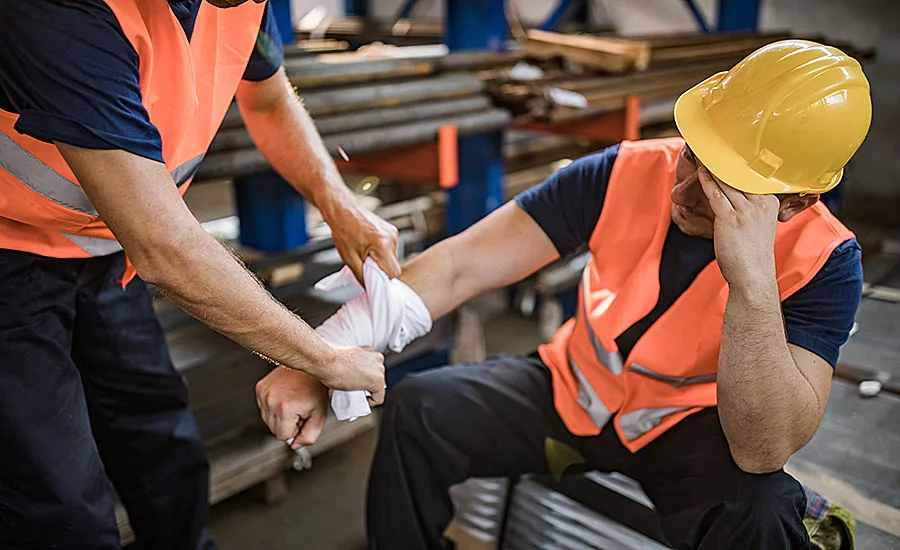
This is particularly important for one of the most vulnerable parts of a worker’s body. Personnel in the offshore oil and gas, construction, mining, manufacturing, warehousing and transport industries, as well as consumers doing DIY, are particularly susceptible to hand impact injuries.
The US Bureau of Labor Statistics reported that, in 2018, 43 percent of non-fatal occupational injuries to upper extremities requiring days away from work affected the hands. The Association of Drilling Contractors’ 2018 summary of occupational incidents found that more than 41 percent of total industry recordable incidents by body part involved fingers, hands and wrists.
As part of efforts to reduce the injury toll, ANSI/ISEA 138, the American national standard for performance and classification for impact resistant hand protection, was published in March 2019. Like all standards, ANSI/ISEA 138 sets minimum performance, classification and labelling requirements for occupational hand protection products. However, this particular standard goes further by incorporating performance levels from 1 to 3, clearly identified with mandatory pictograms, to help health and safety managers select the most appropriate product for a task.
“These performance levels give clarity as to how much energy is being transferred through the glove,” says Kevin Fleer, Head of Product for impact protection specialist D3O. “The language around levels of impact protection has evolved, so health and safety managers are now better equipped to navigate the hand protection landscape. They have reliable information regarding a product’s key performance characteristics.”
Cross-sector learning
ANSI/ISEA 138 performance levels can be achieved more easily through next-generation tech: “The revolution in back-of-hand impact performance through material advances… have made ANSI/ISEA 138 practicable and facilitated a standard that is a game-changer in terms of PPE protection,” Fleer adds.
Most industrial gloves include a back-of-hand impact protector. Usually made from TPR (thermoplastic rubber) and stitched or glued onto the product, this vital component of PPE has a number of drawbacks.
The thickness of the TPR needed to give sufficient protection can make such gloves inflexible and tiring to wear, while the level of dexterity required by a worker to complete many manual tasks is compromised. Such gloves also tend to retain heat and sweat, making them uncomfortable over long periods of use.
As a result, some workers simply discard their hand protection rather than persevering with equipment that is uncomfortable and unsuited to the task, leaving themselves at greater risk of serious injury.
“Over a 12-month period we conducted extensive R&D to explore how materials could be more easily integrated into garments and combined with fabrics and substrates, rather than the methods used previously,” says Fleer. “Glue or adhesive often fails in demanding environments while stitching can come apart. Stitched products also tend to be bulkier and less comfortable.
“Traditional TPR or injection-molded manufacturing methods require the bumper geometry to be a large, solid, joined surface which hinders dexterity and comfort. Now you can have lots of small, individual modules, so flexibility is only constrained by the material it’s printed onto.”
With new technology, protection can be printed throughout the hand rather than occupying only the sections of the hand which will allow stitching or gluing. This enables up to 26 percent more coverage of the hand, connecting the fingers and knuckles for the first time and extending protection towards the wrist. Breathability is enabled by open geometries that protect while allowing airflow. The overall result is a glove that looks and feels great, and that workers will want to wear.
Future innovation
Paul Harris, VP of Product Development at Mechanix Wear, says of the new tech: “The key benefits will be no stitched parts, delivering increased comfort and flexibility while achieving the highest ANSI/ISEA 138 impact performance level 3 with a lighter-weight, lower-profile design that has tremendous dexterity advantages over most of the ANSI/ISEA 138 impact protection level 1 options available in today’s market.”
New gloves meet the EN420 standard which defines the general requirements and relevant test procedures for glove design and construction, including resistance to water penetration, comfort and dexterity, marking, and information supplied by the manufacturer.
Looking forward, the new glove technology has many potential applications beyond hand protection. The National Safety Council analysis of US Bureau of Labor Statistics data for 2018 showed that the upper extremities including the arms accounted for 31.9 percent of all injuries involving days away from work, with the lower extremities including the legs accounting for 23.9 percent. Innovative industrial sleeves and limb protectors incorporating the new tech could in future lead to even safer workplaces.
In the meantime, health and safety managers can be confident that the combined benefit of greater comfort and ANSI/ISEA 138 level 3 protection will increase levels of PPE compliance, reduce the chances of workers suffering a hand injury and enhance productivity.
Looking for a reprint of this article?
From high-res PDFs to custom plaques, order your copy today!