Workplace winter safety: Tips to prevent slips, trips and falls
Changing seasons can bring a plethora of hazards to a workplace, especially when it comes to winter weather. Some of the most common accidents that can occur as a result of winter conditions are slips, trips and falls. According to the National Safety Council, in 2019, slips, trips and falls accounted for the second-highest rate (27.47%) of nonfatal workplace injuries that required days away from work and the second-highest cause of death (16.5%) within the workplace. With the likelihood of workplace slip, trip and fall accidents resulting in a serious injury or death, it is important for both employers to take steps to mitigate the risks of these on-the-job accidents, especially during winter months. Most slip, trip and fall accidents are preventable with proper supplies, preparation and training.
Slip, trip and fall hazards
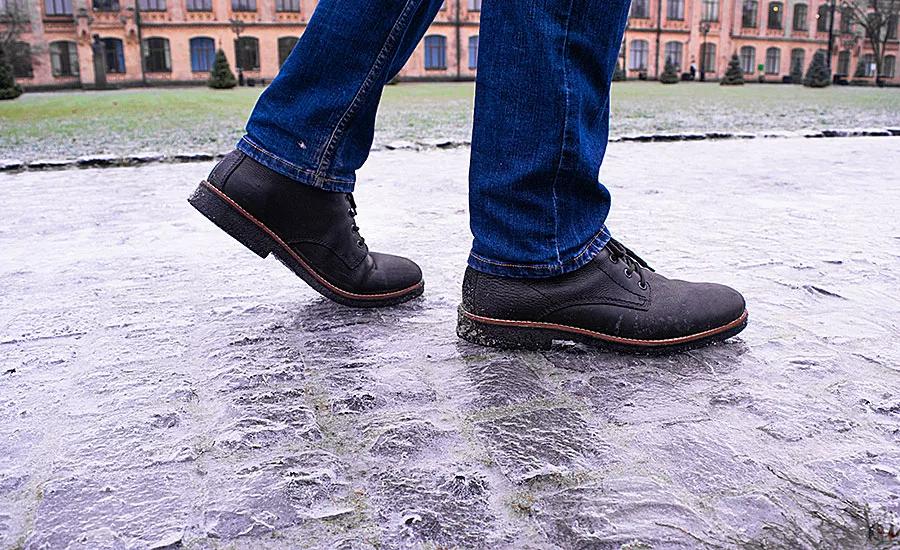
Both seasonal and non-seasonal conditions can heighten the risks of slip, trip and fall accidents. During the winter months, snow, sleet, ice, rain and high winds often contribute to slips, trips and falls.
A few of the most common winter workplace hazards include:
- Unplowed streets
- Unplowed sidewalks
- Unsalted walkways
- Wet, icy floors and walkways
Non-seasonal hazards can pose risks in the workplace at any time throughout the year, so it’s important to always maintain a safe work environment in compliance with federal, state and local regulations.
A few of the most common non-seasonal hazards include:
- Uneven floors, pavement and surfaces
- Spills
- Recently waxed or polished floors
- Poor lighting, which makes it difficult to spot hazards
- Clutter, debris or trash on the floor
- Lack of proper signage and barriers to close off areas
- Loose mats, floorboards or rugs
- Cords and electrical wires running across floors and walkways
- Failure to repair or maintain leaking appliances like refrigerators and freezers
- Lack of or broken/damaged handrail on stairs
- Worn or warped steps
- Using an unsecured ladder
Tips to prepare a workplace for winter hazards
Under Occupational Health and Safety Administration (OSHA) law, employers have a responsibility to provide a safe work environment to their employees. As an employer, it is important to set the standard of safety in the workplace by identifying risks, making a safety plan to address current and prepare for future hazards, designate a safety and compliance manager and provide ongoing, comprehensive training to employees on key awareness issues.
Identify hazards
First, it’s important for employers to survey their workplace for potential slip, trip and fall hazards. Start by scanning each area to identify visible risks, starting with active work areas, inactive work areas, walkways, entrances, exits and then on-site parking lots. Then consider hazards that may stem from the job duties the workers perform and what tasks they entail. It’s helpful for employers to communicate directly with staff to discuss present and potential risks so they are aware and can take proper precautions.
Make a safety plan
Once hazards have been identified, it is important to create a plan that can address current risks and proactively prepare for future ones.
When it comes to safety for winter weather, it’s important for employers to have basic supplies on hand, including shoves, ice melt, scrapers and wet floor signs. Check the weather forecast frequently and advise staff of inclement weather warnings. Clear sidewalks, walkways and building entrances of snow, ice and other hazards prior to workers arriving on site. If there’s a potential for the floors to become wet, put proper safety signage up to warn people to use precaution when walking through those areas. Block off any area that is unsafe or has present hazards that can’t be immediately cleared. If there is a risk that employees will be unable to travel to or from work, consider having them work from home, if possible.
Training
It is crucial for workers to have the proper training relating as well as the right equipment and personal protective equipment (PPE) to complete their tasks. Workers should never use damaged, old equipment and all supplies, tools and machinery should be thoroughly checked before use.
Do a walk-through of site areas, especially with new employees, to familiarize them with the workspaces and point out where potential slip, trip and fall hazards may be. Communicate to them what signage brings attention to those hazards and what barricades are used to keep people out of dangerous areas.
Employers should keep their worksites in compliance with all federal, state and local safety rules and regulations. As defined by OSHA, employee slip, trip and fall safety training should include, but are not limited to:
- An overview of slip, trip and fall hazards.
- A review of OSHA 1910.22 Walking/Working Surfaces and what is expected of them to prevent accidents.
- Tips for employees to mitigate risk and avoid slips, trips and falls.
- Based on the workplace and employees’ job duties, descriptions of what shoes should be worn.
- An overview of company programs that reimburse or purchase workplace-appropriate shoes.
Tips for employees
For winter weather slip and fall prevention, employees should:
- Wear task-appropriate footwear with good traction and insulation.
- Take short steps and walk at a slower pace to react quickly to changes in traction.
- Use caution when walking under awnings, buildings and windows where snow and ice have formed.
- Watch for slippery floors when walking into the building.
- Be vigilant and cautious in areas that could have black ice.
- Be mindful of safety signage and do not enter blocked off areas.
Designate a safety and compliance manager
In many instances, an employer may feel overwhelmed undertaking the safety oversight, prevention and training initiatives on top of their regular duties. If this is the case, it is helpful for an employer to hire or designate an individual whose sole responsibility is to help ensure that safety and compliance rules and regulations are being properly followed. Often referred to as a site safety manager, he or she can monitor employees, assist with training and create ongoing initiatives to address hazards in the workplace.
Steps to take should an accident occur
Slips, trips and falls can result in serious, sometimes fatal, injuries, so it’s important to treat these accidents as emergencies. If a slip, trip or fall occurs, it’s important that workers remain calm and seek immediate medical care for injuries. Even if an injured person feels initially okay after an accident, he or she may be in shock and the pain of their injuries may set in at a later time. For this reason, it’s important to not hesitate to seek professional medical evaluation and care with proper documentation.
For workplace injuries, a worker may recover lost wages, cover medical bills or collect disability benefits by filing a workers’ compensation claim. Regardless of whether the accident was the fault of the employee or employer, a worker may be able to recover workers’ compensation benefits for an on-the-job injury.
If an injury occurs as a result of a third-party’s negligence, outside of an employer, an injured worker may be able to recover financial losses, medical expenses, disability and pain and suffering stemming from the accident by filing a personal injury lawsuit against the negligent party. Workers seeking to recover damages for a work-related injury through a personal injury lawsuit should seek the guidance of an attorney who has experience representing workplace injury cases.
Slip, trip and falls are serious workplace accidents, so it’s important that employers and employees take steps to mitigate risks by implementing proactive safety initiatives, following all safety guidelines and supplying the proper gear and training. Employers may benefit from designating a safety site manager to oversee ongoing safety initiatives, training and compliance efforts. Workers who suffer slip, trip and fall accidents should treat these accidents as emergencies and seek immediate medical attention for injuries. Losses that stem from on-the-job accidents may be recovered through a workers’ compensation claim or, in the instance of third-party negligence, through a personal injury lawsuit.
Looking for a reprint of this article?
From high-res PDFs to custom plaques, order your copy today!