ISHN logo
search
cart
facebook twitter linkedin youtube
  • Sign In
  • Create Account
  • Sign Out
  • My Account
ISHN logo
  • NEWS
    • Today's News
    • Global Safety News
    • Government Regulations
  • PRODUCTS
    • Product Innovations
    • Featured Products
  • TOPICS
    • Environmental Health and Safety
    • Facility Safety
    • Workplace Health
    • Occupational Safety
    • PPE
    • More Topics
  • CONSTRUCTION
  • TECHNOLOGY
  • COLUMNS
    • Best Practices
    • Dave Johnson: What’s going on
    • Editorial Comments
    • Leading Safety
  • MULTIMEDIA
    • ISHN Podcast
    • Videos
    • Cold Stress Education Quiz
    • Webinars
    • White Papers
  • MORE
    • Buyer's Guide
    • Newsletters
    • Convention Companion
    • Polls
    • Events
    • ISHN Store
    • Sponsor Insights
  • EMAGAZINE
    • eMagazine
    • Archived Issues
    • Contact
    • Advertise
  • JOIN TODAY!
Occupational SafetyFacility SafetyTransportation Safety

How to maintain a warehouse traffic management plan
By Evelyn Long
Warehouse safety
October 14, 2021

An efficient and functioning warehouse should run like a well-oiled machine. Everything should be in its place, and everyone should know where to go at all times. Of course, that only works on paper. Once we introduce humans and the problem of human error into the equation, things start to go awry.

One essential element of warehouse safety is traffic management. With equipment and workers alike moving at a fast pace, defining their routes and safety rules can reduce the risk of warehouse injury. What do you need to create an efficient warehouse traffic management plan? And once you have it in place, how do you keep things flowing smoothly?


Plan vehicle routes

Like the cars on any highway in any city in the world, there are specific routes that the traffic follows in order to prevent accidents and keep things moving smoothly. The same rules should apply in a warehouse setting, especially when forklifts and other heavy equipment are in use.

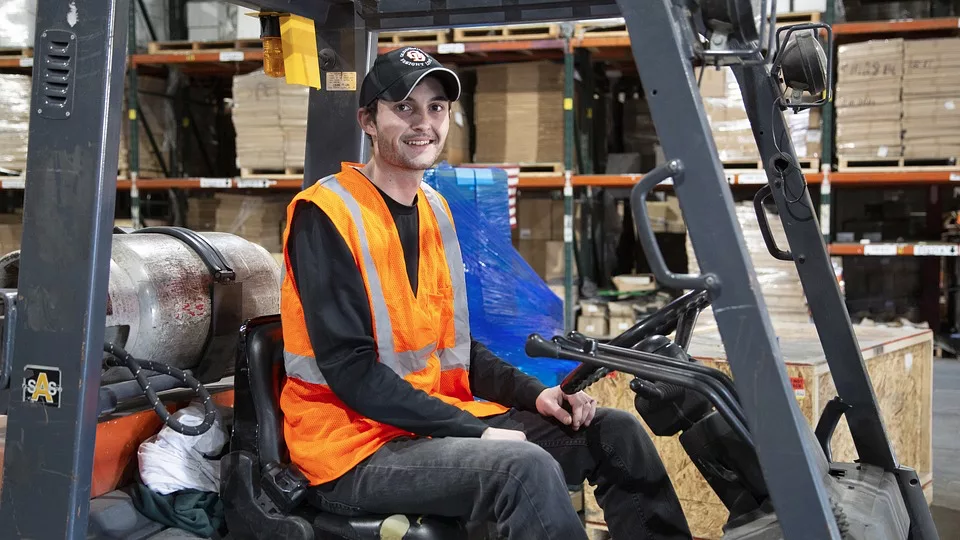
Forklifts alone are responsible for tens of thousands of injuries, as well as one out of every six on-the-job fatalities. Creating established routes for equipment usage can reduce the amount of contact warehouse employees have with machinery.

There may be some exceptions to traffic route rules, especially if a piece of equipment ends up needed in an area outside of its normal operational zone, but under most circumstances, forklifts and other vehicles should stick to their assigned routes.


Create a flow simulation

Finding the perfect flow in any given warehouse is never easy. Until 3D modeling programs became more common, it was often a case of trial and error, tweaking things until they worked smoothly.

Today, that sort of time-wasting experimentation is no longer necessary. It’s easy to create a 3D model of any warehouse and try a number of different scenarios without having to shift so much as a single shelf or tape line.

There can be a bit of a learning curve with these programs, but when it comes to creating a warehouse traffic plan, they quickly become an invaluable tool.


Understand the “rules of the road”

We’re going to use a lot of traffic analogies here, but when it comes down to it, creating a warehouse traffic plan really isn’t much different from planning out a city’s traffic pattern. That means implementing and enforcing your own rules of the road.

The Occupational Safety and Health Administration (OSHA) or your local state workplace safety officials may already have their own rules of the road designed for forklift safety. If that’s the case, then most of the work has already been done for you, and all that’s left to do is enforce them.

If there aren’t already rules in place, take the time to consider the “What If’s” to create a comprehensive set of rules to keep both operators and workers safe.


Enforce speeding restrictions

Just because a forklift has a top speed doesn’t mean you have to reach it. As with most cars, the top speed on the speedometer indicates how far the engine can be pushed, not how fast it should be driven under normal circumstances.

Consider also the amount of time it takes for a forklift to come to a complete stop. These beasts can’t stop on a dime. A forklift traveling at just 7mph can take a full 16 feet to stop. At 9 mph, that distance increases to 21 feet. They aren’t capable of stopping fast enough to protect someone who steps out in front of them, and that can lead to accidents or deaths. Set a safe speed limit and strictly enforce it.


Keep signage updated

Speed limit, directional, and caution signs aren’t just for the highways and byways of the world. Appropriate signage should be posted throughout the warehouse for both operators and pedestrians.

No-go zones where pedestrians are not allowed should be clearly marked. Instructional signs for drivers should also be clearly posted, whether they contain the speed, a map of the traffic route, or even instructions to honk at blind corners to alert pedestrians and other forklifts to their presence.

This signage should also be updated frequently, and everyone on the team should be informed of any changes as soon as possible. Signage, both on the road and in a warehouse, is only useful if people actually read it and understand what it says.


Separate vehicles and pedestrians

Modern robotics have come a long way and there are many situations where humans and heavy equipment can work side by side. A standard warehouse, with forklifts and human operators, generally isn’t one of them. The best way to keep pedestrians safe is to completely remove them from the path of the forklifts and other equipment. There may be situations where these two paths cross, but it should not be a standard operating procedure.

The best and safest choice when creating a warehouse traffic plan is to give forklifts and pedestrians their own operational spaces. If their paths ever have to cross, serious considerations need to be in place to ensure there are no accidents.


Establish a warehouse traffic management plan

When you have soft and squishy humans working alongside heavy equipment, safety is always going to be paramount. Warehouse traffic plans are just one part of that.

KEYWORDS: warehouse safety

Share This Story

Looking for a reprint of this article?
From high-res PDFs to custom plaques, order your copy today!

Evelyn Long is the editor-in-chief of Renovated, a real estate and construction resource for industry professionals.

Recommended Content

JOIN TODAY
to unlock your recommendations.

Already have an account? Sign In

  • forklift safety

    Exploring the latest technologies in forklift safety

    With more staff and more stock in warehousing now more...
    Facility Safety
    By: Josh Cramer
  • welding

    All about welder’s flash or arc eye

    A flash burn is a painful inflammation of the cornea,...
    Environmental Health and Safety
  • dangerous jobs

    The 10 most dangerous jobs in the U.S.

    On-the-job deaths have been rising — hitting the highest...
    Government Safety Regulations
    By: Benita Mehta
Manage My Account
  • eMagazine Subscriptions
  • ISHN Newsletter & Other Newsletter Alerts
  • Online Registration
  • Manage My Preferences
  • Subscription Customer Service

More Videos

Sponsored Content

Sponsored Content is a special paid section where industry companies provide high quality, objective, non-commercial content around topics of interest to the ISHN audience. All Sponsored Content is supplied by the advertising company and any opinions expressed in this article are those of the author and not necessarily reflect the views of ISHN or its parent company, BNP Media. Interested in participating in our Sponsored Content section? Contact your local rep!

close
  • man wearing the the Sundström SR200 Full Face Mask Respirator
    Sponsored byOHD

    5 Fit Testing Mistakes That Could Cost You

  • This image shows Magid AcuSpex polarized blue mirrored safety glasses.
    Sponsored byMagid Glove and Safety

    Construction PPE Guide: What Crews Need for Each Task

  • lone worker in confined space
    Sponsored byAlphasense Ltd.

    GET THE LEAD OUT of your Safety Oxygen Sensors!

Popular Stories

SpaceX 7 launch

OSHA Investigating Fatal Fall at SpaceX Starbase

Automated loading dock equipment

After March 2026 Rivian Death, Safety Managers Reassess Loading Dock Systems Under OSHA's Warehouse Emphasis Program

chemical safety

It Was Just Sugar: Catastrophic Safety Failures in Louisville

top 10 most dangerous jobs

Poll

Seasonal Readiness

With the federal heat stress prevention rule on the horizon, which area of your safety program needs the most attention?
View Results Poll Archive

Products

Surviving an OSHA Audit A Management Guide, 2nd Edition

Surviving an OSHA Audit A Management Guide, 2nd Edition

See More Products

ISHN Podcasts

Related Articles

  • ishn0821-Stern-mainpic.jpg

    Safety pros can learn about how to maintain a civil workplace from anti-bullying policies at big universities

    See More
  • Eye protection training

    How to Build and Maintain a Safety Culture

    See More
  • Warehouse

    How to maintain your warehouse floor to prevent accidents

    See More

Related Products

See More Products
  • Top Ten Pitfalls in OSHA Recordkeeping and How to Avoid Them

  • A Basic Guide to RCRA—Understanding Solid and Hazardous Waste Management, Second Edition

See More Products

Related Directories

  • New Pig

    The world leader in absorbent products, New Pig provides innovative products to help maintain cleaner, safer, more productive work environments.
  • A V Systems Inc.

    MIRS Online collects and manages data for your SARA, TRI, CAA, CWA, RCRA, SDS management and OSHA hazard communication reporting needs.
×

Become a Leader in Safety Culture

Build your knowledge with ISHN, covering key safety, health and industrial hygiene news, products, and trends.

JOIN TODAY
  • RESOURCES
    • Advertise
    • Contact Us
    • Directories
    • Manufacturing Division
    • Store
    • Want More
  • SIGN UP TODAY
    • Create Account
    • eMagazine
    • Newsletters
    • Customer Service
    • Manage Preferences
  • SERVICES
    • Marketing Services
    • Reprints
    • Market Research
    • List Rental
    • Survey/Respondent Access
  • STAY CONNECTED
    • LinkedIn
    • Facebook
    • YouTube
    • X (Twitter)
  • PRIVACY
    • PRIVACY POLICY
    • TERMS & CONDITIONS
    • DO NOT SELL MY PERSONAL INFORMATION
    • PRIVACY REQUEST
    • ACCESSIBILITY

Copyright ©2026. All Rights Reserved BNP Media, Inc. and BNP Media II, LLC.

Design, CMS, Hosting & Web Development :: ePublishing