Are you competent on mold and other OHS science topics?
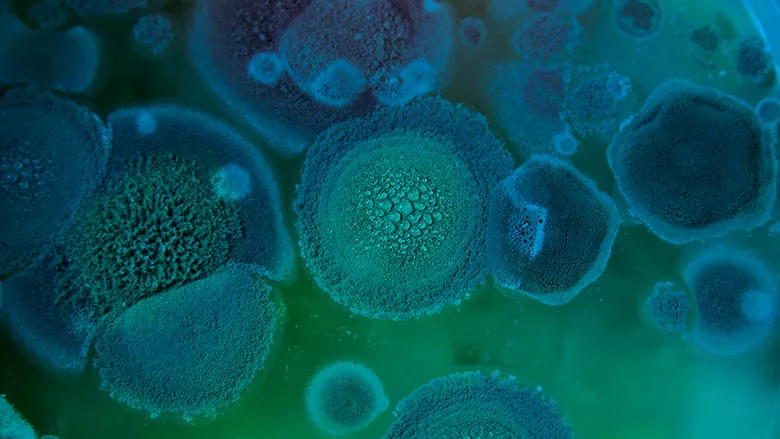
Photo credit: Anna_Gavrylova / iStock / Getty Images Plus
This past August 2024, I accompanied an environmental consultant on a visit to an older multi-floor government building where several occupants believed the presence of mold caused or contributed to their health problems. My presence was necessary because the building manager required that a Certified Industrial Hygienist® CIH® provide an opinion on the health complaints.
Limited mold was observed, and I did not find any other indoor contaminants or activities that would cause or contribute to occupant’s alleged health problems. The environmental health consultant produced a five-page report to his client detailing our findings and conclusions. Case closed? Not so fast.
Another opinion
Influential building occupants did not like the findings and conclusions within our report. Another firm was contracted to evaluate the problem. This second firm’s 38-page report on mold presence in the building looked impressive. There were more than a dozen pages of air and tape sampling results showing the presence of mold. Pictures with arrows showed where mold was discovered. The report included the sampling and analysis for over a dozen spore types from A (Alternaria) to Z (Zygomycetes) along with many other possible contaminants such as skin cells, insect fragments and pollen. The report included many recommendations to remediate mold, including removing sections of the roof’s rubber surface to see if mold was hidden under the membrane. The report’s findings and recommendations appeared ominous. The report included the author’s nearly two-dozen credentials, including being a “Registered Professional Industrial Hygienist” added to the report’s apparent validity.
Preference?
Given this limited information, which report would you recommend being created for your employer? The question has great importance considering that storms such as Hurricane Helene are likely to occur with greater frequency in the future. Water damage to buildings is certain to accelerate mold growth.
To help answer the preference question, go online and see what the EPA and NIOSH have to say about the topic. For example, search “NIOSH Mold, Testing, and Remediation March 12, 2024.” NIOSH states, “There are no health-based standards for mold or other biological agents in indoor air. We do not recommend routine air sampling for mold with building air quality evaluations.”
Mold scam?
The 38-page mold report only has one sentence that has merit, in my opinion. The sentence reads, “Based on our observations and sampling data, [name of firm omitted by me] does not see any reason why the subject building should not be continued to be occupied based upon our experience with similar buildings [locations omitted by me] and our findings for this study.”
Over the past twenty years, I have reviewed many mold sampling reports typical of the 38-page report being discussed. Nearly all of them contain the catch-all sentence “that no health problems were discovered.” They must think the sentence absolves them from legal or moral liability.
One of the first things I look for, where available, to help determine the validity of a mold report is the author’s education. In the 38-page report, the author included that he has a B.S. in Business Administration, he worked on an MBA and has an M.S. in Environmental Management. The author has no formal scientific education. His mind is most focused on business. The most science education he has, by hours of training, appears to be a 40-hour HAZWOPER course.
The limited training the author has specifically on mold is what I refer to as “paint by numbers course and then think they are Rembrandt.” I am almost certain that a monkey could be taught to place a piece of Scotch-like tape over a spot of possible mold, and then have someone send the sample to a biological lab for analysis. It’s a cruel comment, but the visualization is necessary.
Caveat emptor
Mold is everywhere. You are breathing some mold in now. Because science allows that mold can be captured and analyzed, it also allows someone to easily reach the threshold where abuse of science begins. Toss in Latin words provided by the analytical lab such as Cladosporium, Myxomycetes, or Stachybotrys, that few people outside the scientific community understand, only compounds the anguish and uncertainty that the uninformed may experience.
But who is the bad actor in these situations? If you ask someone to sample and find mold, again which is everywhere, why should you fault them for providing that service? If the person providing the service does not cross clear ethical and legal lines, such as using a fake Ph.D. along with valid credentials, such as the CSP® or CIH®, that I battled years ago, they should be allowed to perform the service, in my opinion.
The person who should be faulted may be your reflection in the mirror. How much do you really understand about science?
Science competency
Per Britannica, “science involves a pursuit of knowledge covering general truths or the operations of fundamental laws.” OHS pros should concentrate their science competency in the general topics of biology, chemistry, physics and engineering, where these topics primarily relate to human health and safety. Understanding the social science of human nature is important, too.
For only the second time in its 179-year history, Scientific American magazine endorsed a candidate for president. The editors of SA are very concerned how science may be misused in the future. Regardless of your political leaning, it is critical that OHS pros prioritize opportunities to enhance their science competency. It is no longer just enough to understand science, it is critical that proper use of science be promoted and defended. OHS pros today face far more and significantly more complex science challenges than any OHS pros that came before us.
Falling behind?
Here is a test to determine if you are falling behind on OHS topics:
Looking for a reprint of this article?
From high-res PDFs to custom plaques, order your copy today!