ISHN logo
search
cart
facebook twitter linkedin youtube
  • Sign In
  • Create Account
  • Sign Out
  • My Account
ISHN logo
  • NEWS
    • Today's News
    • Global Safety News
    • Government Regulations
  • PRODUCTS
    • Product Innovations
    • Featured Products
  • TOPICS
    • Environmental Health and Safety
    • Facility Safety
    • Workplace Health
    • Occupational Safety
    • PPE
    • More Topics
  • CONSTRUCTION
  • TECHNOLOGY
  • COLUMNS
    • Best Practices
    • Dave Johnson: What’s going on
    • Editorial Comments
    • Leading Safety
  • MULTIMEDIA
    • ISHN Podcast
    • Videos
    • Cold Stress Education Quiz
    • Webinars
    • White Papers
  • MORE
    • Buyer's Guide
    • Newsletters
    • Convention Companion
    • Polls
    • Events
    • ISHN Store
    • Sponsor Insights
  • EMAGAZINE
    • eMagazine
    • Archived Issues
    • Contact
    • Advertise
  • JOIN TODAY!
Today's Safety NewsOccupational SafetySafety Industry White PapersWorkplace Health

Blackline Safety unveils whitepaper on navigating radiation risks for fire-hazmat, safety workers
Blackline Safety whitepaper fire

Credit: Blackline Safety

November 14, 2024

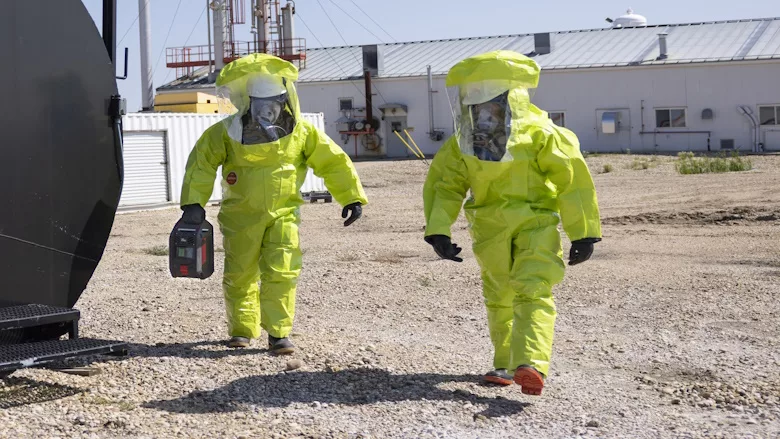
Blackline Safety has released a new whitepaper entitled Navigating Radiation Risks: Key Concepts for Protecting Workers and Responders in an effort to mitigate radiation exposure for fire-hazmat and first responder teams. 
 
 Designed as a strategic playbook, the whitepaper aims to help teams assess and react to the rising threat of radiation exposure to better protect workers, the public and the environment.
 
 “For those on the front line, such as first responders, hazmat teams, and workers in industrial fields like mining and oil and gas, there’s an increased risk of accidental exposure to dangerous levels of radiation,” said Christine Gillies, Chief Product and Marketing Officer at Blackline Safety. “Quick thinking and robust emergency protocols are essential to ensure worker and community safety.” 
 
 “This whitepaper responds to a growing industry need to educate workers on the different types of radiation, early detection strategies, and approaches to address the broad spectrum of radiation risks, faster and smarter,” she said.
 
Key insights from the whitepaper:
 
Radiation can be divided into four main categories: alpha, beta, neutrons, and electromagnetic waves (or gamma rays), and identified as non-ionizing or ionizing (nuclear) radiation and particle or waveform. It’s important to understand the differences to best respond to risks.
 
There are two general categories where nuclear radiation can be found: naturally occurring radioactive material (to which we’re exposed simply by breathing the air around us or ingesting food and water) and artificial sources (including medical imaging such as X-rays and CT scans, nuclear energy and weapons, and dirty bombs), and each has varying effects on the body.
 
Radiation is measured differently in the U.S. than internationally for the three forms of radiation measurement: radioactivity, absorbed dose, and effective dose. The U.S. measures radiation in millirems (mrem) per year, while most other countries measure radiation in millisieverts (mSv) per year. Being familiar with the different measurements enables workers to gauge overall health effects.
 
Gamma radiation cannot be detected through sight or taste. Technology is needed to help determine its presence and develop policies and procedures to deal with how gamma radiation levels are monitored and what steps need to be taken in case of a radiation emergency. There are several types of gamma radiation technologies currently available, each with different uses, advantages, and disadvantages.
 
While our bodies can take in nominal levels of naturally occurring gamma radiation from the surrounding environment, they are not equipped to handle increased exposure levels without incurring severe, life-long damage to our health. For those areas where gamma radiation presents risks, radiation safety plans are critical to ensure the three pillars of radiation protection – time, distance, and shielding. The use of technology plays a key role in worker and community safety, and area monitoring – such as Blackline Safety’s newly-released EXO 8 Gamma, the only direct-to-cloud area monitor capable of detecting up to eight gases and gamma radiation – has been proven effective as one of the first lines of defense. 
 
 Download the full whitepaper free of charge here.
 

KEYWORDS: emergency responders radiation

Share This Story

Looking for a reprint of this article?
From high-res PDFs to custom plaques, order your copy today!

Recommended Content

JOIN TODAY
to unlock your recommendations.

Already have an account? Sign In

  • forklift safety

    Exploring the latest technologies in forklift safety

    With more staff and more stock in warehousing now more...
    Workplace Training Strategies
    By: Josh Cramer
  • welding

    All about welder’s flash or arc eye

    A flash burn is a painful inflammation of the cornea,...
    Environmental Health and Safety
  • dangerous jobs

    The 10 most dangerous jobs in the U.S.

    On-the-job deaths have been rising — hitting the highest...
    Occupational Safety
    By: Benita Mehta
Manage My Account
  • eMagazine Subscriptions
  • ISHN Newsletter & Other Newsletter Alerts
  • Online Registration
  • Manage My Preferences
  • Subscription Customer Service

More Videos

Sponsored Content

Sponsored Content is a special paid section where industry companies provide high quality, objective, non-commercial content around topics of interest to the ISHN audience. All Sponsored Content is supplied by the advertising company and any opinions expressed in this article are those of the author and not necessarily reflect the views of ISHN or its parent company, BNP Media. Interested in participating in our Sponsored Content section? Contact your local rep!

close
  • man wearing the the Sundström SR200 Full Face Mask Respirator
    Sponsored byOHD

    5 Fit Testing Mistakes That Could Cost You

  • This image shows Magid AcuSpex polarized blue mirrored safety glasses.
    Sponsored byMagid Glove and Safety

    Construction PPE Guide: What Crews Need for Each Task

  • lone worker in confined space
    Sponsored byAlphasense Ltd.

    GET THE LEAD OUT of your Safety Oxygen Sensors!

Popular Stories

SpaceX 7 launch

OSHA Investigating Fatal Fall at SpaceX Starbase

Automated loading dock equipment

After March 2026 Rivian Death, Safety Managers Reassess Loading Dock Systems Under OSHA's Warehouse Emphasis Program

psychology in the workplace

Most Workplaces Measure Psychological Safety, Ignoring Psychosocial Risks

top 10 most dangerous jobs

Poll

Seasonal Readiness

With the federal heat stress prevention rule on the horizon, which area of your safety program needs the most attention?
View Results Poll Archive

Products

Surviving an OSHA Audit A Management Guide, 2nd Edition

Surviving an OSHA Audit A Management Guide, 2nd Edition

See More Products

ISHN Podcasts

Related Articles

  • Blackline Safety G6 Enhancements 3.jpg

    Blackline Safety unveils new and improved features for G6 Single-Gas Detector

    See More
  • Blackline software

    Blackline Safety Unveils New Software Upgrades at National Safety Congress & Expo 2025

    See More
  • Blackline Safety-Access Technology Photo.jpg

    Blackline boosts safety protection for workers in confined spaces during turnaround and shutdowns

    See More

Related Directories

  • SafetyLine Lone Worker

    SafetyLine Lone Worker helps companies monitor the status of workers who are remote, alone, or working in hazardous situations. We are an automated check-in monitoring and emergency notification service. SafetyLine uses its communications infrastructure to ensure that workers have comprehensive monitoring, 24/7, without the need for costly monitoring centers.
×

Become a Leader in Safety Culture

Build your knowledge with ISHN, covering key safety, health and industrial hygiene news, products, and trends.

JOIN TODAY
  • RESOURCES
    • Advertise
    • Contact Us
    • Directories
    • Manufacturing Division
    • Store
    • Want More
  • SIGN UP TODAY
    • Create Account
    • eMagazine
    • Newsletters
    • Customer Service
    • Manage Preferences
  • SERVICES
    • Marketing Services
    • Reprints
    • Market Research
    • List Rental
    • Survey/Respondent Access
  • STAY CONNECTED
    • LinkedIn
    • Facebook
    • YouTube
    • X (Twitter)
  • PRIVACY
    • PRIVACY POLICY
    • TERMS & CONDITIONS
    • DO NOT SELL MY PERSONAL INFORMATION
    • PRIVACY REQUEST
    • ACCESSIBILITY

Copyright ©2026. All Rights Reserved BNP Media, Inc. and BNP Media II, LLC.

Design, CMS, Hosting & Web Development :: ePublishing