3 ways safety training is evolving to meet today’s needs
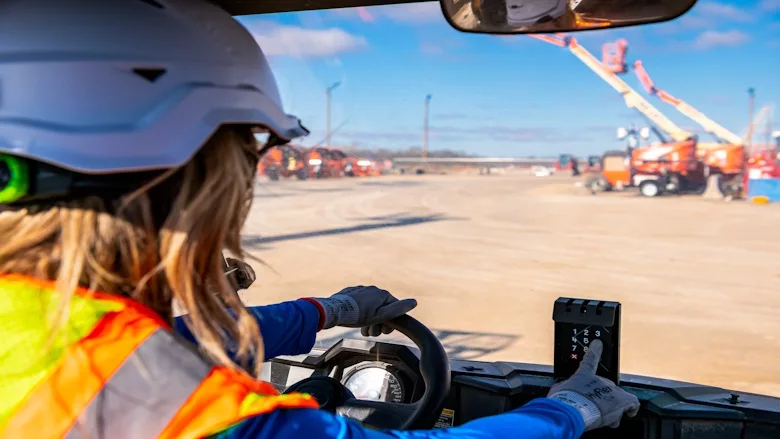
Credit: United Rentals
Safety training is critically important as work-related accident and injury rates remain stubbornly high. According to the Bureau of Labor Statistics, 5,486 workers died from injuries in the United States in 2022, a 5.7% increase from the previous year. In the same year, fatalities due to contact with objects and equipment hit the highest levels since 2018.
As corporate leaders and safety managers seek to reduce these incidents in industrial facilities and on construction sites, safety training is evolving to meet the moment. Here’s a look at three shifts that are making safety training more effective and efficient.
Safety training is becoming an investment, not an expense
The very idea of safety training and its role has undergone a significant transformation. Workers were once “punished” with safety training after being involved in a safety incident. Today, there’s a growing emphasis on building and nurturing a culture of safety on worksites.
Successful safety cultures protect the health of employees while guarding against accident-related productivity losses and fines for noncompliance. More companies are viewing regular, ongoing safety training as an essential investment in the business and its people.
Larger companies are leading this trend and creating a trickle-down effect on smaller companies who subcontract for them. As employees at smaller companies gain exposure to best practices at these worksites, they begin to value them. Such exposure is one of the factors driving increased demand from workers for safer working conditions and the training required to help them do their jobs safely and effectively.
Companies that offer ongoing training as part of an overall commitment to employee development and support are gradually becoming employers of choice. Safety managers can leverage this phenomenon to improve recruitment and retention by highlighting the training opportunities they make available.
Digital training is increasing flexibility and convenience
Digital natives who’ve risen to leadership positions have accelerated the adoption of digital safety training, which gained momentum during the COVID-19 pandemic. While in-person training remains a convenient way to train large groups of workers located in the same place, digital classes are making safety training more flexible and convenient for both workers and employers.
Providers of safety training courses are broadening their offerings of two types of digital classes: online and webinar-style. Both types have distinct advantages.
With online courses, also called e-learning courses, workers who are comfortable with computers can complete the training at their convenience and at their own pace. They can spend as much or as little time on each module as needed to fully understand the material. Some training providers are updating their online courses, making them more engaging and interactive to boost their effectiveness.
Virtual training, which is conducted via a videoconferencing link and features a live trainer, is a fast-growing training option. These classes require little in the way of computer skills, and trainers can interact with students, asking and answering questions and encouraging participation. Virtual training allows companies to provide the same level of training from the same trainer to workers in different locations at the same time. It is especially useful for workers who travel frequently as part of their job, including safety trainers. As demand for virtual training grows, training providers are ramping up to meet it.
For equipment operators seeking operator certification or recertification, online and virtual classes that teach the theory portion of training are followed by in-person skills training and evaluation.
Multilingual training is boosting comprehension
OSHA requires companies to offer safety training in a manner or language that workers can understand. Increasingly, that means providing training in Spanish as well as other languages. According to the Bureau of Labor Statistics, Hispanic and Latino groups make up nearly 20% of the U.S. labor force, and that percentage is projected to rise.
Providing safety training in the language workers understand best makes training more effective. It’s an investment that can pay off in reduced injury rates, a greater sense of appreciation among employees and potentially, lower turnover rates.
Leading training providers are beginning to offer more courses, including online courses, in languages other than English. Digital training is an effective way to train workers in their native language when a bilingual trainer isn’t available locally for in-person training.
Improved training, improved outcomes
Even as equipment manufacturers advance the safety technology available on machines, safety training remains the surest way to reduce accident and injury rates on jobsites.
Providing relevant, ongoing training for workers at all levels, from new hires to managers, sets employees up for success and contributes to a culture that prioritizes safety over other business goals. As viewpoints on safety training evolve and workforce demographics change, so does the training offered by leading vendors. New training formats and courses available in multiple languages are helping companies deliver training when, where and how it’s needed. When safety improves, everyone wins.
Looking for a reprint of this article?
From high-res PDFs to custom plaques, order your copy today!