AI Products Making Manufacturing Safer, Smarter, Greener

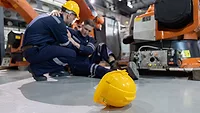
Photo: NanoStockk / iStock / Getty Images Plus
Recent advancements in manufacturing are reshaping industries, driven by artificial intelligence (AI), agile methodologies, and additive manufacturing. These innovations are not only optimizing production but also presenting opportunities to enhance occupational health and safety (OHS). By integrating these tools into product development, companies can mitigate workplace hazards, improve worker safety, and reduce environmental risks. Furthermore, the role of predictive analytics and real-time monitoring in ensuring workplace safety is becoming increasingly significant.
The Three A’s of Product Development
1. Artificial Intelligence: The Engineer’s New Companion
AI is revolutionizing product development by assisting engineers in decision-making, optimizing designs, and predicting performance outcomes. Key applications include:
- Generative Design: AI-driven tools create optimized product designs while considering material properties, chemical compositions, and sustainability factors.
- AI-Powered Decision Support: AI analyzes large datasets to predict performance outcomes and recommend design improvements. AI-driven simulation tools can run thousands of tests rapidly, expediting product safety evaluations.
- Human-AI Collaboration: AI assists engineers by automating analysis, CAD optimizations, and providing expert design suggestions, enhancing both productivity and safety.
- Customer-Centric Design: AI extracts insights from product reviews and customer feedback to refine designs, ensuring safety and usability.
- Real-Time Hazard Detection: AI-powered cameras and sensors can detect workplace hazards such as improper equipment use, air quality issues, or potential fire risks, reducing the likelihood of accidents.
2. Agile Methodologies: Driving Innovation and Safety
Originally a software development approach, agile methodologies are now transforming hardware development. These principles enhance OHS by:
- Continuous Prototyping: Digital twins and rapid prototyping allow engineers to test safety features early in development, reducing exposure to hazardous conditions.
- Integrated Digital Workflows: Cloud-native platforms facilitate seamless collaboration, ensuring safety standards are integrated throughout the design and manufacturing processes.
- Adaptive Supply Chains: Agile tools help companies quickly adjust to supply chain disruptions, ensuring consistent access to safe and compliant materials.
- Customer Feedback Loops: Real-time interaction with digital prototypes enables early detection of potential safety concerns before mass production.
- Safety-Focused Iteration: Agile processes enable teams to rapidly iterate safety features and compliance measures, reducing risks in new product development.
3. Additive Manufacturing: Speed, Versatility, and Safety
Additive manufacturing (AM), or 3D printing, is advancing in speed, material diversity, and precision. These innovations contribute to OHS by:
- Faster Prototyping: New 3D printers operate significantly faster, allowing for rapid safety testing and multiple design iterations within shorter time frames.
- Mass Customization: AI-driven customization ensures ergonomic designs tailored to user safety needs, such as medical implants and protective gear.
- Distributed Manufacturing: Localized production reduces transportation risks and environmental impact, leading to safer working conditions.
- Hybrid Manufacturing Processes: Combining additive and traditional manufacturing allows for greater precision in creating complex, safety-enhanced components.
- Eco-Friendly Materials: The rise of biodegradable and non-toxic materials in additive manufacturing helps reduce workplace exposure to harmful substances.
Redefining ROI in an AI, Agile, and Additive-Driven Economy
To remain competitive, companies must shift their focus from short-term gains to long-term value creation. Key aspects include:
- Multimodal Data Integration: Leveraging AI to extract actionable safety insights from diverse data sources.
- Breaking the "Data Wall": Enhancing transparency and accessibility of safety data across all stages of product development.
- Sustainable Innovation: Ensuring that new technologies not only improve efficiency but also reinforce workplace safety and environmental sustainability.
- Enhanced Compliance Tracking: AI-enabled tools allow for real-time tracking of regulatory compliance, reducing the risk of violations and fines.
The Intersection of AI, Agile, and Additive Manufacturing
The most transformative innovations will emerge at the convergence of these three technologies. Imagine a future where:
- AI generates safety-optimized designs tailored for additive manufacturing.
- Agile teams collaborate in real time through cloud-based platforms, rapidly iterating on safer product designs.
- Additive manufacturing enables faster, waste-free production with enhanced workplace safety measures.
- AI-integrated sensors continuously monitor workplace conditions and automatically trigger safety alerts when needed.
Conclusion
Embracing AI, agile methodologies, and additive manufacturing as strategic tools rather than quick fixes will unlock new opportunities for innovation and OHS advancements. Companies that integrate these technologies into their workflows will not only gain a competitive edge but also create safer, more sustainable workplaces for the future. The ability to predict risks before they occur, iteratively refine safety measures, and manufacture using safer materials will redefine the future of workplace safety.
References
Jon Hirschtick, "Product Development Predictions for 2025: AI, Agile, Additive," Industry Week, Jan. 24, 2025.
Pankaj Chawla, "Redefining ROI in an AI-Driven Economy: Predictions for 2025," Forbes, Jan 31, 2025.
Looking for a reprint of this article?
From high-res PDFs to custom plaques, order your copy today!