ISHN logo
search
cart
facebook twitter linkedin youtube
  • Sign In
  • Create Account
  • Sign Out
  • My Account
ISHN logo
  • NEWS
    • Today's News
    • Global Safety News
    • Government Regulations
  • PRODUCTS
    • Product Innovations
    • Featured Products
  • TOPICS
    • Environmental Health and Safety
    • Facility Safety
    • Workplace Health
    • Occupational Safety
    • PPE
    • More Topics
  • CONSTRUCTION
  • TECHNOLOGY
  • COLUMNS
    • Best Practices
    • Dave Johnson: What’s going on
    • Editorial Comments
    • Leading Safety
  • MULTIMEDIA
    • ISHN Podcast
    • Videos
    • Cold Stress Education Quiz
    • Webinars
    • White Papers
  • MORE
    • Buyer's Guide
    • Newsletters
    • Convention Companion
    • Polls
    • Events
    • ISHN Store
    • Sponsor Insights
  • EMAGAZINE
    • eMagazine
    • Archived Issues
    • Contact
    • Advertise
  • JOIN TODAY!
Safety Technology

Smarter, Safer Workplaces: Inside the AI-Sensor Safety Revolution
By Herman DeBoard
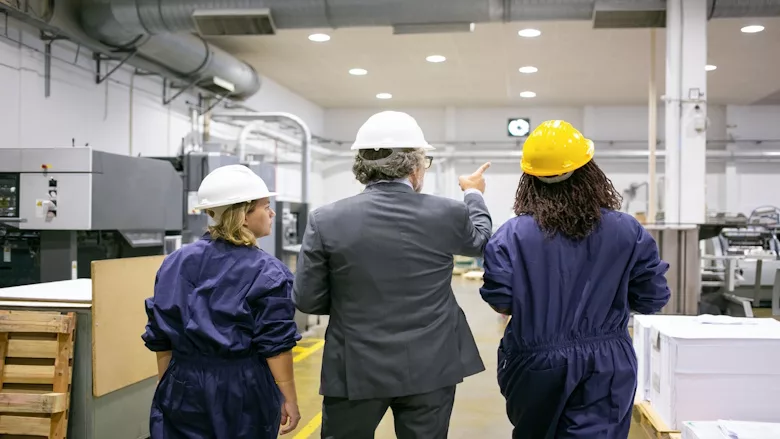
Factory floor
HUVR
August 12, 2025

Decades of manual processes and delayed responses have hindered our efforts to create safe workplaces. To succeed, human security teams needed a smarter and faster ally. 

With this in mind, industries like manufacturing, construction, and logistics are now turning to artificial intelligence. Together, human security teams and AI systems are preventing accidents before they happen.


AI monitoring enhances workplace safety with real-time hazard detection

In the US alone, a worker suffers an injury every seven seconds. That amounts to 12,900 each day and 4.7 million each year. Even today, many organizations still rely on outdated equipment to monitor for these safety incidents and slow, paper-based processes to report them.

AI takes on hazard detection by processing a flood of real-time data from sensors embedded in machinery and environmental monitors. It identifies patterns and flags potential risks before dangerous incidents can occur. For example, if a machine sensor detects unusual vibrations, the AI can cross-reference historical data and immediately alert teams to shut down the faulty equipment for inspection.

AI doesn’t just analyze machines. Wearable devices and sensors assess fatigue levels, training gaps, and environmental conditions to predict worker safety accurately. Whenever an employee is assigned a hazardous task, the AI evaluates all of the factors involved. Based on its analysis, it might recommend additional training or suggest a break, safeguarding workers in ways humans simply can’t match at scale.

Numerous workplace examples of this new technology demonstrate how AI can help keep employees safer. Some workers in physically demanding jobs are beginning to wear exoskeletons that interpret biometric data to lend assistance when they detect muscle and joint strain. During work with heavy lifting or repetitive motion, these devices reduce workplace injuries by up to 83%.

Additionally, there are new smart helmets, boots, and vests equipped with integrated sensors. These actively monitor environmental conditions and health metrics. They flag hazards such as exposure to toxic gases or extreme temperatures and alert workers the moment danger arises.

Unlike human security teams, AI can continuously monitor employee safety throughout the entire facility. Computer vision technology utilizes cameras and AI algorithms to monitor workplace activities and instantly detect risks. These systems notify supervisors of potential dangers, such as trip hazards or employees not wearing safety equipment. Their real-time alerts prevent injuries on the spot and initiate training that minimizes future risk.


Tomorrow’s compliance is continuous AI monitoring and automated reporting

Changing workplace regulations make health and safety compliance increasingly complex. When organizations scramble to adapt their protocols, they risk penalties and, worse still, compromised worker safety. This is where AI proves invaluable.

AI systems now continuously monitor workplace environments and ensure compliance in real-time. By automatically tracking regulatory changes and updating safety protocols, companies reduce their reliance on reactive measures. If OSHA introduces new rules on machine guarding or toxic chemicals, AI adjusts tools and training programs promptly, ensuring alignment while freeing up employees to focus on other priorities.

Another time-consuming aspect of compliance is documentation. Collecting data after incidents occur often leads to human error. However, with prompt and accurate documentation from AI, we can ensure that data is useful for safety audits and future analysis. With AI automating monitoring and documentation, companies are able to stay far ahead of regulatory standards.


Why AI security is a game-changer for workplace culture

AI security systems are an amazing upgrade to workplace safety, but they cannot do the job alone. In fact, they are primarily there to enhance the impact of human professionals. By automating routine tasks like incident documentation and data analysis, AI frees safety managers to observe site operations and engage directly with workers.

These AI security systems actually go one step further by using company-specific data to tailor safety education and training programs that address each workplace’s unique risks. Whether it’s refining training for forklift operators or preparing workers for extreme weather events, AI uses current data to better prepare employees for the realities of their roles.

Integrating AI can utterly change how we approach workplace safety. Real-time hazard detection is helping companies prevent accidents before they happen, automated monitoring is transforming OSHA compliance, and predictive analytics is charting a path to proactively eliminate risks long before they materialize.

KEYWORDS: artificial intelligence (AI) sensors smart technology

Share This Story

Looking for a reprint of this article?
From high-res PDFs to custom plaques, order your copy today!

Herman DeBoard is CEO at Huvr .

Recommended Content

JOIN TODAY
to unlock your recommendations.

Already have an account? Sign In

  • forklift safety

    Exploring the latest technologies in forklift safety

    With more staff and more stock in warehousing now more...
    Workplace Training Strategies
    By: Josh Cramer
  • welding

    All about welder’s flash or arc eye

    A flash burn is a painful inflammation of the cornea,...
    Environmental Health and Safety
  • dangerous jobs

    The 10 most dangerous jobs in the U.S.

    On-the-job deaths have been rising — hitting the highest...
    Transportation Safety
    By: Benita Mehta
Manage My Account
  • eMagazine Subscriptions
  • ISHN Newsletter & Other Newsletter Alerts
  • Online Registration
  • Manage My Preferences
  • Subscription Customer Service

More Videos

Sponsored Content

Sponsored Content is a special paid section where industry companies provide high quality, objective, non-commercial content around topics of interest to the ISHN audience. All Sponsored Content is supplied by the advertising company and any opinions expressed in this article are those of the author and not necessarily reflect the views of ISHN or its parent company, BNP Media. Interested in participating in our Sponsored Content section? Contact your local rep!

close
  • man wearing the the Sundström SR200 Full Face Mask Respirator
    Sponsored byOHD

    5 Fit Testing Mistakes That Could Cost You

  • This image shows Magid AcuSpex polarized blue mirrored safety glasses.
    Sponsored byMagid Glove and Safety

    Construction PPE Guide: What Crews Need for Each Task

  • lone worker in confined space
    Sponsored byAlphasense Ltd.

    GET THE LEAD OUT of your Safety Oxygen Sensors!

Popular Stories

SpaceX 7 launch

OSHA Investigating Fatal Fall at SpaceX Starbase

dust explosion

Tennessee OSHA Issues Record $3.1M Fine After Deadly Explosion at Munitions Plant

Worker Impairment

How to Tell When a Co-Worker is Impaired? A Safety Pro’s Challenge

top 10 most dangerous jobs

Poll

Seasonal Readiness

With the federal heat stress prevention rule on the horizon, which area of your safety program needs the most attention?
View Results Poll Archive

Products

Surviving an OSHA Audit A Management Guide, 2nd Edition

Surviving an OSHA Audit A Management Guide, 2nd Edition

See More Products

ISHN Podcasts

Related Articles

  • ASSP

    Driving safer workplaces: ASSP launches innovative Safety Trekr AI

    See More
  • technology and safety

    AI Products Making Manufacturing Safer, Smarter, Greener

    See More
  • National Safety Council logo 2020

    NSC Invests $300,000 in Next-Generation Solutions for Safer Workplaces

    See More

Related Products

See More Products
  • 1119906652.webp

    Alive and Well at the End of the Day: The Supervisor's Guide to Managing Safety in Operations, 2E

  • fearless world.jpg

    The Fearless World of Professional Safety in the 21st Century

See More Products

Related Directories

  • VelocityEHS

    VelocityEHS is the global leader in EHS & Sustainability software, pioneering human-centered AI to make workplaces safer, faster. Protecting over ten million workers worldwide, our Accelerate® Platform delivers AI-driven innovation across Safety, Ergonomics, Chemical Management, and Operational Risk, and with standalone solutions Contractor Safety & Permit to Work, Environmental Compliance, and Sustainability. With the deepest bench of certified experts, from PhD AI/ML scientists to board-certified ergonomists and safety professionals, VelocityEHS ensures trusted, human-in-the-loop oversight. Recognized as a 2025 Verdantix Green Quadrant Leader and SOC 2 Type II attested, we help companies outpace risk with speed and purpose. Learn more at www.EHS.com.
×

Become a Leader in Safety Culture

Build your knowledge with ISHN, covering key safety, health and industrial hygiene news, products, and trends.

JOIN TODAY
  • RESOURCES
    • Advertise
    • Contact Us
    • Directories
    • Manufacturing Division
    • Store
    • Want More
  • SIGN UP TODAY
    • Create Account
    • eMagazine
    • Newsletters
    • Customer Service
    • Manage Preferences
  • SERVICES
    • Marketing Services
    • Reprints
    • Market Research
    • List Rental
    • Survey/Respondent Access
  • STAY CONNECTED
    • LinkedIn
    • Facebook
    • YouTube
    • X (Twitter)
  • PRIVACY
    • PRIVACY POLICY
    • TERMS & CONDITIONS
    • DO NOT SELL MY PERSONAL INFORMATION
    • PRIVACY REQUEST
    • ACCESSIBILITY

Copyright ©2026. All Rights Reserved BNP Media, Inc. and BNP Media II, LLC.

Design, CMS, Hosting & Web Development :: ePublishing