Opinion
Trump Administration Axes Climate Science Experts, Echoing 'Disinformation Playbook'
A look into why scientists are alarmed and what this means for U.S. climate policy
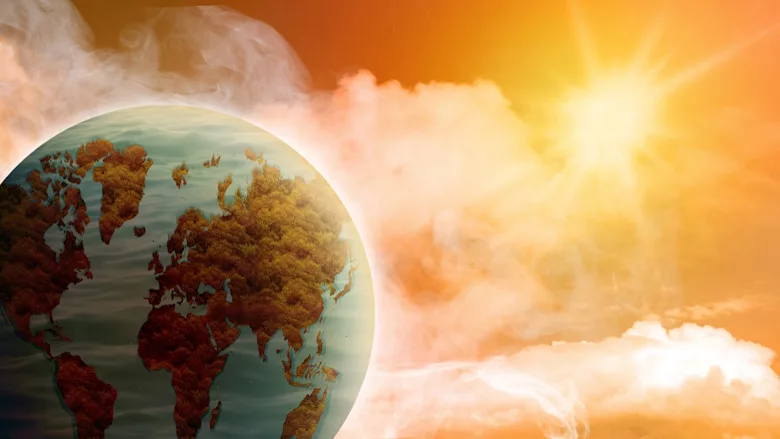
Credit: leolintang / iStock / Getty Images Plus
In late April 2025, the Trump White House quietly dismissed all federal and outside experts — about 400 — who had been working on the Sixth National Climate Assessment (NCA6), a congressionally-mandated, quadrennial synthesis of peer-reviewed climate science that informs federal, state and local planning.
That move, confirmed by an internal email obtained by Reuters, follows earlier cuts to the U.S. Global Change Research Program and the cancellation of NASA’s contract supporting the assessment. With the next NCA due by 2028, its future is now in doubt — and so is the credibility of any replacement effort that omits the very scientists charged with ensuring its integrity.
The Game Plan
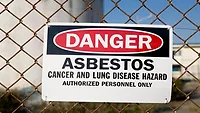
This game plan is nothing new looking at historical case studies. As early as the 1930s, asbestos manufacturers paid for animal studies that showed cancer in mice, then removed all mention of tumors before publishing the results to downplay risk. In 1949, an internal Exxon memo listed “Cancer of Lungs” as likely caused by asbestos, yet companies kept selling insulation products without warning workers or the public. Executives even agreed to redact references to cancer and tumors from official reports, ensuring that life-saving information remained hidden for decades.
The tobacco industry also created public deception. Beginning in the 1950s, tobacco companies secretly funded favorable “research,” then published only redacted or misleading summaries to create the illusion of scientific debate. They coined the “disinformation playbook”— strategies to distort, distract and delay regulatory action —later adopted by chemical and fossil-fuel interests.
On the environmental scene, companies conduct or commission studies showing harm, then classify results as “proprietary” or simply never publish them. Reports are issued with key hazards removed—e.g. cancer references deleted—so that public versions seem risk-free. Industries fund third-party organizations that appear independent but echo corporate talking points, creating an “echo chamber” that muddies the science.
So if you like what is reported — don’t report it at all. These deceptive tactics have been played out over the years. Now, the subject is climate change and the current administration doesn’t like what being written so dismiss the authors and get someone to write something that is less than the truth.
Let’s understand what is happening here:
1. What was dismissed, and why it matters
The National Climate Assessment Process
Congressional mandate: Under the Global Change Research Act of 1990, the U.S. Global Change Research Program (USGCRP) must produce a National Climate Assessment every four years to “assist the Nation … to understand, assess, predict, and respond to human-induced and natural processes of global change.”
Broad participation: Each assessment is steered by a Subcommittee on Global Change Research, involves 14 federal agencies (EPA, NOAA, NASA, DOE, etc.), and draws on hundreds of outside scientists to peer-review and write individual chapters.
April 2025 dismissals
Nearly 400 contributors let go: An email dated April 28 told all NCA6 lead and contributing authors that “the scope of the NCA6 is being evaluated in accordance with the Global Change Research Act of 1990.”
Earlier program cuts: Days before, the administration had disbanded the USGCRP itself and canceled NASA’s support contract with ICF—moves flagged in January as a “reform target” by the conservative Project 2025 blueprint from the Heritage Foundation.
2. Why scientists and communities are alarmed
Loss of critical data for planning
Emergency management impacts: Cities like Houston rely on NCA findings to update flood-and-storm plans; without it, hazard mitigation budgets and land-use decisions lack the latest projections.
Blind spots in local adaptation: Regional chapters (e.g. Southwest drought, Northeast sea-level rise) translate global models into actionable risk assessments for state and local officials. Their removal risks “dangerous blind spots” in resilience planning.
Threat to scientific integrity
Expertise sidelined: Meade Krosby (Univ. of Washington) warns that excluding the very experts who ensure rigorous peer review “undermines the report’s credibility.”
Risk of “fringe” views: Without mainstream climate scientists, any replacement could lean on skeptical or industry-friendly voices, distorting policy guidance.
3. Political and legal context
Project 2025 and regulatory rollback
Heritage Foundation blueprint: Project 2025 specifically calls to “reshape” the NCA by tightening scrutiny of contributors, part of a broader agenda to shrink scientific agencies.
100-day environmental onslaught: In his second term’s first 100 days, President Trump has reversed 140+ environmental rules, gutted NOAA and EPA staffs, and accelerated fossil-fuel leases—moves environmentalists deem “reckless.”
Congressional mandate vs. executive action
Legal requirement: The Global Change Research Act leaves little room for skipping or indefinitely delaying the assessment, but lacks strong enforcement mechanisms.
Potential for litigation: States, cities or NGOs may sue to compel production. Similar suits (e.g. Juliana v. U.S.) have challenged the government’s climate obligations, though the Supreme Court recently declined to hear one such youth-led case.
4. What happens next?
Paths forward
Congressional oversight
Hearings, subpoenas or funding riders could force the administration to restart the NCA process under USGCRP leadership.
Independent publication
Displaced authors are exploring publishing a “shadow” assessment through academic presses or NGOs—a route taken by researchers after Trump’s first term.
Legal challenge
States and municipalities harmed by lack of updated risk data may sue to enforce the 1990 law.
Timeline uncertainties
Next official NCA due by 2027/2028: With NCA5 released November 2023, the clock is ticking on the Sixth Assessment. Any delay beyond 2027 would break a decades-long four-year cadence.
Budget cycle implications: Federal fiscal year 2026 appropriations—now under White House and congressional negotiation — will determine whether any funds remain for climate synthesis.
5. Broader implications for U.S. climate policy
Erosion of evidence-based decision-making: Removing expert voices from foundational reports weakens the scientific underpinning of infrastructure, health, agriculture, and emergency-management policies.
International signal: As the only major economy outside the Paris Agreement, the U.S. risks further isolation if it downgrades its own climate assessments while urging other nations to act.
Economic stakes: The Fifth NCA estimated annual climate-related costs to Americans at $150 billion; without updated projections, insurers, investors and supply chains face heightened financial uncertainty.
In conclusion, by dismissing the very scientists charged with compiling the next National Climate Assessment, the Trump administration has cast doubt on the reliability and continuation of the U.S. government’s flagship climate-risk report. That decision not only conflicts with a clear Congressional mandate but also jeopardizes the evidence used by communities and businesses to prepare for worsening extreme weather, sea-level rise, wildfires and other climate impacts. How Congress, the courts, and the scientific community respond will shape U.S. climate resilience for years to come.
Looking for a reprint of this article?
From high-res PDFs to custom plaques, order your copy today!