Protecting Coal Miners’ Health and Safety: Policy Recommendations
Credit: Jack Corn / The Daily Yonder
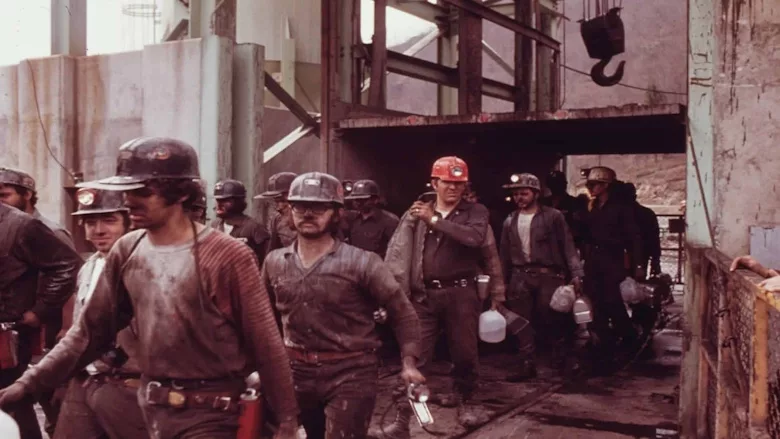
In West Virginia and elsewhere, coal miners live with the legacy of mine disasters and deadly dust diseases. In one recent AP News interview, a former miner held the helmet he wore during the 2010 Upper Big Branch mine explosion — a vivid reminder of mining’s hazards.
He warned that planned cuts to Mine Safety and Health Administration (MSHA) inspections were “idiotic,” giving coal companies a “green light” to compromise the health and safety of miners.
This photo and comment illustrate why safety advocates resist rolling back federal protections — especially as roughly 20% of Central Appalachian coal miners now suffer from black lung disease. A robust health-and-safety policy for miners is urgently needed.
Last week, Trump signed a raft of measures he said would expand coal mining in the US in order to feed the energy demands of hungry datacenters that power artificial intelligence software. The coal industry has shrunk precipitously in recent years, and now represents only about 15 percent of the power generated for the US electrical grid. Natural gas, wind and solar have proved to have a competitive advantage over coal, contributing to its decline, because plants are cheaper to operate, according to Inside Climate News.
Even as coal mining has shrunk, the potential dangers for people who still work in the field remain high. Pneumoconiosis is among the best-known occupational hazards faced by coal miners, but is far from the only risk they face — others include roof collapse, hearing loss and lung cancer, to name a few.
Prevalence and Trends
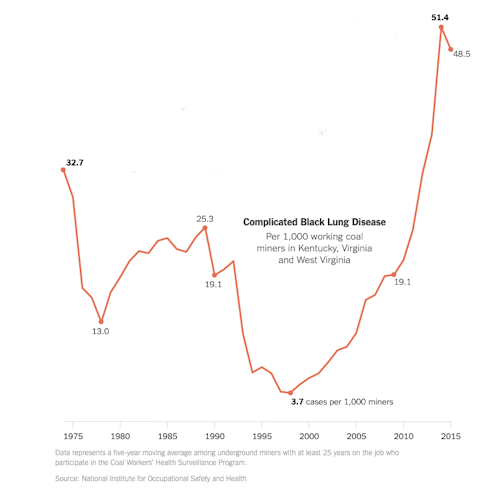
Coal miners have a higher-than-average risk of dying from black lung by virtue of their occupation. One in 10 underground coal miners who worked in mines for at least 25 years had black lung, according to a NIOSH report in 2018. In Central Appalachia, one of the main coal mining regions in the U.S., the rate was 1 in 5.
National Increase: The prevalence of black lung disease among U.S. coal miners has risen, with estimates indicating that approximately 16% of coal workers are affected. This marks a significant increase after decades of improvement.
Central Appalachia Hotspot: In Central Appalachia, the situation is particularly severe. Studies have found that one in five long-tenured miners in this region shows evidence of CWP, highlighting a sharp rise in cases since the late 1990s.
Global Context: In China, the burden is also substantial. By the end of 2021, there were about 450,000 surviving patients with occupational pneumoconiosis, with coal miners being one of the main affected groups
Scott Laney, an epidemiologist at the Coal Workers’ Health Surveillance Program, said the program diagnosed new cases and provided evidence of the disease to miners filing for disability benefits. He estimated that, due to staffing cuts, there are hundreds of thousands of X-rays currently sitting in the basement of the NIOSH facility in Morgantown, West Virginia.
Profound Health Implications
Respiratory Diseases: A study reported that 94% of coal miners had coal mining-related pulmonary diseases, with 40% suffering from pneumoconiosis and 37% from bronchitis .
Mortality Rates: Coal miners have significantly increased odds of death from CWP, chronic obstructive pulmonary disease (COPD), and lung cancer compared to the general U.S. population. This higher mortality has worsened over time, with modern miners facing greater risks than their predecessors.
Rollback in Resources
Nearly 900 of those workers were dismissed from the National Institute for Occupational Health and Safety (NIOSH), including in the agency’s respiratory health division in West Virginia, which specifically oversaw an X-ray screening program for black lung. Doge has also pursued cuts to mine safety by eliminating 34 regional offices of the Mine Safety and Health Administration (MSHA) in 19 states. The deep cuts especially worried those intimately familiar with the suffering caused by pneumoconiosis ‑ such as Greg Wagner, a doctor and former senior adviser at the NIOSH.
Dave Dayton, a miner in Marion County, West Virginia, said he has personally taken advantage of NIOSH’s mobile screenings for lung disease. Many miners work long shifts and would otherwise struggle to see a doctor, he said. “Without NIOSH being there to help us, I don’t know where we’re going and where the miners are going to be without their help,” he said.
Protecting Coal Miner Health
Coal miners are urging President Trump and his administration to reinstate critical health protections after his administration paused the enforcement of a new federal rule aimed at limiting exposure to silica dust — a primary cause of black lung disease. This decision has sparked significant concern, especially as black lung is resurging among younger miners in Central Appalachia.
The delayed rule, introduced by the Labor Department, sought to halve the permissible exposure limit for crystalline silica over an eight-hour shift. This measure was designed to protect miners from the harmful effects of silica dust, which is approximately 20 times more toxic to the lungs than coal dust. The resurgence of black lung disease is particularly alarming among miners in their 30s and 40s, who are increasingly exposed to silica dust as they cut through more rock to access deeper coal seams.
In addition to pausing the silica rule, the Trump administration has implemented significant cuts to health and safety programs. Notably, the National Institute for Occupational Safety and Health (NIOSH) faced substantial layoffs, leading to the suspension of the Coal Workers' Health Surveillance Program (CWHSP) for the first time in over 50 years. This program provides free chest X-rays to miners to detect black lung disease early. Although some NIOSH employees have been temporarily reinstated following public outcry and political pressure, their positions remain uncertain beyond June 2.
The administration's actions have drawn criticism from various quarters. Republican Senator Shelley Moore Capito of West Virginia has appealed to Health and Human Services Secretary Robert F. Kennedy Jr. to reverse the layoffs, emphasizing the vital role these programs play in protecting miners' health.
Enhancing MSHA Oversight and Enforcement
Strong health protections depend on active enforcement. MSHA is mandated by law to inspect every underground coal section quarterly (and surface mines twice a year). Yet proposed budget cuts threaten this. Plans to close 34 MSHA field offices in 19 states would force inspectors to travel farther, delaying inspections and weakening oversight.
In fact, MSHA’s former chief has warned that being understaffed and reducing enforcement “can risk miners’ lives.” After fatal accidents like the Upper Big Branch explosion, MSHA used to conduct “impact inspections” at similar mines; this practice has been halted under current cuts. The administration should stop any office closures, hire more inspectors, and restore impact inspections.
That means filling vacancies (recently 20 inspector posts were unfilled, with hundreds of offers rescinded or take-it-or-leave-it buyouts taken) and reversing hiring freezes. Additional enforcement steps could include stronger penalties for safety violations and more transparent public reporting of mine health data.
Regulating Hazardous Exposures (Silica, Coal Dust, Asbestos)
Coal miners face multiple airborne hazards. MSHA issued a new respirable crystalline silica dust standard in April 2024, cutting the permissible exposure limit to 50 micrograms/m³ (8-hour TWA). This is a historic step to prevent silicosis, but delays and understaffing have hampered enforcement. The Trump administration paused this rule in early 2025; enforcing it must be a priority. Similarly, ensure strict enforcement of the 2014 coal dust rule (1.5 mg/m³ PEL) and modernize compliance tools (for example, require continuous personal dust monitors and rigorous ventilation standards in mines).
Recent data show that per U.S. county overall, there are 4.34 cases of black lung disease and 3.44 deaths as a direct result of it. There are approximately 0.04 deaths per 1,000 US population, and 4 deaths per 100,000 US population; for cases of black lung, 0.11 and 11, respectively. The most well-known areas with a high concentration of black lung disease are Appalachia, which stretches from southern New York state to northern Mississippi and all of West Virginia.
Silica Exposure and Black Lung Disease
Silica dust, particularly crystalline silica, is a major contributor to coal workers' pneumoconiosis (CWP), commonly known as black lung disease. This risk has intensified in recent years as miners cut through more rock to access thinner coal seams, generating fine silica particles that are easily inhaled. Silica is approximately 20 times more toxic than coal dust, leading to severe forms of black lung after even a few years of exposure. The disease has been increasingly diagnosed in younger miners, with a reported 20% prevalence in Central Appalachia. A 2018 investigation by NPR and PBS Frontline revealed that high levels of silica dust have been found in mines frequently since 1986. Workers in Kentucky, Virginia and West Virginia grind through more rock filled with quartz to reach the coal.
Asbestos Exposure in Coal Mining
On asbestos — which can occur in coal strata — MSHA tightened PELs in 2008; the administration should confirm these rules are upheld and consider further limits if scientific evidence warrants. In all cases, the focus should be on engineering controls: mandate water sprays, proper ventilation, and high-quality respirators (NIOSH-approved) in dusty jobs. OSHA and EPA expertise could be tapped to update long-term cancer and toxicity research for miners
Asbestos, a naturally occurring mineral, poses another significant health risk in coal mining. Approximately 15% of U.S. coal mines contain naturally occurring asbestos, and miners can be exposed through disturbed rock formations and contaminated equipment. Asbestos exposure can lead to serious diseases such as asbestosis, lung cancer, and mesothelioma.
The risk is exacerbated in underground mining environments with poor ventilation, where asbestos fibers can become airborne and inhaled. Even minimal exposure levels can be hazardous, and some coal mines recorded asbestos concentrations exceeding regulatory compliance health thresholds.
Combined Health Impacts
Exposure to both silica and asbestos increases the risk of developing pneumoconiosis, a group of lung diseases characterized by inflammation and scarring. These conditions can lead to chronic respiratory issues, disability, and premature death. The resurgence of black lung disease, particularly among younger miners, underscores the critical need for stringent occupational health protections and effective enforcement of safety regulations
In response, the U.S. Department of Labor introduced a regulation requiring mining companies to monitor airborne silica levels and adjust working conditions when excess dust is detected. However, enforcement has been hindered by staffing shortages and policy delays.
Plight of a Coal Worker
The Josh Cochran's story underscores the dire consequences of recent federal policy shifts on coal miner health protections. After working in West Virginia's coal mines since age 22, Cochran was diagnosed with advanced black lung disease at 43. He benefited from the Mine Safety and Health Administration's (MSHA) Part 90 program, which allowed him to transition to a desk job without a pay cut. However, this program, along with others designed to protect miners from black lung disease, is now at risk due to mass layoffs and office closures initiated by the Trump administration and the Department of Government Efficiency, overseen by Elon Musk.
The Coal Workers’ Health Surveillance Program, which provided on-site black lung screenings, has been suspended. Additionally, staffing shortages have impacted the enforcement of new regulations aimed at reducing silica exposure, a significant contributor to black lung disease. These developments are particularly concerning given the resurgence of black lung, especially among younger miners, with a reported 20% prevalence in Central Appalachia.
Despite some NIOSH employees being temporarily recalled, the future of these essential programs remains uncertain. Advocates and former officials warn that the safety rollback endangers miners, especially as efforts to revive the coal industry continue. Cochran's situation highlights the critical need for robust health and safety protections for coal miners. As the coal industry faces resurgence efforts, ensuring the well-being of miners must remain a priority.
Recommendations
Immediately freeze MSHA office closures and reassign inspectors locally. Increase MSHA staffing by rescinding rescinded job offers and replacing buyouts (there were approximately 120 buyouts recently). Resume “impact inspections” at high-risk mines as was standard after serious accidents. Strengthen enforcement by raising fines for repeated or severe health violations and by standardizing MSHA inspector training (as previously recommended by GAO).
Fully implement the new silica dust rule now and fund compliance assistance (training, monitors). Prohibit further delays and give MSHA inspectors the resources to test silica levels at every mine. Keep coal-dust standards at the strict 2014 levels and expand real-time monitoring systems in mines. Review and enforce existing asbestos limits (30 CFR Part 56/71) and issue any new guidance on emerging toxins. Invest in research and development (via DOE or NIOSH grants) for innovative dust-control technologies (e.g. anti-dust chemicals, robotic drilling) and better respirator designs.
Maintain and increase funding for miners’ medical support: ensure the Black Lung Disability Trust Fund and clinics are fully financed. Deploy mobile pulmonary screening vans and establish telehealth links to specialists for remote mining regions. Ensure clinics in coal states (including FQHCs and VA clinics) have training and equipment to screen for black lung and recommend Part 90 transfers. Offer grants to states for community respiratory care (e.g. portable X-ray machines at rural hospitals).
Create an interagency Coal Miner Health Council (DOL, HHS/CDC, DOE, EPA, VA, etc.) to align strategy and funding. For instance, enable NIOSH and MSHA to jointly review disease patterns and inspection needs. Leverage Department of Energy and Appalachian development funds to support miner health infrastructure (clinics, training, tech). Require cooperation: companies benefiting from coal subsidies should contribute to a miner-health fund. Finally, include safety provisions in labor agreements and training grants — for example, OSHA “mine worker” courses funded through union apprenticeships.
Conclusion
Protecting coal miners’ health requires reversing recent rollbacks and actively investing in surveillance, enforcement, and care. By restoring NIOSH screening programs, beefing up MSHA enforcement, and enforcing strict dust standards, the administration can significantly reduce disease and injuries. Adequate funding (via taxes and appropriations) and cross-agency collaboration will sustain these efforts. Aligning them with energy and labor policy — for instance, tying coal subsidies to safety — makes protection of miners a bipartisan goal. Key recommendations include: reinstate and fully fund black lung screening and Part 90 transfer programs; and ensure financing through the coal excise tax and federal budgets. Implementing these steps would demonstrate that U.S. energy independence need not come at the expense of coal workers’ health.
Sources: Contemporary reports from Reuters, AP News, CDC/NIOSH, MSHA, NBC News. Daily Yonder, Mountain State Spotlight and several federal agencies provide the factual basis for these comments and recommendations.
Looking for a reprint of this article?
From high-res PDFs to custom plaques, order your copy today!


.webp?t=1721257160 "download (1).jpg")