Heat’s Hidden Cost: What You Need to Know About Cooling PPE
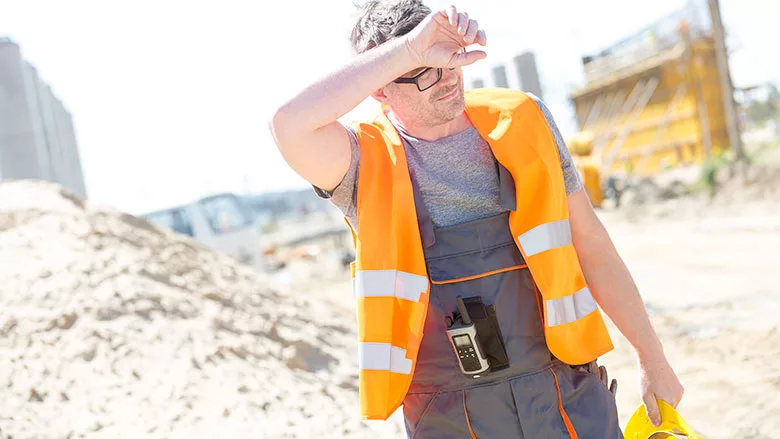
Photo: IPGGutenbergUKLtd / iStock / Getty Images Plus
From bustling construction sites to sweltering factory floors, the impact of excessive heat on the global workforce is undeniable. The International Labour Organization (ILO) estimates that by 2030, more than 2% of total working hours worldwide will be lost each year, either because it is too hot to perform tasks or workers have to operate at a slower pace. The human cost is even more staggering. A study by the Washington Center for Equitable Growth found that between 2001 and 2018, hot temperatures contributed to at least 360,000 workplace injuries in California alone — an average of 20,000 injuries per year.
For safety managers and industrial hygienists, mitigating heat stress requires more than hydration and job rotation. In environments where PPE traps body heat or ventilation is limited, cooling personal protective equipment (PPE) can provide critical relief. The challenge is finding the right gear — balancing cost, comfort, functionality, and compatibility with other safety equipment. Not all cooling PPE is equally effective across diverse conditions, and inappropriate use can introduce new hazards.
Understanding The Risks of Occupational Heat Stress
Heat stress occurs when the body can no longer regulate its internal temperature due to excessive heat exposure. As core temperatures rise, the body reacts with symptoms ranging from mild discomfort (heat rash, cramps) to life-threatening (heat exhaustion and potentially fatal heat stroke).
According to the National Institute for Occupational Safety and Health (NIOSH), several key factors contribute to occupational heat stress:
High Air Temperatures and Humidity: Under these conditions, the air is saturated with moisture, making it harder for sweat to evaporate efficiently. This leads to heat buildup and increased risks of dehydration, heat exhaustion, and heat stroke, especially in physically demanding jobs or poorly ventilated environments.
Direct Sunlight or Radiant Heat Sources: Hot asphalt, furnaces, and industrial machinery significantly increase thermal stress by raising the surrounding temperature and limiting the body's ability to cool itself. This type of heat exposure is particularly dangerous in confined or poorly ventilated spaces.
Non-Breathable PPE: These can trap body heat and restrict airflow, which prevents sweat from evaporating and leads to rapid heat buildup. In extreme cases, prolonged wear can cause dangerous spikes in core body temperature, making workers more susceptible to heat stroke.
Inadequate Hydration or Rest Periods: Without sufficient hydration, the body struggles to replace lost fluids, leading to fatigue, dizziness, and impaired cognitive function. Similarly, insufficient rest periods prevent workers from cooling down, causing heat stress to accumulate and potentially escalate into more severe conditions like heat exhaustion or heat stroke.
Industries such as construction, agriculture, manufacturing, and oil and gas routinely expose workers to these conditions, making heat stress not just a seasonal concern but a daily reality.
Types of Cooling PPE and How They Work
Various types of PPE have different mechanisms and ideal use-case scenarios.
Various types of PPE have different mechanisms and ideal use-case scenarios. Safety managers should evaluate these options based on work conditions such as temperature, humidity, and duration of exposure.
Evaporative Cooling Vests
These lightweight vests are soaked in water and worn over a base layer. As the water evaporates, it draws heat away from the body. They’re most effective in hot, dry environments where evaporation occurs quickly.
- Pros: Affordable, reusable, easy to activate
- Limitations: Less effective in humid conditions; can become heavy when saturated
Phase Change Cooling Vests
These vests use phase change materials (PCMs) that maintain a constant cooling temperature (typically around 58°F) as they change from solid to liquid. They are ideal for humid environments or enclosed spaces where evaporative cooling is less efficient.
- Pros: Effective regardless of humidity, stable cooling effect
- Limitations: More expensive, requires refrigeration or ice packs to recharge
Neck Wraps, Bandanas, and Towels
These accessories cool critical pulse points like the neck, wrists, and forehead. Some are evaporative, while others contain gel or PCM inserts.
- Pros: Inexpensive, highly portable, can be worn with other PPE
- Limitations: Limited coverage area; supplemental rather than primary cooling
Hard Hat Cooling Pads and Inserts
These pads fit inside hard hats and are either evaporative or contain cooling gel. They help reduce heat buildup on the scalp and upper neck — areas with high heat sensitivity.
- Pros: Integrated with mandatory head protection
- Limitations: Cooling duration is shorter than vests or wraps
Moisture-Wicking Base Layers
While not actively cooling, these garments play a key role by moving sweat away from the skin to promote natural evaporation. Many moisture-wicking base layers are designed to be worn under FR or arc-rated gear.
- Pros: Improve comfort and reduce overheating under heavy PPE
- Limitations: Passive cooling only; best used as part of a layered system
Cooling Hard Hat Pad with Neck Shade
This evaporative cooling pad attaches inside a hard hat and extends down to shade the neck, reducing heat exposure from direct sunlight. It activates with water and provides cooling relief for several hours.
- Pros: Easy to use, enhances head and neck cooling, reusable
- Limitations: Requires periodic rewetting for continued effectiveness
Double Bib Hood Cooling Air System
Designed for high-heat industrial environments, this system delivers cooled air directly to the worker’s head and neck through a double-bib hood. It connects to an external air source, making it ideal for extreme conditions like foundries or confined spaces.
Many cooling PPE products are designed with field-specific features, such as adjustable fits, FR-rated materials, and compatibility with fall protection harnesses. Some are recharged with cold packs or water, while others can be reused throughout the day depending on ambient conditions.
Safety and Usage Considerations
While cooling PPE enhances comfort and heat tolerance, it must never compromise a worker’s safety or interfere with essential PPE. Before implementation, safety managers should conduct a hazard assessment that accounts for:
- Compatibility with FR, chemical, or electrical arc-rated clothing
- Weight and mobility impact of cooling gear
- Proper fit when combined with fall harnesses, visibility gear, or respiratory protection
- Potential hygiene concerns with shared gear
Cooling PPE is best used during outdoor or high-radiant-heat tasks such as roofing, paving, welding, trenching, or utility line work. NIOSH also recommends it for confined spaces and interior environments with limited airflow, such as boiler rooms and factory floors.
Remember, providing proper training is essential. Workers should know how to activate, wear, and maintain cooling PPE properly. Make sure the gear is purchased from reputable brands or sellers. Equipment should also be inspected regularly for wear, mildew, or material breakdown, particularly in reusable gear.
Integrating Cooling PPE Into a Broader Heat Safety Plan
Ultimately, cooling PPE should be viewed as one component of a layered safety strategy. Under no circumstances can they replace proper rest breaks, hydration, environmental monitoring, or worker education. However, when used correctly, it significantly improves worker endurance, productivity, and safety in high-heat conditions.
As climate variability continues to affect workplace conditions across the country, now is the time for employers to evaluate their heat stress prevention protocols. While cooling PPE may not eradicate the hazards, combining its use with smart scheduling, training, and engineering controls can help keep workers safe, cool, and focused on the job.
Looking for a reprint of this article?
From high-res PDFs to custom plaques, order your copy today!