Next-Generation Rope Access: Innovations in Fall Protection Systems
Falling remains among the top unintentional injury hazards in various industries. Hence, there’s constant pressure to engineer better preventive gear and equipment to match the rate of changing industry standards. The newest generation of fall protection and rope access systems has become unrecognizable from their mountaineering and rock-climbing origins as they become lighter, smarter and faster to deploy. Here's what you need to know about the latest gear to keep workers safe and efficient.
Rope Access is Taking Over Scaffolding
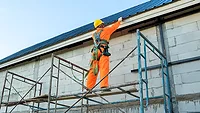
Scaffolding is an indispensable method that’s unlikely to disappear, especially in long-term projects such as construction. However, rope access is emerging as an alternative to scaffolding.
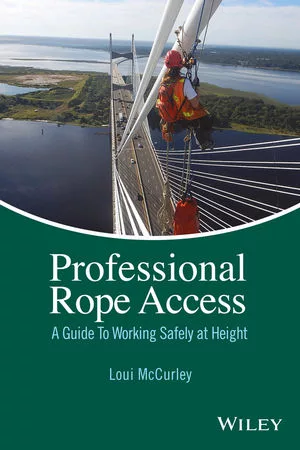
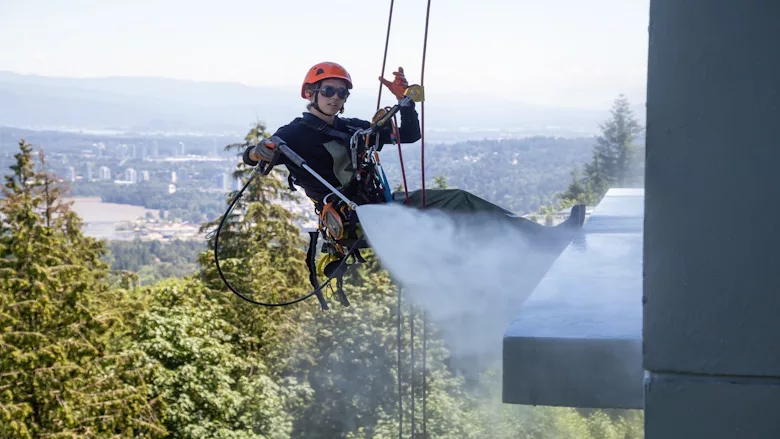
Rope access is quicker to set up and ready for use within hours, compared to scaffolding, which takes full days to erect the bulky frameworks. It's less invasive and allows trained technicians to scale a building using only compact equipment and a two-line system — a main rope and a backup line. This method doesn’t block entrances or dominate the building’s appearance during maintenance. It’s especially useful in urban environments with tight spaces and buildings where keeping exterior appearance matters even when a project is ongoing.
More importantly, rope access has one of the lowest accident rates in the work-at-height category. What managers love about it is that it’s more cost-effective than scaffolding, allowing projects to save up to 70% of their costs.
Stronger, Smarter and Lighter Fall Protection Equipment
Traditional fall protection gear was reliable but heavy and restrictive. That’s changed thanks to the ingenuity of various manufacturers, who are always seeking solutions to constant pain points. Thanks to Computer-Aided Design modeling and the use of advanced materials like Technora, Dyneema and lightweight metal alloys, they are now creating gear that's stronger per pound.
Engineers can simulate high-stress scenarios digitally, reducing the trial-and-error process that came with traditional methods. This process produces fewer physical prototypes, better material efficiency and less overengineering. The result is lighter harnesses, compact and self-retracting lifelines and high-strength anchor points that workers are more likely to wear and use properly.
Lighter gear equates to better compliance. When harness-mounted lifelines were first introduced, many personnel avoided them because of the bulk. Now, equipment weighs far less, often without compromising on strength or protection.
Mobile and Non-Penetrative Are the Newest Options
Forget permanent roof anchors. They can be expensive and overkill for facilities needing occasional high-angle work. New mobile rope access systems now use non-penetrative anchor points, which are ideal for projects that are once or twice a year. These allow technicians to set up safe anchor points for rope access without drilling into the building.
It’s a game-changer for facilities that want to avoid structural modifications, water intrusion risks or compliance headaches.
Smart Technology Adds a New Layer of Safety
What if you could monitor the condition of your gear and your workers in real time? Smart technology makes it happen. Harnesses are now embedded with sensors to monitor vital signs and detect falls. If a crew person wearing it becomes unresponsive or experiences trauma, the system can alert a supervisor immediately.
Similarly, real-time sensors in ropes and anchor systems can report on tension, stress and environmental exposure. These are already a reality in facilities committed to high safety standards.
As these technologies become more affordable, facility managers should expect integration into existing systems. The future may include automated alerts, maintenance reminders or even AI-powered analytics showing which areas are at higher risk based on historical activity.
One company in Massachusetts leveraged data analytics and artificial intelligence to decrease its incident rate by 25%, showing that emerging tech is a powerful ally in protecting workers from fall-related incidents.
Drones Are Taking Workers Off the Roof
Sometimes, the safest way to inspect a dangerous area is not to send a human up there at all. Drones are now a regular part of high-access safety programs, especially for initial inspections or recurring condition monitoring, especially in hard-to-reach spots. They also reduce manual handling and mitigate the risks of trapping or pinching injuries associated with scaffolding and mechanical components.
Using drones has removed the need for workers to climb up for visual inspections, reducing the risk of falls and exposure to mechanical pinch points from ladders or scaffolding. Modern drones offer:
- High-resolution imaging that helps detect minor faults before they become major repairs
- AI-powered image analysis to flag cracks, corrosion or heat anomalies
- Data comparison with historical photos, giving a full picture of wear over time
Cost reductions by eliminating the need for large crews, platforms and extended facility shutdowns
Regulations still apply and permits and flight planning must be in place. However, with third-party operators handling logistics, drones are increasingly available to facilities of all sizes.
Training Still Makes or Breaks the System
Even the best gear fails if it’s used incorrectly. Courses should go beyond the compliance checkbox and into jobsite confidence and safety. Training sessions should cover everything from lifeline installation to proper use of anchor points. Properly donning a harness is one thing. Knowing how to respond in an emergency, assess risk zones and maintain your gear is another.
Project managers can directly reduce liability in this area and improve jobsite morale. Workers who feel secure in their equipment and knowledge are more productive and more likely to engage in safety practices.
What You Can Do Now
If you're responsible for safety planning or facility operations, ask yourself:
- Are we still using bulky or outdated systems that create more risk than they solve?
- Can we reduce costs and increase safety by switching to rope access or mobile lifelines?
- Are inspections or maintenance tasks being delayed because of access concerns?
- Do our teams know how to use their gear correctly or just enough to get by?
It’s worth getting a full fall protection audit. Many suppliers offer consulting and training in addition to equipment. The best part is that you’re not locked into a single solution. There’s now a spectrum of tools that let you adapt without overcommitting. For example, pairing rope access and scaffolding in one project reduces more risks.
The New Standard for Working at Heights
Fall protection has moved far beyond scaffolding and generic harnesses. Today, rope access, smart technology, mobile anchor systems and drones are shaping a safer, more efficient way to operate at height.
Facilities that embrace these tools lead in crew protection. And when workers are safe, you gain more time and avoid injury-related costs.
Looking for a reprint of this article?
From high-res PDFs to custom plaques, order your copy today!