Beyond the Heat: How AI Can Help Organizations Meet OSHA’s Proposed Heat Rule and Protect Workers in Real Time
Photo credit: PK Safety
Managing heat exposure has long been an essential part of workplace safety in industries such as construction, manufacturing, and agriculture. Protecting employees from heat-related illness is a core element of occupational health, and OSHA’s proposed Heat Injury and Illness Prevention in Outdoor and Indoor Work Settings rule would establish consistent national requirements for identifying and controlling heat hazards. Meeting OSHA’s expectations is only the first step. Real progress will come from integrating new approaches, better data, and the intelligent use of AI to strengthen how organizations manage and respond to heat risk.
A National Framework for Heat Safety
Under OSHA’s proposal, employers would be required to act at two key temperature “trigger” levels. The first threshold, 80°F (measured by heat index or WBGT equivalent), would require employers to provide cool drinking water, shaded or cooled rest areas, and effective communication systems. It would also mandate training for employees and supervisors on recognizing and responding to early signs of heat illness.
The second threshold, 90°F, triggers more intensive requirements: scheduled rest breaks, direct observation for symptoms, and heightened environmental monitoring. Employers with more than ten workers would also be required to develop a written Heat Injury and Illness Prevention Plan (HIIPP), including acclimatization protocols for new or returning employees.
Today, OSHA relies primarily on the General Duty Clause and the National Emphasis Program (NEP) to address heat hazards on a case-by-case basis. The proposed rule would replace that reactive model with a proactive, nationwide framework. For the first time, employers would have a clear roadmap for heat stress prevention, one that could dramatically reduce the roughly 2,000 heat-related hospitalizations reported annually in the U.S.
Compliance Challenges and Operational Realities
While the intent of OSHA’s rule is clear (protecting workers), the path to compliance may not be simple. Prescriptive rest schedules or temperature-based triggers may not perfectly align with real-world conditions, especially in environments with fluctuating microclimates or high radiant heat. For manufacturers, foundries, or food processors, engineering out heat exposure is often impractical, making procedural controls the only option.
Smaller employers may also feel the weight of documentation and recordkeeping requirements, from maintaining acclimatization logs to evaluating program performance. During the transition period, inconsistent application of the new protocols could actually increase confusion or risk.
In short, employers will need tools that make compliance practical, scalable, and adaptive. That’s where AI-driven environmental and physiological monitoring can help.
The AI Advantage in Heat Management
Artificial intelligence has already transformed how companies manage safety data, predictive maintenance, and environmental risk. Heat safety is the next frontier.
AI-powered systems can integrate multiple data sources, such as local temperature and humidity readings, National Weather Service HeatRisk forecasts, and historical exposure patterns, to predict dangerous conditions days in advance. For example, if AI identifies that a specific site will exceed the 90°F trigger by midweek, safety teams can proactively reschedule high-exertion work, increase hydration supplies, or deploy additional shade structures before the risk peaks.
On-site sensors can continuously track environmental conditions like WBGT, air movement, and humidity. When combined with AI, these data streams enable real-time risk scoring and automated alerts. Some pilot programs go even further, using wearable sensors to capture individual metrics such as heart rate, core temperature, and exertion levels. AI algorithms can then estimate each worker’s heat strain risk and suggest personalized recovery actions before symptoms appear.
Beyond monitoring, AI can optimize scheduling and staffing. Intelligent scheduling platforms can dynamically adjust shifts or rotate workers through cooler micro-zones, minimizing cumulative exposure. This level of automation not only helps companies meet OSHA thresholds but also preserves productivity by avoiding heat-related downtime.
Learning from Early Adopters
Several states and countries have already implemented their own heat protection standards, offering valuable lessons for national compliance and AI integration. California’s long-standing heat illness prevention rule shows that simple, enforceable requirements (water, shade, rest) are effective when implemented consistently. Oregon and Washington have adopted tiered approaches similar to OSHA’s proposed model, demonstrating that incremental triggers can balance safety with operational flexibility.
Internationally, Spain’s regulations require employers to reassess working conditions during official heat alerts and, when necessary, temporarily pause certain outdoor activities to protect workers. Across all these jurisdictions, one principle stands out: success depends on real-time awareness and clear communication, two areas where AI can add immediate value.
Barriers to Adoption and How to Overcome Them
Despite its promise, AI-enabled heat safety systems face real-world obstacles. Technically, not all wearables or sensors are rugged enough for industrial environments. Many remote or outdoor worksites also face limited internet connectivity or power access, which can make continuous data collection and upload difficult. Employers should pilot technologies first, verify accuracy, and prioritize systems capable of local (offline) processing.
Culturally, trust is paramount. Workers may resist wearing sensors if they fear surveillance or data misuse. Transparency is the remedy. Employers must clearly communicate what’s being measured, how the data will be used, and who will have access. Participation should be voluntary whenever possible, with data anonymized and deleted promptly after analysis.
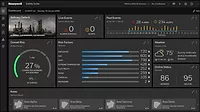
Operationally, AI outputs should be simple and actionable; think color-coded dashboards or mobile alerts indicating “elevated,” “critical,” or “safe” conditions. Overly complex analytics risk overwhelming supervisors rather than empowering them.
When AI is introduced thoughtfully, and built on trust, transparency, and worker involvement, it becomes an enabler, not an intrusion.
Measuring Success in an AI-Enabled Program
Integrating heat safety data into an organization’s broader Environmental, Health, and Safety (EHS) platform allows for new forms of visibility and accountability. Leading indicators might include:
- High-heat exposure days by site
- Percentage of tasks rescheduled to cooler periods
- Hydration compliance rates
- Acclimatization completion for new or returning workers
- Average response time from heat alert to intervention
Lagging indicators, such as first-aid cases, medical incidents, and lost-time injuries, remain important but tell only part of the story. Modern safety software that includes potential for Serious Injuries and Fatalities (pSIF) recognition tools helps organizations move beyond tracking incidents to identifying where severe outcomes are most likely to occur.
When combined with AI, these systems can connect leading and lagging data sets, reveal emerging patterns, and predict where risks are likely to intensify next. Over time, these insights help organizations demonstrate continuous improvement and verify the effectiveness of their heat safety and broader EHS programs, exactly the kind of evidence OSHA auditors and stakeholders will expect.
From Compliance to Resilience
OSHA’s proposed heat rule is more than a regulatory milestone, it’s a shift toward prevention. Reactive approaches that address heat illness only after incidents occur are no longer sufficient. Compliance alone won’t be enough; organizations need to anticipate risk and intervene early.
AI makes that possible. By transforming environmental and physiological data into actionable intelligence, companies can safeguard workers, stabilize operations, and build trust. The result isn’t just compliance, it’s resilience.
Meeting OSHA’s expectations is only the first step. Real progress will come from integrating new approaches, better data, and the intelligent use of AI to strengthen how organizations manage and respond to heat risk.
Looking for a reprint of this article?
From high-res PDFs to custom plaques, order your copy today!




.webp?t=1721257160 "download (1).jpg")
