8 Practices that Reliably Increase Construction Safety
When it comes to bolstering safety in construction, the best safety managers know it requires going beyond ensuring compliance with regulations.
Clear expectations for day-to-day operations, a strong, participatory safety culture and adequate worker training reduce accidents and injuries, boost morale and keep productivity high.
Incorporating the following eight practices into your safety program can improve outcomes on fast-paced projects, support the safety of less experienced workers and mitigate risks to workers’ health — and the company’s reputation.
1. Tracking safety-related metrics
The adage “you can’t manage what you don’t measure” applies to safety managers. Knowing how well your safety program is performing is a good first step to improving it. A few of the metrics to track include:
- Safety training completion rate. Implement a system for tracking which workers need to complete what types of safety training.
- Total recordable incident rate (TRIR). This number measures your past safety performance based on your incident rate. Use an incidence rate calculator for an accurate TRIR calculation. Then set goals for reducing specific types of incidents, such as struck-by incidents.
- Near misses. Near misses draw attention to hidden hazards and safety lapses. Encourage workers to report them through an anonymous near miss reporting mechanism, then commit to investigating the causes.
2. Identifying and providing necessary training
Workers can’t be expected to operate safely if they haven’t been trained to do so. Check that crews have received relevant — and recent — safety training for the types of work being performed and the types of equipment being operated.
Necessary training might include courses such as equipment operation, fall protection, trench safety, confined space safety, electrical safety, hazardous material handling and competent person training. Refresher courses keep the information top of mind and bring knowledge up to date.
3. Performing in-depth new-hire orientations
Many construction crews now include a higher percentage of new or less experienced workers. Successful safety programs include in-depth new hire safety orientations. These have been shown to aid in the reduction of injuries.
Walk new employees through your safety program and the expectations and responsibilities that apply to all workers. Have at least one senior leader attend the orientation or introduce it. Include training on the proper use of personal protective equipment that the employees will be expected to use.
4. Conducting site inductions
Each job site poses unique safety challenges. Hold a site induction for every new job site and use it to present your site-specific safety plan.
A site-specific safety plan spells out your strategy for identifying, controlling and eliminating potential hazards and details responsibilities relating to safety. Give workers access to a copy. Include the names of designated competent persons and the people responsible for managing emergency response, as well as other important details such as the location of a first aid station or kit and the nearest fire department and hospital.
5. Developing site-specific evacuation plans
The ability to quickly evacuate a construction site is critical. Having an evacuation plan and conducting evacuation drills helps ensure that all workers reach muster points or shelter in place as appropriate in the event of an emergency.
Planning for specific types of emergencies based on possible threats, such as a hurricane, fire or flood, takes evacuation planning to the next level.
6. Using daily toolbox talks to share timely, relevant reminders
Toolbox talks help workers start their shift with a safety-first mindset. They are most effective when they are mandatory, held daily and directly relevant to the day’s work.
If workers will be entering a confined space that day, center the toolbox talk around confined space safety. If they will be using ladders, remind them of the basic rules of ladder safety, such as maintaining three points of contact. If they will be sanding, grinding or drilling concrete or stone, review the proper use of respiratory protection equipment and the procedures for safely cleaning up silica dust.
Keep it short but give workers the chance to ask questions or raise concerns.
7. Restricting access to equipment
Preventing workers from accessing heavy equipment when they lack proper training or don't have a legitimate business need to use it is an effective way to reduce equipment-related accidents and injuries.
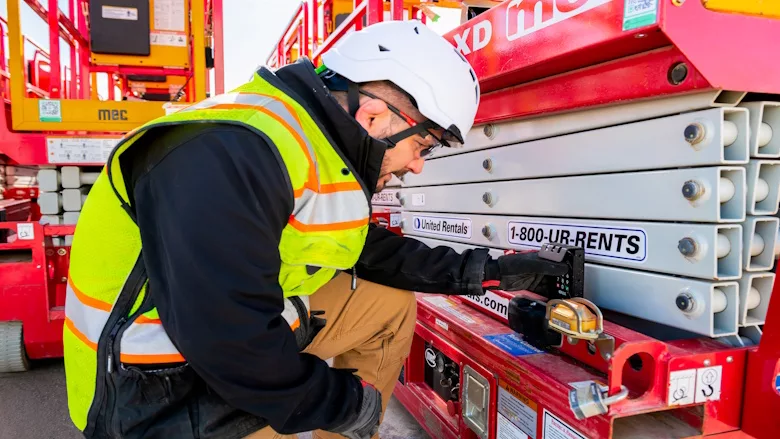
Ignition keypads restrict use to workers with the PIN code specific to that piece or type of equipment. These keypads are easily added to rented or owned equipment. For construction sites that use badge-based jobsite access, RFID readers can be added to keypads so that workers can scan their badge and access equipment based on the permissions granted in their worker profile.
8. Empowering crews with the right to stop work
On a construction site, safety should be a shared responsibility. A stop-work authority (SWA) policy grants employees the right — and the responsibility — to stop work if a task presents a danger to themselves or others on the job.
Once an individual invokes the stop work authority and reports the hazard to a supervisor, it’s up to the supervisor to address it. For an SWA policy to be effective, companies should remind employees that they won’t be punished for stopping work.
Safety requires involvement at every level of the organization and every stage of operations. It must become an integral part of how employees think and act. These eight practices embed safety as a core value and help safety programs stand up to real-world challenges for a safer, more productive workforce and a stronger, more resilient business.
Looking for a reprint of this article?
From high-res PDFs to custom plaques, order your copy today!