Can Artificial Intelligence Replace an EHS Professional?
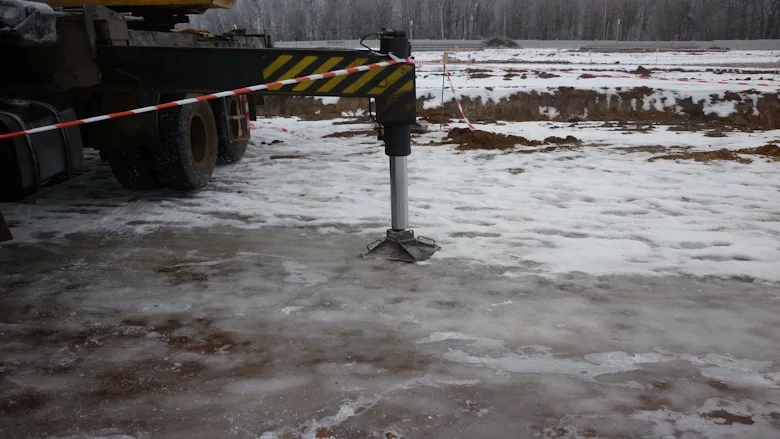
This photo was December's image for the ISHN's AI vs. Safety Pros Challenge on LinkedIn. We asked professionals to identify any safety hazards and risks they saw and then we asked AI the same.
More and more companies are turning to artificial intelligence to optimize employee workloads and reduce costs. In December 2025, Russian-speaking YouTube blogger @AMNUSA reported on layoffs at a large U.S. IT company with approximately 1,000–1,100 employees. According to a video published on December 29, 2025, the company completely eliminated its QA department (around 50 specialists) and reduced staff in several other functions. Management explained the decision as a transition to AI-based tools replacing traditional QA roles.
This raises an inevitable question for our profession: Could similar layoffs happen in EHS?
One of the core and most in-demand EHS functions is risk assessment.
Under the General Duty Clause, Section 5(a)(1) of the OSH Act, employers are required to eliminate recognized hazards. In practice, this is impossible without identifying and evaluating hazards.
Risk assessment is also embedded directly into multiple OSHA standards, including:
- 29 CFR 1910.132(d) – Personal Protective Equipment
- 29 CFR 1910.1200 – Hazard Communication
- 29 CFR 1910.147 – Lockout/Tagout
- 29 CFR 1910.146 – Confined Spaces
- 29 CFR 1910.1030 – Bloodborne Pathogens
If AI is to replace EHS professionals, it must first prove that it can reliably identify and assess workplace risks at the level these requirements demand.
ISHN LinkedIn Challenge
In January 2025, ISHN magazine launched a monthly LinkedIn contest to test exactly that.
Each month, ISHN published a real photo from an actual audit and asked readers to evaluate it. Then, AI was given the same task with one consistent prompt:“Find all risks in this photo.”
Over the course of the year, ISHN published 11 photos, all involving clear violations of standards such as scaffolding, hazard communication, fall protection, ladders, control of hazardous energy, confined spaces, and machine guarding. The topics were deliberately selected based on the Top 10 most frequently cited OSHA standards for 2024–2025.
It is important to clarify that the AI used throughout the contest was GPT-based, and the same model was applied consistently across all monthly evaluations.
ChatGPT was selected as one of the most widely used AI tools for work-related tasks in the United States, particularly in corporate environments. While AI integration into business processes is still evolving, many large companies are already actively using ChatGPT and GPT-based models as part of their business toolkits. Other models, such as Anthropic Claude and Google Gemini, are growing, but in terms of reach and the number of enterprise integrations, GPT remains the leader across many segments.
Where AI Performed Well
One of AI’s strongest performances appeared in the June Lockout/Tagout (LOTO) scenario.
AI not only identified that the existing lockout allowed the valve to be rotated, but also correctly explained why: the issue was tied to an incorrect selection of the lockout method itself, not just improper application. This demonstrated an understanding of causal relationships within the energy control system.
In the future, AI could be particularly valuable during the design and implementation stage of procedures, helping teams evaluate whether selected lockout methods are truly effective for specific equipment.
AI also performed well in simple, static, visually unambiguous scenarios:
- July: strong identification of fire hazards, pallet storage issues, and mixed waste
- September: a single worker standing on a ladder preparing to manually lift a load — a clear, textbook fall-hazard situation
In these cases, the risk could be “read” directly from the image without requiring deeper contextual or regulatory interpretation.
Systemic Limitations Revealed by the Contest
1. Object Recognition and Spatial Errors
Across nearly all months, AI repeatedly misidentified objects or their location, producing factual errors such as “this is not present” or “this is on the floor” when the opposite was true.
Examples include:
- February: AI claimed paint cans were open; readers saw they were sealed.
- May: AI warned about tripping over cables on the floor; readers saw the cables mounted on the wall.
- November: AI stated there was no eye protection; readers clearly saw a face shield.
- In August, AI failed to recognize an open confined space entry in a wall and instead described it as a hole in the floor that someone could fall into.
These are not minor inaccuracies — they directly undermine risk assessment credibility.
2. Risk Duplication
Duplication proved to be one of the most persistent AI errors.
Across 8 months, at least 10 separate cases were recorded where the same underlying risk was described multiple times using different wording, or where secondary points fully repeated the meaning of the first.
A clear example appeared in October, where AI listed:
- Pinch points & entanglement hazards
- Lack of guarding
- Warning sign with no clear protection
All three described the same core risk: access to moving conveyor parts. The judge explicitly pointed out the repetition.
3. Confusing Hazard, Risk, and Violation
Another systemic issue was AI’s difficulty distinguishing between:
- a hazard (source of harm),
- a risk (likelihood and severity),
- and a violation (non-compliance with a requirement).
The concepts of hazard, risk, and violation are not universally defined. Their interpretation can vary slightly depending on the country, regulatory framework, industry, and even organizational practice. However, within the broadly accepted safety and risk management context, these terms are generally understood as follows:
- Hazard: a potential source of harm (for example, a slippery floor or sharp objects).
- Risk: the likelihood and potential severity of harm resulting from exposure to a hazard (for example, the risk of slipping on a wet floor).
- Violation: a failure to comply with legal or regulatory requirements — in other words, a set of mandated controls and measures intended to reduce risk, which may differ across jurisdictions, states, or regulatory systems.
While the terminology may vary, experienced safety professionals consistently distinguish between these concepts when assessing real-world conditions — a distinction that remains challenging for AI-based assessments.
This confusion appeared in at least 8 months of the contest.
Why does this matter?
Many audit and scoring systems escalate findings based on the number of issues identified. When AI duplicates risks or treats violations as risks, the result can be an inflated number of gaps, potentially escalating minor issues into major findings and distorting audit outcomes.
4. Lack of Contextual Reasoning
Perhaps the clearest distinction between AI and experienced safety professionals is contextual understanding.
Professionals often identify hazards from indirect or incomplete signals, based on knowledge of real workplace behavior:
- November: a partial view of a boot on a radiator was recognized as a sign of workers drying footwear — a known fire hazard.
- March: a funnel inserted into a chemical container indicated regular chemical transfers, not simple storage.
- April: AI described a second person as “standing on the lower rungs of a ladder,” while professionals immediately recognized the individual was stabilizing it.
These conclusions rely on behavioral patterns and experience — not just object detection.
The Balanced Reality
On average, AI often identified more individual items than human reviewers. In part, this is because experienced EHS professionals instinctively filter out insignificant issues during real-time risk evaluation.
At the same time, humans are not immune to oversight. When many small deviations exist, something important can be missed. In this sense, AI can act as a valuable secondary layer of review.
Conclusion: Replacement or Reinforcement?
The results of the ISHN experiment suggest a clear answer.
AI, even at the GPT level, is highly effective as a visual detector of common, well-defined hazards, particularly in static, familiar scenarios with clear geometry and obvious consequences. It can support procedure development, highlight overlooked details, and serve as an additional safety net.
However, AI still struggles with:
- accurate object recognition in complex scenes,
- prioritization and consolidation of risks,
- distinguishing hazards from violations,
- and, most importantly, contextual and behavioral reasoning.
EHS work is not just about listing what is visible in a photo. It requires understanding how work is actually performed, what typically happens next, and which risks truly matter in practice.
AI can assist. EHS professionals provide judgment. At present, one cannot replace the other — but together, they can significantly strengthen workplace safety.
Looking for a reprint of this article?
From high-res PDFs to custom plaques, order your copy today!