Right-Sizing HVAC Parts Supply Prevents Costly Facility Downtime and Worker Safety Risks
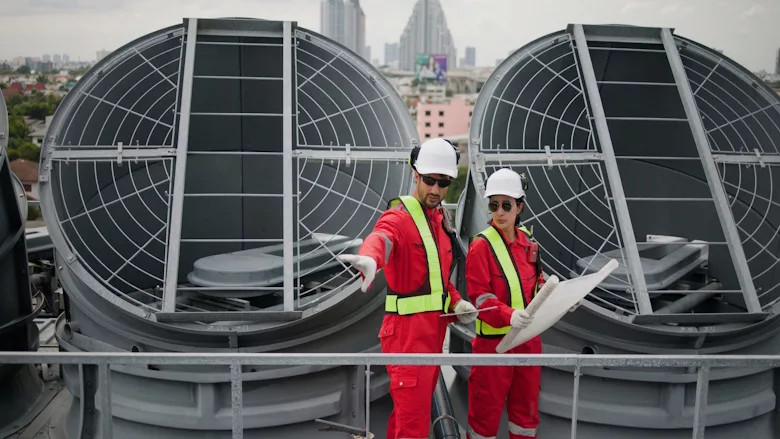
Mismatched, counterfeit or improperly sized HVAC procurement is a significant but often overlooked source of operational and safety risks. A strategic approach to HVAC parts supply and manufacturing can mitigate these risks. How does HVAC part procurement fit into a larger industrial safety program?
Common Hazards Associated with HVAC Maintenance
Numerous safety risks are associated with incompatible, ill-fitting or counterfeit HVAC components in industrial facilities. They can fail unexpectedly, creating a dangerous situation for those working on or around the unit.
A mismatched component can cause electrical shorts or overload circuits, dramatically increasing the risk of electric shock. A fault condition can even cause an arc flash, with temperatures exceeding 35,000° Fahrenheit — almost four times the heat of the sun’s surface. In this situation, severe injury or death are significant risks.
Depending on the faulty part, both mechanical and chemical risks are equally likely to occur. An improperly fitted valve could facilitate high-pressure refrigerant leaks, creating skin irritation and suffocation hazards. Alternatively, a cracked heat exchanger could leak odorless, colorless carbon monoxide gas, potentially leading to confusion and, ultimately, suffocation.
The very existence of an ill-fitting HVAC parts supply and manufacturing pipeline exposes workers to hazards because it forces them to replace components more often. They spend more time in hazardous conditions, such as in cramped, high-temperature attics, and risk strains and sprains when handling heavy, awkwardly shaped parts.
Ensuring technicians have manufacturer-approved components that meet technical specifications and industry standards helps mitigate these risks.
How Right-Sizing HVAC Parts Supply Decreases Risk
An insecure supply chain introduces counterfeit or substandard parts lacking proper testing or certification. Since these components increase the likelihood of electrical fires, mechanical breakdowns and premature equipment failures, procurement must be treated as a primary safety function.
The Connection Between Sourcing and Safety
The dangers of sourcing the wrong part are clear. Urgent intervention is crucial in industrial settings where ventilation is vital — heat stress and the buildup of hazardous fumes could put workers’ lives at risk — and environments require specialized, durable components.
Attempting to use an element that is close enough but not an exact match has consequences. For instance, a motor with a voltage different from the required one could overheat, potentially causing an electrical fault or fire.
Eventually, quality problems become safety problems because supplier choice and workplace outcomes are intertwined. National injury data collected by the Bureau of Labor Statistics supports this trend, revealing the likelihood of hazard exposure positively correlates to the abundance of faulty components, substandard materials and inconsistent manufacturing.
How Right-Sizing Reduces Worker Safety Risks
Right-sizing the HVAC parts supply manufacturing system optimizes procurement and inventory management by strategically matching the quantity, type and size of replacement components to the facility’s needs.
This allows organizations to hold the minimum amount of stock while consistently meeting demands, mitigating delays, decreasing unplanned downtime and improving reliability. Additionally, it frees tied-up capital, decreases carrying costs and prevents dead stock from going to waste.
Creating a Verifiable Supply Chain for Critical Components
The first step in creating a verifiable and secure supply chain for critical HVAC elements is to find partners specializing in the manufacturing of HVAC parts. Trusted, reputable suppliers ensure compliance. For instance, for electrical components, they can deliver products that adhere to the National Electrical Manufacturers Association’s (NEMA) rating system.
NEMA established the industry standard rating system for the performance and protection levels of electrical enclosures. It is a crucial tool for selecting application-appropriate enclosures. They are rated based on their structural durability and ability to withstand environmental elements. For instance, NEMA 1 enclosures provide some degree of protection against dust and light.
Beyond working with reputable suppliers who can guarantee the authenticity of spare parts, industrial safety personnel should also think of personal protective equipment (PPE) as another aspect of right-sizing.
Employers used to order standard sizes for technicians. However, one-size-fits-all solutions mean workers are frequently forced to wear loose-fitting or uncomfortable gear. In 2024, OSHA announced revisions to its criteria. As of January 13, 2025, the final rule explicitly requires PPE to fit correctly.
Since protective equipment typically lasts only a few months or years at most, organizations must regularly replenish their supplies. Ensuring gear fits each individual properly is vital because it encourages compliance with OSHA regulations, facilitating a culture of safety.
Coordinating Maintenance Schedules and Procurement
Since insecure spare parts supply introduces safety risks, strategic procurement and proactive repairs go hand in hand. Safety managers should leverage preventive maintenance for equipment downtime reduction. Early warning can prevent minor issues from snowballing, helping them protect workers.
Integrating HVAC maintenance schedules with these pipelines offers benefits beyond general cost savings — it mitigates safety hazards and decreases downtime, one of the most prominent supply chain issues. Manufacturing facilities alone experience up to 25 hours of downtime per month.
Professionals should start by analyzing systems to identify any single points of failure. Ranking elements by their criticality and hazard potential can help them prioritize their next steps. Creating a preferred supplier list for critical components can help streamline procurement without sacrificing quality.
Once the delivery arrives, proper storage is essential for preventing the degradation of sensitive electronic or mechanical equipment before it is ever used. If managers are strategic, they can prevent downtime, eliminate hazards and maximize productivity.
Leveraging Technology for Proactive Parts Management
Preventive maintenance should make parts management proactive rather than reactive. However, manually tracking schedules, inspection logs and spare parts inventories can be tedious and confusing. Safety personnel should consider leveraging modern technology to streamline the process.
Using historical data and analytics, they can forecast when repairs will be necessary. This way, they will have more than enough time to order and stage the necessary parts, enabling them to prevent breakdowns from occurring in the first place.
Preventive maintenance reduces equipment downtime, prevents hazards from forming and makes units more efficient. Typically, HVAC systems experience a 25% to 50% energy loss rate. However, if technicians identify and fix issues before irreparable device damage occurs, they can reduce this waste to under 15%.
Advanced tools, such as artificial intelligence, can make fault detection and diagnostics more relevant and timely, thereby directly reducing unplanned downtime. AI-powered maintenance is rapidly becoming more accessible and accurate as the technology advances.
Procurement Fits Perfectly Into Industrial Safety Programs
From a risk management perspective, an HVAC unit is not just about occupant comfort — it is a mission-critical system tied directly to business continuity and worker safety. That is why right-sizing HVAC parts supply and manufacturing is so important. Procurement and supply chain management must be treated as core safety functions.
Effective supply and inventory management are critical components of safety and operational uptime, as they ensure professionals consistently have the right parts on hand. Anticipating issues is key — professionals must minimize exposure to hazards and reduce equipment downtime with preventive maintenance.
Looking for a reprint of this article?
From high-res PDFs to custom plaques, order your copy today!