Emerging Workplace Safety Risks and the Role of Technology in Prevention
Why modern hazards are evolving faster than traditional controls and what safety leaders must rethink
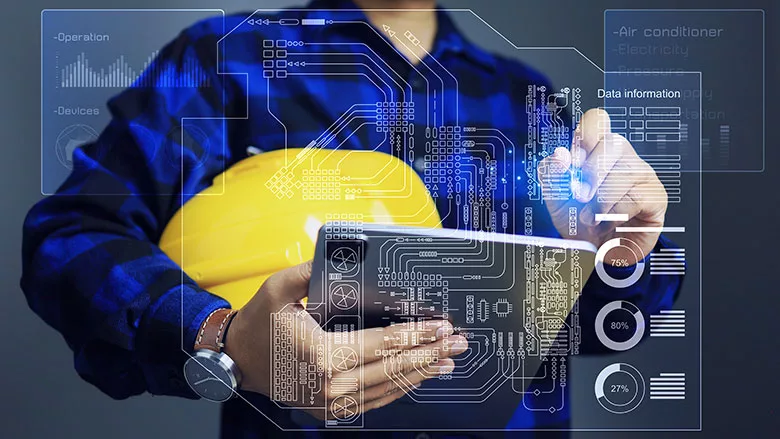
Photo: Aree Sarak / iStock / Getty Images Plus
The most serious workplace safety risks today are no longer defined by what is visible, audible, or immediately measurable. They are shaped by speed, complexity, and interaction — between people, machines, environments, and operational pressures.
Whether it is the construction sites, manufacturing plants, logistics hubs, or mining facilities, incidents increasingly arise not from a single failure, but from rapidly changing conditions that outpace human perception and conventional safety systems. For example, in the recent fire incident in Hong Kong, initial reports suggested how bamboo scaffolds used on the site led to the vertical escalation of the fire.
This shift is forcing EHS professionals to confront a difficult reality: many emerging risks are systemic, dynamic, and predictive in nature. Preventing them requires more than compliance checklists or retrospective analysis.
It demands an AI-based approach of understanding how risk forms, accumulates, and escalates in real time.
When Familiar Hazards Start Behaving in Unfamiliar Ways
As per OSHA’s Top 10 safety violations in 2025, falls from height, PPE non-compliance, equipment collisions, and exposure to hazardous atmospheres are common causes of serious injuries and fatalities (SIFs) across heavy industries.
Yet incident investigations increasingly show that the mechanisms behind these events are changing.
In construction, for example, scaffolds and temporary access structures are exposed to fluctuating loads, weather conditions, and shifting workflows throughout the day. A scaffold deemed compliant during a morning inspection may present elevated risk by afternoon due to wind changes, material staging, or access reconfiguration.
In warehousing and logistics environments, pedestrian-vehicle interactions are becoming more complex as automation, peak throughput demands, and night-shift operations intensify.
Fire risk offers another example of how traditional assumptions fall short. Temporary electrical installations, hot works, battery-powered tools, and combustible materials often coexist in confined spaces. Fires linked to temporary works tend to escalate quickly because detection is delayed, ventilation patterns are poorly understood, or combustible structures enable vertical flame spread before alarms are triggered.
What unites these scenarios is not a lack of safety rules, but a lack of continuous situational awareness.
The Limitations of Lagging Indicators in Predicting Workplace Safety
Historically, safety measures across industrial sites have relied heavily on lagging indicators such as total recordable incident rates (TRIR), injury statistics, severity index, and compliance audits.
While essential for accountability, these metrics describe what has already gone wrong, not what is about to.
But the emerging risks often develop quietly, such as surface conditions deteriorate as humidity rises; fatigue accumulates over extended shifts; equipment paths intersect as site layouts evolve.
By the time alarms activate or thresholds are breached, the opportunity for prevention has already narrowed.
This is why many safety leaders are now shifting focus toward leading indicators—signals that reveal deteriorating conditions before incidents occur. These indicators are rarely captured by a single sensor or observation.
Instead, they emerge from patterns across time, space, and activity, facilitated by modern AI-based safety systems powered by computer vision technology, AI video analytics, IoT sensors, machine learning, and generative AI.
How AI-Based Systems are Changing Risk Visibility Across Sites
Advances in sensing, analytics, and AI are reshaping how organisations detect and interpret safety risk.
For instance, today a construction site located in the midst of a desert in the UAE uses IoT-based weather stations to monitor environmental variables such as temperature, air quality, vibration, noise, and surface moisture.
Smart wearables like smart watches and smart helmets provide insight into worker location, movement, and physiological strain. Computer vision systems integrated into existing CCTV cameras on-site or AI-powered drones interpret how people and equipment interact within complex environments.
Individually, these technologies offer data. Combined, they provide context.
A construction giant in Singapore employing over 12,000 employees encountered continuous issues of safety violations like PPE non-compliance, near misses around heavy machinery, and hidden dangers in confined spaces. But when the site used an end-to-end AI-based safety monitoring system, the overall safety scores improved by 10x while 7,000 working hours were saved.
From renowned manufacturing companies like Shell, and Ford, to mining giants like Gold Fields and BHP, AI-powered systems are deployed across their operations to ensure productivity, safety and generate predictive insights for a better future.
Synchronising Technology with the Human Factor on Site
Despite these advances, technology alone does not prevent incidents. People do. What technology changes is how people perceive risk and how quickly they can act on it.
When supervisors, safety leaders, and operational managers are equipped with real-time insights rather than delayed reports, safety conversations move from enforcement to foresight. Instead of reminding workers about generic rules, leaders can now explain why conditions have changed and what actions are necessary now.
This clarity builds trust, particularly in high-risk environments where workers are often sceptical of abstract warnings.
Over time, this feedback loop strengthens safety culture. Near misses are no longer anecdotal. Emerging hazards are no longer invisible. Prevention becomes a shared, informed responsibility rather than a procedural obligation.
Importantly, predictive safety systems do not replace traditional controls such as training, engineering safeguards, or personal protective equipment. They enhance them by ensuring those controls are applied at the right time, in the right place, based on real conditions rather than assumptions.
As Gary Ng, CEO of viAct, observes, “Workplace risk is no longer static. It evolves minute by minute, shaped by environment, worker behaviour, and operational pressure. When safety systems learn to interpret how these forces interact over time, prevention shifts from reacting to incidents to anticipating them before they take form.”
New Risks, New Responsibilities for Safety Leaders in 2026
As workplaces become more complex, safety leadership must evolve accordingly in the upcoming years. The challenge is no longer simply enforcing compliance, but managing variability—of environment, workload, and human performance.
This requires asking different questions.
- Where does risk change fastest during operations?
- Which tasks are most sensitive to environmental variation?
- How do fatigue, congestion, or weather interact with physical hazards?
- Which warning signs appear consistently before serious incidents?
Organizations that invest in systems capable of answering these questions gain access to leading indicators that traditional metrics cannot provide. Even incremental adoption — such as piloting predictive analytics in high-risk zones or during critical tasks — can significantly reduce serious injury potential.
For EHS leaders navigating increasingly complex environments, the path forward lies in embracing prevention as a dynamic discipline. One that values foresight over hindsight, interpretation over thresholds, and understanding over assumption.
Looking for a reprint of this article?
From high-res PDFs to custom plaques, order your copy today!