Improving Performance, Quality and Safety by Identifying Unconscious Biases in Operations
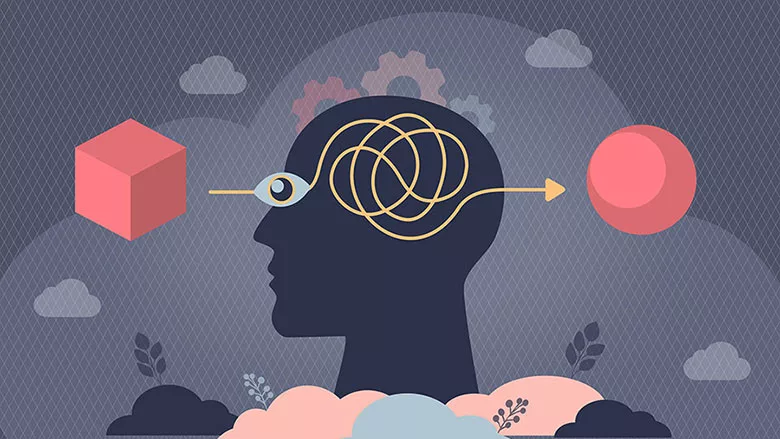
Everyone has biases which unconsciously influence our actions and/or perceptions and can be both positive and negative in nature. Research has shown that human judgement and decision making is distorted by biases inherent to cognitive, motivational, and perceptual processes. This invariably can manifest itself in any work performed by employees.
Biases fall into two general categories: our biases and biases of others. People generally tend to believe that their perceptions reflect reality and if others see things differently (disagree with our position or thinking) then they must obviously be biased. This results in the tendency of people to deny their own biases while recognizing biases in others which leads to serious deficiency in self-awareness and to some degree impacts our interaction or relationship with others.
Mental Processes: Conscious vs. Automatic
Humans have one brain but two minds. One mind — the mind of self-control, makes conscious choices, which are based on careful consideration, self-reflection, observation as well as insight. While the other mind — the mind of impulse and habit, makes automatic choices based on experience, habit and/or instinct. Neuroscientists report that these two “minds” are supported by different neural circuits which activate thoughts, emotions and behavior. Stress or pressure plays a role in activating the automatic neural circuitry while suppressing the conscious circuitry therefore making biases unconscious and automatic.
It is a matter of practice that every time a decision is made all the relevant information is filed away for future reference. Due to the very large amount of information generated, to streamline recovery similar information is stored in mentally labeled bins. To facilitate and improve recovery, as the number of bins become voluminous, they are further stored in common master bins.
This sorting and filing of information may create some level of variation as to where the information is stored by individuals. This may result in some differences in the individual stored information. Therefore, when a worker is faced with the need to make a decision (choice), the automatic system looks for data in these common bins to get the appropriate information to assist and enable decision-making.
So, if exact information is not available, similar information is considered and if these have had no associated adverse effects, then they are utilized in the decision-making process and action is initiated. More times than not this process also has no resulting adverse effect. That is why when an error, discrepancy or accident does in fact occur the workers natural reaction is “I have done this 100 times before and did not have an mistake or accident. This generally leads to statements such as “that was a freak accident.”
Unconscious Bias in Construction
As construction work progresses, the physical environment or conditions change daily, hourly or even by the minute.
As a result, the “risk picture” is in continual flux requiring rapid risk Identification and assessment to properly deal with the emerging risk. To perform the work efficiently and maintain a reasonable level of production. The urgency promotes the automatic choosing mind process facilitating the utilization of unconscious biases which may lead to emotional decisions that color our interaction with other people or situations. There are a whole host of different kinds of unconscious biases, some common workplace biases that may be applicable to construction are as follows:
Confirmation bias reflects the tendency to seek information that confirms one’s beliefs or expectations. When dealing with people the person may ask leading questions to elicit responses that confirm their belief about the other person or the situation. This could very well unintentionally affect the results of an accident being investigated. It may also hamper or influence proper communication in conveying the appropriate safety message or concern.
Affinity bias involves the tendency to feel a connection to another person if they have attributes similar to ours which makes us feel a connection to them. A foreman or superintendent may be more likely to hire a worker who they find compatible, like lives in the same area, likes the same sports teams, enjoys similar food, etc. But none of this makes them the best fit for the position they are being interviewed for. When dealing with safety the approach to one worker will likely be different than to another based on the affinity bias. Other workers may notice this and think the safety practitioner is playing favorites, which will decrease his/her overall effectiveness engagement.
Perception bias is a tendency to harbor predetermined assumptions about certain types or groups of people. This to some extent may hamper the ability to make impartial or objective assessments of capability or the competence of a worker. In the case of the safety practitioner, it may possibly hamper getting the safety message effectively across to everyone in the crew.
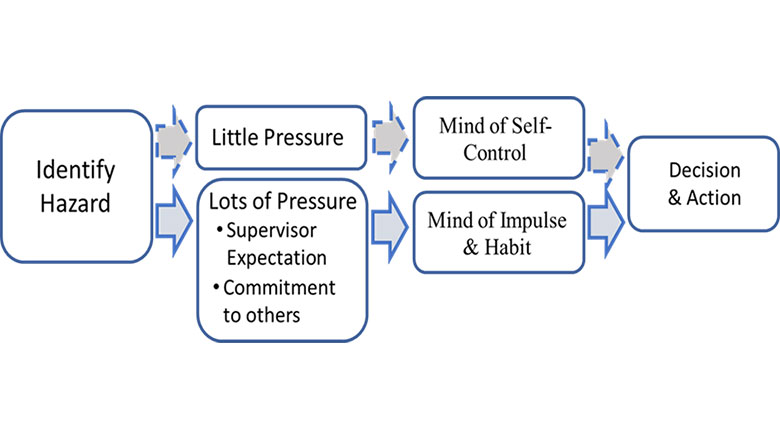
Conformity bias (group think) occurs where people wanting to be accepted by a group mimic the group’s beliefs or the position taken by that group. In safety if the crew routinely performs their work in an unsafe manner. A person wanting to be accepted by that group may perform the work in the same “unsafe” manner even if that person knows it is not the way the organization expects them to perform it. For the safety practitioner to be able to deal with this situation effectively, they must be able to determine that this phenomenon is the driver of the behavior in order to be able to effectively deal with the problem rather than assuming the worker is not paying attention or needs safety training. etc.
Humans have one brain but two minds. One mind — the mind of self-control, makes conscious choices, which are based on careful consideration, self-reflection, observation as well as insight. While the other mind — the mind of impulse and habit, makes automatic choices based on experience, habit and/or instinct.
Framing effect is the tendency to draw a different conclusion from the same information depending on how it is presented. The boss may believe one person over another just because they tell the “story” in a way that the boss expects to hear it. In the case of the safety practitioner, it may color their approach to interacting with the different members of a crew given similar situations or actions.
Halo effect represents the tendency to consider one mistake a person makes as rendering them totally incompetent, or that some risk taking improves efficiency. A foreman under pressure to get the work completed by a certain time may observe workers performing the work unsafely but may say nothing if they perceive that the task will be completed on time with possibly no adverse outcome. The halo effect may color the foreman’s perception of the worker as inventive, or outside- the-box thinker rather than a risk taker. In the case of the safety practitioner, it may interfere with assessment of the seriousness of an observed safety infraction.
Bystander effect creates conditions where individuals are less likely to offer assistance to someone when there are others present. In safety where the organization expects workers to intervene when they see another worker doing something that might get them injured, by offering advice or input. The bystander effect may keep them from doing so, because they may assume that one of the others in the area has probably already done so. Or they may think that since all the other did not intervene that maybe the observer is wrong, assuming that the act is unsafe and so say or do nothing. For greater detail see my article titled “Everyone is responsible for safety published here on April 22, 2022.
As these examples show, unconscious biases hinder decision making, interpersonal interaction, team dynamics, affect management and employee interaction and relationships, organizational efficiency as well as effectiveness. Tackling unconscious biases will help address these issues as well as improve the work climate and thereby foster growth opportunities, engagement, cooperation, loyalty and trust.
Biases are an unavoidable part of one’s personal as well as professional life. However, with the understanding of unconscious biases nefarious effect on relationships one can limit or to some degree minimize its harmful effect on the personal, operational and/or organizational policies, practices or procedures.
Conclusion
Persistence, understanding, and practicing mindful thinking is required to effectively deal with unconscious biases. Treating each individual with consideration and respect, one can evolve beyond their biases and engage with all people in a positive manner involving any environment or situation.
Knowledge of cognitive bias can enable leaders and managers to question their own reasoning so as to identify biases that increase risk or impact safety outcomes.
They can improve their decision making by putting this knowledge to use when planning, organizing, staffing, directing as well as controlling operations.
Also, any employee may utilize this process or thinking when dealing with people mindfully or work more safely.
Unconscious biases can minimally or profoundly impact any organization and/or its people. The existence of unconscious biases can be an issue in any organization immaterial of its size or the industry it is in. Leaders, managers and supervisors can make a positive contribution to their workplaces by rooting out and/or minimizing the unconscious biases that can undermine the outcomes of the day-to-day activities of the organization. By providing proper training and putting processes and structures in place that identify unconscious biases, organizations take positive steps to minimize harmful biases that can greatly improve outcomes.
Looking for a reprint of this article?
From high-res PDFs to custom plaques, order your copy today!