Closing the Gap in Chemical Safety: Integrating Modern Decontamination Practices into EHS Programs
Chemical hazards are a routine part of many industrial environments. From manufacturing and warehousing to energy, transportation, and facility maintenance, workers are regularly exposed to hazardous chemicals that can pose immediate and long-term risks if not properly managed. While most organizations have established chemical safety programs to address these risks, a critical gap remains in how chemical incidents are handled in their earliest stages.
Traditional safety measures, such as spill procedures, emergency showers, and personal protective equipment, are essential components of any environmental health and safety (EHS) framework. These controls are designed to reduce exposure and support compliance with safety requirements. However, they are often implemented as part of structured response processes, rather than for immediate hazard control at the point of exposure.
As chemical risks evolve, particularly with the growth of lithium-ion battery use, industrial chemicals, and complex supply chains, safety programs must also evolve. Bridging the gap between exposure and response is becoming increasingly important for protecting workers, maintaining compliance, and reducing operational disruption.
The limitations of traditional response methods
Many established decontamination and spill response procedures rely on water, absorbents, or containment systems. While effective under the right conditions, these methods often require time, setup, and specific infrastructure to deploy properly.
For example, emergency procedures such as eyewash stations and safety showers are critical for managing direct exposure, but they depend on accessibility and immediate action by affected personnel. Similarly, spill procedures and hazardous spill response kits are valuable for managing known hazards, but they may not fully address vapor release or prevent the spread of contamination in the critical first moments of an incident.
These limitations are not failures of existing systems — they reflect the reality that many traditional tools were not designed for immediate hazard mitigation. As a result, there is often a delay between chemical exposure and effective intervention.
Why the first few minutes matter
The initial moments following a chemical release are often the most consequential. During this time, exposure can continue; contamination can spread across surfaces and equipment, and airborne hazards may develop in enclosed or poorly ventilated areas.
Even relatively small incidents involving harmful chemicals can escalate if not addressed quickly. Liquids can migrate beyond the point of release, while vapors or gases can expand the impact area, increasing health and safety risks to additional personnel.
From a workplace safety perspective, early intervention is key to reducing both immediate and downstream risks. Controlling a hazard at its source—before it spreads or becomes airborne—can significantly improve outcomes and reduce the environmental impact of a release.
The role of modern decontamination practices
To address this gap, many organizations are beginning to incorporate newer approaches into their chemical safety programs, particularly those focused on rapid deployment and early-stage hazard control. One of these approaches is dry decontamination.
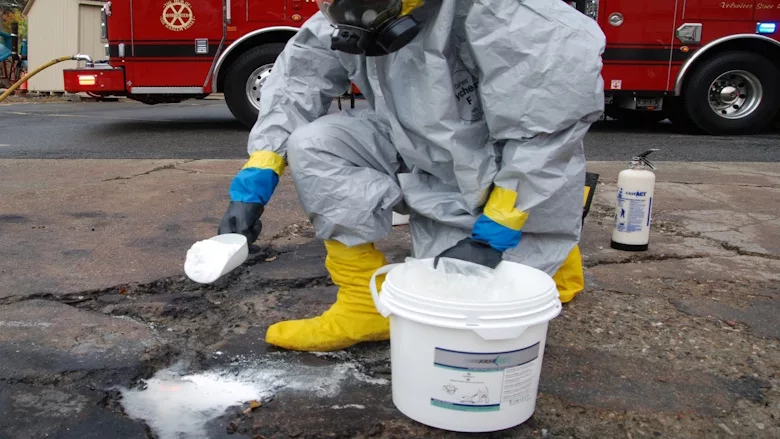
Dry decontamination methods are designed to be used without water or complex setup, allowing for faster application in the event of a chemical release. These methods typically involve materials that can absorb, contain, or neutralize hazardous substances on contact, making them suitable for both liquid spills and certain vapor-related risks.
Because they do not rely on fixed infrastructure, these tools can be integrated into existing hazard controls, staged near high-risk areas, or included as part of standard operating procedures. This flexibility allows for faster response times and supports immediate action during the first minutes of an incident.
Importantly, dry decontamination is not intended to replace traditional response measures. Instead, it complements existing spill procedures and safety protocols by addressing the gap between exposure and full-scale response.
Supporting compliance and safety standards
Incorporating modern decontamination practices into EHS programs can also support compliance with regulatory expectations and safety requirements.
Organizations are required to maintain hazard information, manage chemical inventory, and implement appropriate hazard controls to protect employees from exposure. This includes ensuring that emergency plans and response procedures are both practical and effective under real-world conditions.
Regulatory frameworks emphasize the importance of minimizing exposure, maintaining safe working environments, and adhering to regulatory exposure limits. While these standards do not prescribe specific technologies, they do require employers to evaluate whether their current controls adequately address the risks associated with hazardous materials.
By integrating tools and practices that enable faster hazard control, organizations can strengthen their chemical safety program and demonstrate a proactive approach to environmental health and safety.
Integrating into existing EHS programs
Enhancing chemical safety does not require replacing existing systems. Instead, organizations can improve outcomes by building on what is already in place.
For example, dry decontamination methods can be added to existing spill procedures as supplemental capability. They can be staged in areas where hazardous chemicals are stored or used, such as production lines, laboratories, or battery charging stations. Some modern decontamination approaches are designed not only to absorb or contain hazards, but also to neutralize their active risk during the initial phase of exposure.
Training is another critical component. Effective chemical safety training should include awareness of early-stage response actions, ensuring that personnel understand how to respond to a chemical hazard before it escalates. This is particularly important for laboratory personnel and others working in high-risk environments.
In addition, organizations should ensure that their emergency procedures and communication protocols are aligned with early response actions. Clear roles, responsibilities, and coordination with emergency response teams are essential for managing incidents effectively.
Addressing emerging risks
As industrial processes continue to evolve, new types of chemical hazards are emerging. Lithium-ion battery incidents, for example, can produce both hazardous liquid spills and toxic gases, creating complex response challenges.
These scenarios highlight the need for adaptable safety programs that address a range of hazard classes and exposure pathways. Whether dealing with traditional hazardous waste, chemical storage risks, or emerging technologies, organizations must be prepared to respond quickly and effectively.
Moving toward more resilient safety programs
Chemical safety programs cannot stand still. As risks evolve, organizations must actively update how they prevent, detect, and respond to exposure events. Integrating modern decontamination practices is a practical, immediate way to close the critical gap between exposure and response.
By prioritizing early-stage intervention, organizations can act faster in the moments that matter most — reducing escalation, strengthening worker protection, and minimizing operational disruption. These actions go beyond meeting compliance requirements; they directly reinforce day-to-day safety performance and long-term resilience.
For EHS professionals, the objective is clear: don’t just manage incidents after they occur—design safety programs that reflect real-world conditions and respond decisively in the first minutes of an event. Strengthening chemical safety strategies at the front end of an incident is no longer aspirational. It is an achievable, necessary step toward safer, more resilient operations.
Looking for a reprint of this article?
From high-res PDFs to custom plaques, order your copy today!