ISHN logo
search
cart
facebook twitter linkedin youtube
  • Sign In
  • Create Account
  • Sign Out
  • My Account
ISHN logo
  • NEWS
    • Today's News
    • Global Safety News
    • Government Regulations
  • PRODUCTS
    • Product Innovations
    • Featured Products
  • TOPICS
    • Environmental Health and Safety
    • Facility Safety
    • Workplace Health
    • Occupational Safety
    • PPE
    • More Topics
  • CONSTRUCTION
  • TECHNOLOGY
  • COLUMNS
    • Best Practices
    • Dave Johnson: What’s going on
    • Editorial Comments
    • Leading Safety
  • MULTIMEDIA
    • ISHN Podcast
    • Videos
    • Cold Stress Education Quiz
    • Webinars
    • White Papers
  • MORE
    • Buyer's Guide
    • Newsletters
    • Convention Companion
    • Polls
    • Events
    • ISHN Store
    • Sponsor Insights
  • EMAGAZINE
    • eMagazine
    • Archived Issues
    • Contact
    • Advertise
  • JOIN TODAY!

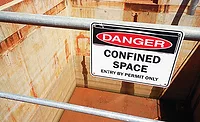
Q&A - Confined space entry

July 1, 2004


QUESTION:

Do I need an industrial hygienist to monitor my confined spaces, or can I train a line employee to operate the instrumentation?

ANSWERS:

Gas monitoring instruments for use in confined spaces are designed to be very straightforward and user-friendly. In routine applications, confined space workers need only to understand that if the readings exceed the set points for limiting action or entry into the confined space, entry should cease immediately until the situation is corrected and normal readings are obtained. This minimizes the need for any industrial hygienist involvement.

But the IH does play a vital role in interpreting the situation when the readings fall outside of the acceptable range and the instruments indicate abnormal atmospheric conditions.

David D. Wagner, Manager, Customer and Product Services, Industrial Scientific Corporation


Yes and yes. The potential hazard within a confined space needs to be assessed first. An IH can be called in to employ a variety of instruments to evaluate the situation and produce an analysis. There may be several hazardous gases present existing at different levels and concentrations within that confined space. Once a recommendation is made by the IH and the proper instrumentation is procured, then an employee may be trained to operate those instruments for ongoing monitoring.

Ron Baughman, Portable Instrument Product Group Manager, MSA Instrument Division


It all depends on the employer’s confined space entry program, and the regulations that govern the entry procedures. All programs, however, must ensure that the individuals who undertake duties such as testing the atmosphere in the space are properly trained.

OSHA 29 CFR 1910.146, “Permit-Required Confined Spaces,” requires the designation, identification and proper training for persons who have an active role in the PRCS entry, including persons who test or monitor the atmosphere in a permit space, but leaves it up to the employer to decide what additional credentials may be required for individuals tasked with specific confined space duties.

Permit space entry team members can only function effectively and safely when they fully understand their responsibilities and duties. Thorough training is essential. Permit spaces are by definition inherently dangerous.

Mistakes are “Not Permitted!”

Bob Henderson, Vice President Business Development, BW Technologies


Our feeling is that it is important that a pre-entry test and confined space monitoring must be performed by someone competent to carry it out, and that testing must be carried out in compliance with the procedures of the organization. The product used must be suited to the purpose and have a current valid calibration certificate. The instrument should have a bump test prior to going into service each day.

All of those areas are best supervised by an industrial hygienist, but with simple one-button instruments now available, the actual function of testing could be carried out by a trained line employee.

Phil Saxton, General Manager, Crowcon USA


The Permit-Required Confined Spaces safety regulation as enforced by state and federal OSHA does not specify the skill level of the individual conducting the air quality testing of such spaces. The OSHA regulation is essentially “silent” on the issues of level of training of the operator and the frequency of calibration of the instrument. However, calibration should be performed in accordance with the instrument-maker’s written instructions, and “due diligence” suggests minimally a one-hour “hands on” training session for the instrument operator.

Dr. Verne R. Brown, Founder and President, ENMET Corporation


A well-designed confined space monitor can be used by operators with little or no background in instrumentation with minimal training required. Gas monitoring instruments are available with fewer control buttons to simplify operation. A typical instrument will have one button for on/off control, one button to zero the instrument, and another for display options. A variety of tools are available to assist employee training, such as pocket reference cards, videos, and interactive computer-based training.

Mike Johnson, Marketing Manager, RKI Instruments, Inc.

Share This Story

Looking for a reprint of this article?
From high-res PDFs to custom plaques, order your copy today!

Recommended Content

JOIN TODAY
to unlock your recommendations.

Already have an account? Sign In

  • forklift safety

    Exploring the latest technologies in forklift safety

    With more staff and more stock in warehousing now more...
    Facility Safety
    By: Josh Cramer
  • welding

    All about welder’s flash or arc eye

    A flash burn is a painful inflammation of the cornea,...
    Environmental Health and Safety
  • dangerous jobs

    The 10 most dangerous jobs in the U.S.

    On-the-job deaths have been rising — hitting the highest...
    Government Safety Regulations
    By: Benita Mehta
Manage My Account
  • eMagazine Subscriptions
  • ISHN Newsletter & Other Newsletter Alerts
  • Online Registration
  • Manage My Preferences
  • Subscription Customer Service

More Videos

Sponsored Content

Sponsored Content is a special paid section where industry companies provide high quality, objective, non-commercial content around topics of interest to the ISHN audience. All Sponsored Content is supplied by the advertising company and any opinions expressed in this article are those of the author and not necessarily reflect the views of ISHN or its parent company, BNP Media. Interested in participating in our Sponsored Content section? Contact your local rep!

close
  • man wearing the the Sundström SR200 Full Face Mask Respirator
    Sponsored byOHD

    5 Fit Testing Mistakes That Could Cost You

  • This image shows Magid AcuSpex polarized blue mirrored safety glasses.
    Sponsored byMagid Glove and Safety

    Construction PPE Guide: What Crews Need for Each Task

  • lone worker in confined space
    Sponsored byAlphasense Ltd.

    GET THE LEAD OUT of your Safety Oxygen Sensors!

Popular Stories

SpaceX 7 launch

OSHA Investigating Fatal Fall at SpaceX Starbase

dust explosion

Tennessee OSHA Issues Record $3.1M Fine After Deadly Explosion at Munitions Plant

roofing dangerous jobs Getty.jpg

OSHA Finds Florida Roofing Company Willfully Exposed Workers to Safety Hazards After Worker’s Fatal Fall

top 10 most dangerous jobs

Poll

Seasonal Readiness

With the federal heat stress prevention rule on the horizon, which area of your safety program needs the most attention?
View Results Poll Archive

Products

Surviving an OSHA Audit A Management Guide, 2nd Edition

Surviving an OSHA Audit A Management Guide, 2nd Edition

See More Products

ISHN Podcasts

Related Articles

  • CFR1910.146: Permit-required confined space entry

    See More
  • Confined Space Safety and Entry Plan

    Keep workers safe before, during & after confined space entry

    See More

Related Directories

  • A F C International Inc.

    Single and Multi gas detectors, fixed position gas monitors, respiratory protection, SCBAS, fit testing, calibration gases, confined space entry detectors.
×

Become a Leader in Safety Culture

Build your knowledge with ISHN, covering key safety, health and industrial hygiene news, products, and trends.

JOIN TODAY
  • RESOURCES
    • Advertise
    • Contact Us
    • Directories
    • Manufacturing Division
    • Store
    • Want More
  • SIGN UP TODAY
    • Create Account
    • eMagazine
    • Newsletters
    • Customer Service
    • Manage Preferences
  • SERVICES
    • Marketing Services
    • Reprints
    • Market Research
    • List Rental
    • Survey/Respondent Access
  • STAY CONNECTED
    • LinkedIn
    • Facebook
    • YouTube
    • X (Twitter)
  • PRIVACY
    • PRIVACY POLICY
    • TERMS & CONDITIONS
    • DO NOT SELL MY PERSONAL INFORMATION
    • PRIVACY REQUEST
    • ACCESSIBILITY

Copyright ©2026. All Rights Reserved BNP Media, Inc. and BNP Media II, LLC.

Design, CMS, Hosting & Web Development :: ePublishing