ISHN logo
search
cart
facebook twitter linkedin youtube
  • Sign In
  • Create Account
  • Sign Out
  • My Account
ISHN logo
  • NEWS
    • Today's News
    • Global Safety News
    • Government Regulations
  • PRODUCTS
    • Product Innovations
    • Featured Products
  • TOPICS
    • Environmental Health and Safety
    • Facility Safety
    • Workplace Health
    • Occupational Safety
    • PPE
    • More Topics
  • CONSTRUCTION
  • TECHNOLOGY
  • COLUMNS
    • Best Practices
    • Dave Johnson: What’s going on
    • Editorial Comments
    • Leading Safety
  • MULTIMEDIA
    • ISHN Podcast
    • Videos
    • Cold Stress Education Quiz
    • Webinars
    • White Papers
  • MORE
    • Buyer's Guide
    • Newsletters
    • Convention Companion
    • Polls
    • Events
    • ISHN Store
    • Sponsor Insights
  • EMAGAZINE
    • eMagazine
    • Archived Issues
    • Contact
    • Advertise
  • JOIN TODAY!

LED Lighting: Its future in safety applications is bright

By Kevin Deighton
January 1, 2006


The incandescent bulb was once the preferred way to light a flashlight. But in the past 15 to 20 years, LEDs have steadily evolved from the VCR and EQ gauge to an integral part of safety lighting in today’s industrial, safety and manufacturing settings. Their safety characteristics, extreme battery efficiency, toughness, versatility and brilliant collimated beams have earned them high marks among safety professionals worldwide.

Ken Scofield of the Blue Springs, Mississippi, Fire Department says, “During a primary search, my partner’s light only went a foot or so in front of him, and it had a lot of back scatter, to the point that visibility was just as bad with his light on as it was without. After he saw mine cut through the smoke, he shut his off and put his back in his pocket.”

“We were absolutely amazed that through thick, dark smoke, the LED’s beam shot several feet ahead of us, illuminating not only the objects ahead of us, but we could even make out some of the details like patterns on the wallpaper and the corner of the chair leg, through the smoke.”

At the Mississippi State’s Summer Fire School, firefighters throughout the state in hot, smoky, steamy environments used LED lights that outperformed other styles of flashlights. “Significantly less back scatter, further penetration in the smoke, and the ability to make out some detail in the smoke. Every time. Without exception,” adds Scofield.

What is an LED?

An LED (Light Emitting Diode) is a solid plastic bulb embedded with a semiconductor that emits photons or light particles when excited by an electrical current. White LEDs are the staple in flashlight technology, but currently just about any solid colored LED (green, red, blue, yellow, purple, white, etc.) can be created.

White LEDs are made with a single blue LED chip that has been covered with a special material called phosphor to alter the color of the emitted light.

The overall result is a super bright LED that produces a white to bluish-white light. Generally speaking, white LEDs are exactly the same as blue LEDs. They have the same voltage and current requirements, because both white and blue use an almost identical chip.

LED qualities

LEDs are increasingly being used as an alternative to incandescent bulbs. There are a number of reasons for this. Here are just a few:
  • LEDs have up to 5,000 times more life than an incandescent bulb.
  • LEDs are ideal for extended operation because of their low power requirements.
  • LEDs use about one-tenth the power of incandescent bulbs and are up to 90 percent more efficient than both fluorescent and neon lamps of similar strength.
  • LEDs don’t have a filament like incandescent bulbs so they can’t burn out and are shock-resistant.
LEDs are intrinsically safe (giving off much less heat than incandescent bulbs), making them ideal for just about any potential incendiary situation where flammable gases are in the air. Incandescent bulbs give off lots of heat and burn on a filament, which can be compared to putting a match to gasoline in some situations.

The normal working lifetime of an LED device, including the bulb, is more than ten years, giving them a distinct advantage over the abrupt burnout of incandescent bulbs.

Brighter and brighter

While LEDs haven’t yet eclipsed incandescent bulbs from a brilliance and power standpoint, the technology has a rather brief history. If Moore’s Law prevails, then the power of LEDs will double every 18 months.

“The inherent advantages that LEDs have over common incandescent bulbs (long life, shock resistance, full color light) make them a natural choice as a replacement. Just a couple of years ago we saw LEDs appear on the market that could produce ten times the light of the previous generation of LEDs,” says Doug Pribis, author and owner of Flashlightreviews.com.

Incandescent bulbs are cheap to buy but inefficient to run, generating a range of about 16 lumens per watt for a domestic tungsten bulb to 22 lumens per watt for halogen bulbs. LEDs are tougher and much more efficient than common incandescents, with the average commercial LED generating about 32 lumens per watt.

More does not mean brighter

In the past, to get a usable bright light, multiple LEDs needed to be gathered in an array, but even then the light was hazy and diffused. The latest LED lights’ power have eclipsed the models produced only a couple of years ago and offer more consistent color in a very small package. Their beams can now be focused and brilliant with the help of single 3 Watt and 1 Watt LEDs and specially engineered reflectors. They can now generate as much as 45 lumens per watt in white, making them equal to about 10 to 20+ ultra-bright white 5mm LEDs, occupying the same or less space.

Recent technological advances such as Recoil LEDâ„¢ offer a collimated beam comparable to a regular flashlight, ushering them into the professional marketplace as viable alternatives to incandescent bulbs. The technology works like a handheld lighthouse by mounting an LED on a crossbar that shines backward into a parabolic reflector to gather 100 percent of the generated light.

“I expect that LED lighting technology will continue to grow at an exponential rate. I would not be surprised if within the next several decades, most of the man-made light we encounter in our lives is produced by energy-efficient, full-spectrum solid-state LED ‘bulbs.’ It’s only a matter of time until we see LED bulbs producing 10, 100 and 1,000 watts equivalent of light,” adds Pribis.

LEDs — a little dollop of plastic coupled with the semiconductor’s endurance, efficiency and power — will no doubt save many lives and lots of money in the coming years.

Share This Story

Looking for a reprint of this article?
From high-res PDFs to custom plaques, order your copy today!

Kevin Deighton is director of product development at Pelican Products in Torrance, Calif. He holds an MBA from Cal State Long Beach, Calif., and a degree in Technology and Management Science from the University of Bradford, UK. Pelican Products is a leading, ISO 9001-2000 certified, internationally recognized manufacturer of high-impact, waterproof Protectorâ„¢ Cases and technically advanced, safety-approved flashlights. For more information, visit www.pelican.com.

Recommended Content

JOIN TODAY
to unlock your recommendations.

Already have an account? Sign In

  • forklift safety

    Exploring the latest technologies in forklift safety

    With more staff and more stock in warehousing now more...
    Facility Safety
    By: Josh Cramer
  • welding

    All about welder’s flash or arc eye

    A flash burn is a painful inflammation of the cornea,...
    Environmental Health and Safety
  • dangerous jobs

    The 10 most dangerous jobs in the U.S.

    On-the-job deaths have been rising — hitting the highest...
    Occupational Safety
    By: Benita Mehta
Manage My Account
  • eMagazine Subscriptions
  • ISHN Newsletter & Other Newsletter Alerts
  • Online Registration
  • Manage My Preferences
  • Subscription Customer Service

More Videos

Sponsored Content

Sponsored Content is a special paid section where industry companies provide high quality, objective, non-commercial content around topics of interest to the ISHN audience. All Sponsored Content is supplied by the advertising company and any opinions expressed in this article are those of the author and not necessarily reflect the views of ISHN or its parent company, BNP Media. Interested in participating in our Sponsored Content section? Contact your local rep!

close
  • man wearing the the Sundström SR200 Full Face Mask Respirator
    Sponsored byOHD

    5 Fit Testing Mistakes That Could Cost You

  • This image shows Magid AcuSpex polarized blue mirrored safety glasses.
    Sponsored byMagid Glove and Safety

    Construction PPE Guide: What Crews Need for Each Task

  • lone worker in confined space
    Sponsored byAlphasense Ltd.

    GET THE LEAD OUT of your Safety Oxygen Sensors!

Popular Stories

SpaceX 7 launch

OSHA Investigating Fatal Fall at SpaceX Starbase

Automated loading dock equipment

After March 2026 Rivian Death, Safety Managers Reassess Loading Dock Systems Under OSHA's Warehouse Emphasis Program

psychology in the workplace

Most Workplaces Measure Psychological Safety, Ignoring Psychosocial Risks

top 10 most dangerous jobs

Poll

Seasonal Readiness

With the federal heat stress prevention rule on the horizon, which area of your safety program needs the most attention?
View Results Poll Archive

Products

Surviving an OSHA Audit A Management Guide, 2nd Edition

Surviving an OSHA Audit A Management Guide, 2nd Edition

See More Products

ISHN Podcasts

Related Articles

  • Is LED Lighting Really that Efficient and Can it Really Save that Much Money

    See More
  • Waterproof, safety-coated LED lighting solutions

    See More
  • Larson Electronics releases a portable, rechargeable LED task lighting system

    See More

Related Products

See More Products
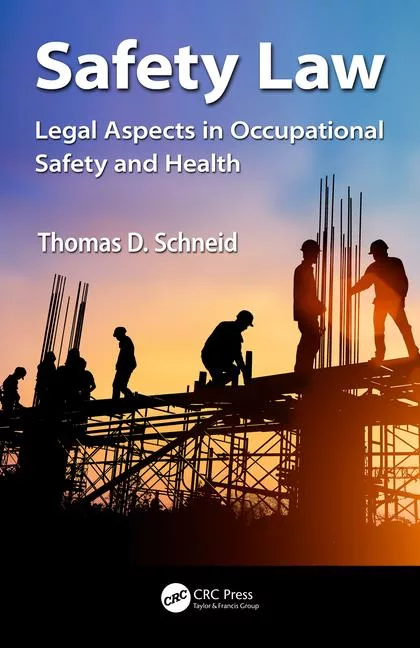
  • safety law.jpg

    Safety Law: Legal Aspects in Occupational Safety and Health

See More Products

Related Directories

  • Fenix Lighting

    Fenix builds quality LED lights for hands, heads and handlebars. Whether outdoor and hunting enthusiasts or professionals in public safety, industrial services or the military, Fenix offers an array of lights for every lighting demand. Fenix offers the highest standards in quality, performance and customer service. For more than 10 years, Fenix has manufactured all products in its company-owned facility in Shenzhen, China, and exceeds industry ANSI/NEMA FL-1 standards with additional in-house testing protocols.
×

Become a Leader in Safety Culture

Build your knowledge with ISHN, covering key safety, health and industrial hygiene news, products, and trends.

JOIN TODAY
  • RESOURCES
    • Advertise
    • Contact Us
    • Directories
    • Manufacturing Division
    • Store
    • Want More
  • SIGN UP TODAY
    • Create Account
    • eMagazine
    • Newsletters
    • Customer Service
    • Manage Preferences
  • SERVICES
    • Marketing Services
    • Reprints
    • Market Research
    • List Rental
    • Survey/Respondent Access
  • STAY CONNECTED
    • LinkedIn
    • Facebook
    • YouTube
    • X (Twitter)
  • PRIVACY
    • PRIVACY POLICY
    • TERMS & CONDITIONS
    • DO NOT SELL MY PERSONAL INFORMATION
    • PRIVACY REQUEST
    • ACCESSIBILITY

Copyright ©2026. All Rights Reserved BNP Media, Inc. and BNP Media II, LLC.

Design, CMS, Hosting & Web Development :: ePublishing