CASE STUDY: Company resolves vapor issues
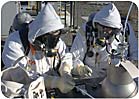
CH2M HILL is responsible for safely managing more than 53 million gallons of radioactive and chemical waste on the Department of Energy’s Hanford site in south-central Washington State. The waste is stored in 177 underground tanks. Part of CH2M HILL’s management responsibility includes protecting its workers from potentially harmful chemical vapors emanating from those tanks.
Waste in the tanks was generated during World War II and the Cold War from chemical processes used to produce plutonium for nuclear weapons. Worker concerns about possible health effects from these vapors, prompted in part by odors coming from the tanks, led CH2M HILL to launch a series of actions to resolve the vapors issue once and for all.
Team effort
First, the company formed a Chemical Vapor Solutions Team (CVST), made up of employees and managers to address the problem head-on. All meetings were open to employees, and actions were reported weekly on the team Web site.The team went to work identifying vapor release sources and generated ideas on how to stop the releases. Identifying some of these sources, like the filtered breather stacks, was obvious. Other sources, like worn flange gaskets, instrument cabinets and the like, had to be located before they could be sealed. The team made recommendations, served as a sounding board for new ideas and participated in decision-making.
During the time it took CH2M HILL to research these issues and obtain sound data, all workers were required to use supplied air respirators while working inside the tank farms.
Air sampling campaign
The company then developed a document known as the Industrial Hygiene Technical Basis, which identified approximately 1,800 chemicals known, or suspected to be inside the tanks. The document also included a list of which chemicals produce vapors that could put workers at risk, and provided a systematic method to determine the concentration of these chemicals in the work space so they could be compared to government health standards.Based on recommendations contained in the Technical Basis, an aggressive air sampling campaign was launched to find out if the chemicals of concern were present in the work space and, if so, in what concentrations. “Rigorous toxicological methods were used to determine safe, conservative exposure limits for hundreds of chemicals. This process was overseen by an expert panel of nationally recognized professional toxicologists, all of whom have served on National Academy of Sciences panels,” said Tom Anderson, CH2M HILL Director of Health and Safety.
The next challenge was determining where to begin taking the air samples. Hanford tanks are grouped into 18 farms, each with as few as two and as many as 16 individual tanks. Most of the tanks have no active ventilation system on them. Instead, they are passively vented to the atmosphere through a High Efficiency Particulate Air (HEPA) filter, and “breathe” with the changes in temperatures and atmospheric pressure. Other tanks, including newer double-shell tanks, have active ventilation systems — large exhaust fans that continually remove vapors.
Seeking advice
Even before the sampling program was under way, CH2M HILL management decided to go outside the company for expert assistance, seeking input from leading consultants in the chemical and petroleum industries. As it turned out, the vapor problem at Hanford was more complex than any industrial plant setting because the tank vapors were not as well controlled as in a chemical plant. As a result of the enhanced evaluations, new vapor controls were implemented.“Sampling equipment was set up in specified locations outside the farms, within the farms, and directly inside the breather filters,” said Anderson. “Sampling devices were also attached to workers to obtain information about vapor concentrations in the worker breathing space.”
While the sampling program went forward, engineered solutions were explored to provide additional worker protection. On certain tanks known for releasing noxious vapors, breather filter exhaust stack extensions were installed to move vapors up and away from worker breathing space. Sources of fugitive emissions, such as leaking gaskets, were identified and sealed. Ventilation fans were installed inside instrument cabinets. Cracked plastic hoses found inside radiation air monitoring cabinets were replaced with stainless steel tubing. Remotely operated cameras were installed around a number of single-shell tank farms to provide safety and security monitoring.
While the sampling program was the key to resolving the issue, it took time. Thus, during this period the company embarked on a thorough communications effort to update its workers on the program’s progress. This included periodic technical reports, newsletter articles, frequent all-employee meetings, and more.
Respiratory protection measures
As sampling data came back from the laboratory, it was subjected to a rigorous quality assurance process and reviewed with the Chemical Vapor Solutions Team. Once defensible data was in-hand and employees were alerted, managers were able to adjust the respiratory protection requirements. For most situations within the tank farms, the data shows that supplied air respirators were not required. Because transfers of waste between tanks can stir up the waste and potentially increase vapor releases, an additional vapor sampling program is being conducted during periods of waste transfers. This sampling is still under way and until sound data exists on vapors under these conditions, supplied air respiratory protection is still required during those periods.Workers were assured they would always have the option to wear respiratory protection at their discretion, and some still choose to do so.
The first changes in respiratory protection requirements followed two years of workers using supplied air. It was a change that most workers welcomed because it relieved them of having to use heavy, cumbersome supplied air equipment.
The result of this multi-phased effort has been a significant improvement in worker safety because the company now has the data that enables sound decisions regarding the appropriate levels of respiratory protection required to work in tank farms. By taking an aggressive approach in resolving these highly complex concerns raised by our workforce, CH2M HILL has built a solid foundation of not only data, but of trust and confidence between management and the workforce.
Looking for a reprint of this article?
From high-res PDFs to custom plaques, order your copy today!