ISHN logo
search
cart
facebook twitter linkedin youtube
  • Sign In
  • Create Account
  • Sign Out
  • My Account
ISHN logo
  • NEWS
    • Today's News
    • Global Safety News
    • Government Regulations
  • PRODUCTS
    • Product Innovations
    • Featured Products
  • TOPICS
    • Environmental Health and Safety
    • Facility Safety
    • Workplace Health
    • Occupational Safety
    • PPE
    • More Topics
  • CONSTRUCTION
  • TECHNOLOGY
  • COLUMNS
    • Best Practices
    • Dave Johnson: What’s going on
    • Editorial Comments
    • Leading Safety
  • MULTIMEDIA
    • ISHN Podcast
    • Videos
    • Cold Stress Education Quiz
    • Webinars
    • White Papers
  • MORE
    • Buyer's Guide
    • Newsletters
    • Convention Companion
    • Polls
    • Events
    • ISHN Store
    • Sponsor Insights
  • EMAGAZINE
    • eMagazine
    • Archived Issues
    • Contact
    • Advertise
  • JOIN TODAY!
Columns

EHS WORLDWIDE HORIZONS: Preventing death on the job

By James Nash
November 4, 2008


A growing number of safety professionals, including many ORC Worldwide members, are questioning the conventional wisdom that preventing unsafe acts and minor incidents will lead to fewer fatalities. The questions arise because in recent years many companies have lowered total injury rates — yet the number of fatalities continues as before.

In response to this trend, ORC formed a “Fatality and Serious Injury Task Force.” More than 70 fatality and near-fatality cases have already been reported by task force members, allowing ORC to do some preliminary analysis on the root causes of these incidents. Before discussing these findings, however, I want to explain briefly why many safety professionals are focusing on serious injury and fatality prevention.
Challenging the Heinrich Pyramid

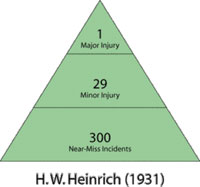
The received wisdom now called into question is the belief in a direct relationship between unsafe acts, minor incidents, and serious injuries. It can be traced back to the 77-year-old Heinrich Pyramid, or safety triangle, first discussed in H.W. Heinrich’s 1931 book, Industrial Accident Prevention: A Scientific Approach (see figure one). The theory predicts that for every 300 near-miss incidents there will be 29 minor and one major injury. Although the specific numbers in the pyramid have never been scientifically validated, the concept has appealed to safety professionals for years as intuitively plausible.

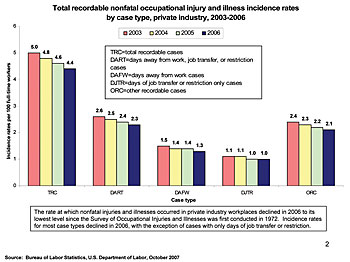
Skeptics of the Heinrich Pyramid argue that the Bureau of Labor Statistics data do not appear to support the theory. Since 2003, every major measure of OSHA recordable nonfatal occupational injury and illness rates has declined: total recordable cases; days away from work, job transfer, or restriction cases; days of job transfer or restriction only cases; and other recordable cases (see figure two).

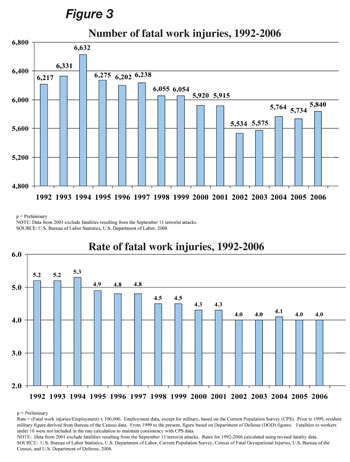
If Heinrich’s theory is correct, one would expect this steady decline in total injuries to be accompanied by a decline in the most serious kinds of injuries. But this is not the case; the number of workplace fatalities increased from 2003 to 2006 (the last year for which complete data are available), while the rate of fatal injuries did not change (see figure three).

In the second edition of Safety Management, the late and venerable Dan Petersen agreed that the types of accidents resulting in temporary disabilities are quite different from those resulting in permanent total disabilities or fatalities. “There are different sets of circumstances [and causes] surrounding severity.”
Preliminary results

So far a total of 17 companies have shared data on 72 fatality and near-fatality cases with ORC. While this sample size is too small to be statistically definitive, it is large enough to be suggestive. We believe these results can be used to guide future research as well as ongoing risk-reduction strategies.

The first noteworthy feature of the data is that almost half of these incidents (33) involved contractors as opposed to regular employees. Although we do not know the overall ratio of contractors to employees at these organizations, it is likely far below 50 percent. This is evidence that contract workers face significantly higher serious injury risk than do regular employees.

We also found important differences among contractors and employees regarding the type of work involved in these incidents. Operations led to four times as many incidents for employees as compared to contractors, while contractors were far more likely to be involved in incidents involving field service and construction/renovation work. Overall, maintenance and service tasks accounted for the largest number of incidents (14).

Perhaps the most significant findings point to a possible mismatch between fatality incident investigation findings and corrective actions taken to address the situation.

For example, poor equipment design, hazardous conditions, and machinery were all essentially tied for third place (cited 55 to 56 times) as contributing causes to these incidents. But substituting less hazardous tools or materials came in last as a corrective action, cited just three times while equipment modification was cited 28 times. Retraining (41 citations) and procedure modification (40 citations) were the most frequently cited corrective actions.

Conclusion

The results of the ORC Fatality and Serious Injury Task Force Survey have convinced us that as professionals we must change how we view:
  • The relationship between incident investigations and corrective action;
  • Employee behavior and risk management;
  • Employee behavior and engineering controls.


Through its consulting expertise, networking opportunities and a range of other specialized services, ORC Worldwide today helps more than 150 leading corporations achieve safety, health and environmental excellence (www.orc-dc.com).

Share This Story

Looking for a reprint of this article?
From high-res PDFs to custom plaques, order your copy today!

James joined ORC Worldwide in 2007 and is responsible for managing internal and external communications. Prior to working for ORC, James was Associate Editor and, later, Senior Editor in the Washington, DC, office of Occupational Hazards magazine.

Recommended Content

JOIN TODAY
to unlock your recommendations.

Already have an account? Sign In

  • forklift safety

    Exploring the latest technologies in forklift safety

    With more staff and more stock in warehousing now more...
    Facility Safety
    By: Josh Cramer
  • welding

    All about welder’s flash or arc eye

    A flash burn is a painful inflammation of the cornea,...
    Environmental Health and Safety
  • dangerous jobs

    The 10 most dangerous jobs in the U.S.

    On-the-job deaths have been rising — hitting the highest...
    Government Safety Regulations
    By: Benita Mehta
Manage My Account
  • eMagazine Subscriptions
  • ISHN Newsletter & Other Newsletter Alerts
  • Online Registration
  • Manage My Preferences
  • Subscription Customer Service

More Videos

Sponsored Content

Sponsored Content is a special paid section where industry companies provide high quality, objective, non-commercial content around topics of interest to the ISHN audience. All Sponsored Content is supplied by the advertising company and any opinions expressed in this article are those of the author and not necessarily reflect the views of ISHN or its parent company, BNP Media. Interested in participating in our Sponsored Content section? Contact your local rep!

close
  • man wearing the the Sundström SR200 Full Face Mask Respirator
    Sponsored byOHD

    5 Fit Testing Mistakes That Could Cost You

  • This image shows Magid AcuSpex polarized blue mirrored safety glasses.
    Sponsored byMagid Glove and Safety

    Construction PPE Guide: What Crews Need for Each Task

  • lone worker in confined space
    Sponsored byAlphasense Ltd.

    GET THE LEAD OUT of your Safety Oxygen Sensors!

Popular Stories

SpaceX 7 launch

OSHA Investigating Fatal Fall at SpaceX Starbase

psychology in the workplace

Most Workplaces Measure Psychological Safety, Ignoring Psychosocial Risks

Worker Impairment

How to Tell When a Co-Worker is Impaired? A Safety Pro’s Challenge

top 10 most dangerous jobs

Poll

Seasonal Readiness

With the federal heat stress prevention rule on the horizon, which area of your safety program needs the most attention?
View Results Poll Archive

Products

Surviving an OSHA Audit A Management Guide, 2nd Edition

Surviving an OSHA Audit A Management Guide, 2nd Edition

See More Products

ISHN Podcasts

Related Articles

  • EHS WORLDWIDE HORIZONS: Go out and compete for resources

    See More
  • workers

    Death on the Job: The Toll of Neglect, 2019

    See More
  • Death on the Job: The Toll of Neglect, 2017

    See More

Related Products

See More Products
  • ISHN-BG-Dec.2017-cover.jpg

    ISHN EHS Buyers’ & Resource Guide

See More Products

Related Directories

  • Crisis Prevention Institute

    CPI equips organizations with training and resources on preventing and de-escalating difficult behavior.
×

Become a Leader in Safety Culture

Build your knowledge with ISHN, covering key safety, health and industrial hygiene news, products, and trends.

JOIN TODAY
  • RESOURCES
    • Advertise
    • Contact Us
    • Directories
    • Manufacturing Division
    • Store
    • Want More
  • SIGN UP TODAY
    • Create Account
    • eMagazine
    • Newsletters
    • Customer Service
    • Manage Preferences
  • SERVICES
    • Marketing Services
    • Reprints
    • Market Research
    • List Rental
    • Survey/Respondent Access
  • STAY CONNECTED
    • LinkedIn
    • Facebook
    • YouTube
    • X (Twitter)
  • PRIVACY
    • PRIVACY POLICY
    • TERMS & CONDITIONS
    • DO NOT SELL MY PERSONAL INFORMATION
    • PRIVACY REQUEST
    • ACCESSIBILITY

Copyright ©2026. All Rights Reserved BNP Media, Inc. and BNP Media II, LLC.

Design, CMS, Hosting & Web Development :: ePublishing