ISHN logo
search
cart
facebook twitter linkedin youtube
  • Sign In
  • Create Account
  • Sign Out
  • My Account
ISHN logo
  • NEWS
    • Today's News
    • Global Safety News
    • Government Regulations
  • PRODUCTS
    • Product Innovations
    • Featured Products
  • TOPICS
    • Environmental Health and Safety
    • Facility Safety
    • Workplace Health
    • Occupational Safety
    • PPE
    • More Topics
  • CONSTRUCTION
  • TECHNOLOGY
  • COLUMNS
    • Best Practices
    • Dave Johnson: What’s going on
    • Editorial Comments
    • Leading Safety
  • MULTIMEDIA
    • ISHN Podcast
    • Videos
    • Cold Stress Education Quiz
    • Webinars
    • White Papers
  • MORE
    • Buyer's Guide
    • Newsletters
    • Convention Companion
    • Polls
    • Events
    • ISHN Store
    • Sponsor Insights
  • EMAGAZINE
    • eMagazine
    • Archived Issues
    • Contact
    • Advertise
  • JOIN TODAY!

How much does my respirator leak?
By Cliff Crutchfield, CIH Ph.D.
May 8, 2009


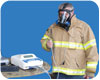
With the introduction of the controlled negative pressure (CNP) fit test method and the CNP Redon fit test protocol, it is now possible to complete an OSHA-accepted fit test of a worker’s actual respirator in three minutes or less.

The CNP Redon fit test protocol places a strong emphasis on mask re-donning. Mask donning plays a critical role in determining how much protection a respirator will actually provide. The CNP Redon protocol assesses three separate mask donnings during the fit test.

Basics and basis
The basic question every fit test operator tries to answer during a fit test is, “How much does the respirator leak?” The answer to that question will judge whether the respirator will likely provide an acceptable level of protection when worn in a specific work environment.

Systems based on CNP answer the leakage question by measuring respirator leakage directly during a fit test. There is always a sufficient challenge agent concentration because, during a CNP fit test, the difference between challenge and in-mask concentrations is about a million billion air molecules/cc.

Using air as the CNP challenge agent enables faster detection of respirator leakage. Because it is based on air pressure that equilibrates by wave propagation at the speed of sound, a CNP system detects air molecules the moment they enter a respirator leak site. CNP’s pressure and leak measurements can readily be traced to primary measurement standards.

The objective of the respirator faceseal is to block air leakage into the respirator. CNP quickly measures how well that objective is met by the test respirator. Since air is the medium that transports both particulate and gaseous contaminants through respirator leak sites, it is the most conservative challenge agent possible. If air cannot leak into a respirator, neither can a particulate or gaseous contaminant.

Most current fit test pass-fail criteria rely on aerosol-based assessments of respirator leakage and fit. Systems based on CNP use air as the challenge agent. Differences in system measurements can be traced to the basic differences in each method’s approach to answering the question of how much does a respirator leak. A comparison metric to allow CNP and aerosol fit test results to be assessed using the same pass-fail criterion is available, and numerous scientific studies can be reviewed to discern the positive difference CNP systems can make in detecting respirator leakage.

Share This Story

Looking for a reprint of this article?
From high-res PDFs to custom plaques, order your copy today!

Cliff developed the CNP fit test method. He recently retired from the University of Arizona after a 26-year career in occupational and public health. Contact him at cdcrutch@comcast.net.

Recommended Content

JOIN TODAY
to unlock your recommendations.

Already have an account? Sign In

  • forklift safety

    Exploring the latest technologies in forklift safety

    With more staff and more stock in warehousing now more...
    Facility Safety
    By: Josh Cramer
  • welding

    All about welder’s flash or arc eye

    A flash burn is a painful inflammation of the cornea,...
    Environmental Health and Safety
  • dangerous jobs

    The 10 most dangerous jobs in the U.S.

    On-the-job deaths have been rising — hitting the highest...
    Occupational Safety
    By: Benita Mehta
Manage My Account
  • eMagazine Subscriptions
  • ISHN Newsletter & Other Newsletter Alerts
  • Online Registration
  • Manage My Preferences
  • Subscription Customer Service

More Videos

Sponsored Content

Sponsored Content is a special paid section where industry companies provide high quality, objective, non-commercial content around topics of interest to the ISHN audience. All Sponsored Content is supplied by the advertising company and any opinions expressed in this article are those of the author and not necessarily reflect the views of ISHN or its parent company, BNP Media. Interested in participating in our Sponsored Content section? Contact your local rep!

close
  • man wearing the the Sundström SR200 Full Face Mask Respirator
    Sponsored byOHD

    5 Fit Testing Mistakes That Could Cost You

  • This image shows Magid AcuSpex polarized blue mirrored safety glasses.
    Sponsored byMagid Glove and Safety

    Construction PPE Guide: What Crews Need for Each Task

  • lone worker in confined space
    Sponsored byAlphasense Ltd.

    GET THE LEAD OUT of your Safety Oxygen Sensors!

Popular Stories

SpaceX 7 launch

OSHA Investigating Fatal Fall at SpaceX Starbase

Worker Impairment

How to Tell When a Co-Worker is Impaired? A Safety Pro’s Challenge

psychology in the workplace

Most Workplaces Measure Psychological Safety, Ignoring Psychosocial Risks

top 10 most dangerous jobs

Poll

Seasonal Readiness

With the federal heat stress prevention rule on the horizon, which area of your safety program needs the most attention?
View Results Poll Archive

Products

Surviving an OSHA Audit A Management Guide, 2nd Edition

Surviving an OSHA Audit A Management Guide, 2nd Edition

See More Products

ISHN Podcasts

Related Articles

  • Bleeding money: how much does safety really cost?

    See More
  • How much does an amputation cost in recovery time?

    See More
  • How much risk does the Zika virus pose for Olympic visitors?

    See More

Related Products

See More Products
  • Top Ten Pitfalls in OSHA Recordkeeping and How to Avoid Them

See More Products
×

Become a Leader in Safety Culture

Build your knowledge with ISHN, covering key safety, health and industrial hygiene news, products, and trends.

JOIN TODAY
  • RESOURCES
    • Advertise
    • Contact Us
    • Directories
    • Manufacturing Division
    • Store
    • Want More
  • SIGN UP TODAY
    • Create Account
    • eMagazine
    • Newsletters
    • Customer Service
    • Manage Preferences
  • SERVICES
    • Marketing Services
    • Reprints
    • Market Research
    • List Rental
    • Survey/Respondent Access
  • STAY CONNECTED
    • LinkedIn
    • Facebook
    • YouTube
    • X (Twitter)
  • PRIVACY
    • PRIVACY POLICY
    • TERMS & CONDITIONS
    • DO NOT SELL MY PERSONAL INFORMATION
    • PRIVACY REQUEST
    • ACCESSIBILITY

Copyright ©2026. All Rights Reserved BNP Media, Inc. and BNP Media II, LLC.

Design, CMS, Hosting & Web Development :: ePublishing