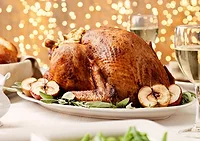
Thanksgiving top day for cooking fires
Thanksgiving remains the leading day for cooking fires, with three times as many cooking fires as an average day. That’s according to statistics by the nonprofit National Fire Protection Association (NFPA), which also found that cooking equipment fires are still the leading cause of U.S. home fires and fire injuries, and the third leading cause of fire deaths. On Thanksgiving 2008, U.S. fire departments responded to 1,300 home cooking fires compared to 420 such fires on an average day.
“Thanksgiving is a holiday of feasting, but it’s also a day of intense cooking, when stovetops and ovens are working overtime,” says Lorraine Carli, NFPA’s vice president of communications. “These culinary activities bring an increased risk of fire particularly when people are trying to prepare several dishes while entertaining friends and family.”
According to NFPA, U.S. fire departments responded to an estimated annual average of 154,700 home structure fires involving cooking equipment between 2004 and 2008. These fires caused an average of 460 civilian deaths, 4,850 reported civilian fire injuries, and $724 million in direct property damage. Overall, these incidents accounted for two of every five (41%) reported home fires, 17% of home fire deaths, more than one-third (37%) of home fire injuries, and 11% of the direct property damage resulting from home fires. Three of every five people (59%) injured in a cooking fire were hurt when they tried to fight the fire themselves.
Unfortunately, little progress has been made in reducing deaths from home cooking fire. The average of 460 deaths per year in 2004-2008 was only 7% lower than the 500 per year in 1980-1984. Meanwhile, fire rates among other types of home fires have steadily declined.
Unattended cooking was by far the leading contributing factor in cooking equipment fires. Ranges or cooktops were involved in the majority (59%) of home cooking fire incidents; ovens accounted for 16%. Clothing was the item first ignited in less than 1% of these fires, but these incidents accounted 15% of the cooking fire deaths.
NFPA offers the following cooking safety tips.
Cook with caution:
“Thanksgiving is a holiday of feasting, but it’s also a day of intense cooking, when stovetops and ovens are working overtime,” says Lorraine Carli, NFPA’s vice president of communications. “These culinary activities bring an increased risk of fire particularly when people are trying to prepare several dishes while entertaining friends and family.”
According to NFPA, U.S. fire departments responded to an estimated annual average of 154,700 home structure fires involving cooking equipment between 2004 and 2008. These fires caused an average of 460 civilian deaths, 4,850 reported civilian fire injuries, and $724 million in direct property damage. Overall, these incidents accounted for two of every five (41%) reported home fires, 17% of home fire deaths, more than one-third (37%) of home fire injuries, and 11% of the direct property damage resulting from home fires. Three of every five people (59%) injured in a cooking fire were hurt when they tried to fight the fire themselves.
Unfortunately, little progress has been made in reducing deaths from home cooking fire. The average of 460 deaths per year in 2004-2008 was only 7% lower than the 500 per year in 1980-1984. Meanwhile, fire rates among other types of home fires have steadily declined.
Unattended cooking was by far the leading contributing factor in cooking equipment fires. Ranges or cooktops were involved in the majority (59%) of home cooking fire incidents; ovens accounted for 16%. Clothing was the item first ignited in less than 1% of these fires, but these incidents accounted 15% of the cooking fire deaths.
NFPA offers the following cooking safety tips.
Cook with caution:
- Be on alert! If you are sleepy or have consumed alcohol, don’t use the stove or stovetop.
- Stay in the kitchen while you are frying, grilling, or broiling food. If you leave the kitchen for even a short period of time, turn off the stove.
- If you are simmering, baking, roasting, or boiling food, check it regularly, remain in the home while food is cooking, and use a timer to remind you that you are cooking.
- Keep anything that can catch fire — oven mitts, wooden utensils, food packaging, towels or curtains — away from your stovetop.
- Just get out! When you leave, close the door behind you to help contain the fire.
- Call 9-1-1 or the local emergency number after you leave.
- If you try to fight the fire, be sure others are getting out and you have a clear way out.
- Keep a lid nearby when you’re cooking to smother small grease fires. Smother the fire by sliding the lid over the pan and turn off the stovetop. Leave the pan covered until it is completely cooled.
- For an oven fire, turn off the heat and keep the door closed.
Looking for a reprint of this article?
From high-res PDFs to custom plaques, order your copy today!