Free falls & sudden stops
Use of fall protection equipment is becoming more commonplace throughout industry; still, falls from height, even when protection is used, can be violent, injurious events. All individuals working with fall protection need to know how to select and apply fall protection properly to maximize safety and minimize injuries. The most common assumption that a newcomer to fall protection makes is that all fall protection equipment is safe in every application. This is not true.
Most fall protection products are made for very specific applications and, as a result, have specific limitations. Unfortunately, misapplications are all too common, and these misapplications set up the user for potential injuries that can range from traumatic to potentially fatal.
Let’s review the most common equipment, restrictions of use, and common misapplications.
Lanyards
The biggest misuse of energy-absorbing lanyards, E.A.Ls, is attaching them as high as possible above the user’s head and directly above the user’s head (Figure 1). The greater the free fall distance, the greater the potential impact on the body. The risk is compounded when the human body has contact with hazards or falls onto or into hazards during this free fall and deceleration distance. The greater this total distance, the more likely it is that the user will not be able to rescue himself/ herself and climb back to safety.If the user attaches the end of the lanyard to a point below his/her harness D-ring, the dangers increase significantly. Almost every E.A.L. sold today (to current ANSI Z359.1 (1992) standards) is engineered for only a six (6) foot free fall. If a common six-foot E.A.L. is attached at foot level or below, the total free fall can exceed 12 feet.
If the worker falls more than six feet, the energy-absorbing capability of the shock pack may be completely used up. The remaining potential and kinetic energy from the fall must then be absorbed by the internal organs and/or skeleton of the human body. The maximum G-forces a healthy human body can withstand without injury is 10 Gs. Knowing that the backup strap is required to have a breaking strength of 5000 lbs, the maximum Gs the human body would be subjected to would be as follows:
130 lb person = 5000 lbs. / 130 lbs = 38.5 Gs
310 lb person = 5000 lbs. / 310 lbs = 16.2 Gs
These maximum values of 38.5 Gs and 16.2 Gs may result in very serious internal organ, skeletal injuries, or even a fatality.
To protect the user, all new lanyards must be clearly labeled per the new standard Z359.13 just released this past November of 2009 (Figures 3 and 4).
If a six-foot long lanyard is anchored in any position below the users’ harness D-ring, then the 12-foot maximum free fall lanyard must be used (Figure 4).
Commonly available self-retracting lanyards (SRLs) are engineered for overhead use only. A common misuse of the SRL involves the user incorrectly attaching his SRL to an anchorage point below his D-ring or unwittingly climbing above the attachment point of the SRL. In this situation the fall distance will exceed the two-foot free fall the unit was engineered for, and the user can “tear through” the energy-absorption capability of the SRL with a shock pack.
Compared to “SRL with shock pack” the “SRL with brake” (Figure 7) is much more forgiving. If the user unwittingly uses the “SRL with brake” improperly by climbing above his anchorage point, there is a better chance that the braking mechanism inside the SRL will pay out farther, up to the full amount of lanyard wrapped around the internal drum.
If we compare the E.A.L. to an SRL, the SRL clearly has less fall distance due to the shorter lanyard length (self-storing capability of the lanyard).
Flexible horizontal lifelines
Flexible horizontal lifelines are generally wire rope systems strung between support columns. Here again the fall protection professional may significantly underestimate the amount of clearance required. The flexible nature of the horizontal wire rope results in significant downward deflection of the wire rope before the energy absorber engages and also causes additional downward deflection during the energy-absorbing part of the fall. Wire rope deflections of eight (8) feet or more are not uncommon for long spans of wire rope.In the illustration (Figure 8), the combination of the E.A.L and the flexible horizontal lifeline (wire rope) offers practically no protection to the worker using the fall protection equipment (Figure 9).
To eliminate large deflections a new product called “rigid track” is available for use in fall protection. These are available as monorails or traveling bridge systems as shown in Figure 10.
Traveling bridge and swing arm systems also have the added benefit of eliminating swing falls as the attachment point can remain directly over the worker’s head.

Figure 1. Common Energy Absorbing Lanyard (E.A.L.)
Provide training in equipment use
Organizations whose employees are working at height should practice rescue drills to ensure that aid can be delivered promptly to a fallen worker. If a user falls in a very high location in the remote regions of your plant and is rendered unconscious, do you know with certainty that you will be able to rescue that individual quickly? Rescue plans should be well-thought-out and practiced regularly to ensure self rescue or, barring that, the prompt rescue as required by OSHA.
Figure 2. A common 6-ft. lanyard can allow a worker to fall too far.
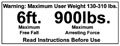
Figure 3. New 6 ft. free fall label
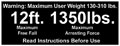
Figure 4. New 12 ft. free fall label (limited to 6-ft free fall if user exceeds 310 lbs.)
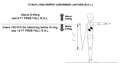
Figure 5. When to use the new “12 ft. Maximum Free Fall” Lanyard

Figure 6. SRL with shock pack energy absorber, 2-ft free fall, only 2-ft payout

Figure 7. SRL w/internal brake, 2-ft free fall, most payout more than 2 ft.
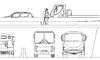
Figure 8. Worker will impact roadway before fall protection starts deceleration.
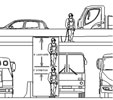
Figure 9. Rough scale of 6-ft E.A.L. & harness stretch (wire rope deflection not shown)

Figure 10. Traveling bridge allows almost unlimited area coverage and eliminates swing falls.
Looking for a reprint of this article?
From high-res PDFs to custom plaques, order your copy today!