ISHN logo
search
cart
facebook twitter linkedin youtube
  • Sign In
  • Create Account
  • Sign Out
  • My Account
ISHN logo
  • NEWS
    • Today's News
    • Global Safety News
    • Government Regulations
  • PRODUCTS
    • Product Innovations
    • Featured Products
  • TOPICS
    • Environmental Health and Safety
    • Facility Safety
    • Workplace Health
    • Occupational Safety
    • PPE
    • More Topics
  • CONSTRUCTION
  • TECHNOLOGY
  • COLUMNS
    • Best Practices
    • Dave Johnson: What’s going on
    • Editorial Comments
    • Leading Safety
  • MULTIMEDIA
    • ISHN Podcast
    • Videos
    • Cold Stress Education Quiz
    • Webinars
    • White Papers
  • MORE
    • Buyer's Guide
    • Newsletters
    • Convention Companion
    • Polls
    • Events
    • ISHN Store
    • Sponsor Insights
  • EMAGAZINE
    • eMagazine
    • Archived Issues
    • Contact
    • Advertise
  • JOIN TODAY!
PPE

Protecting cleanup workers
By Dave Shutt
September 4, 2010


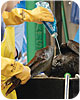
With emotions riding high after this spring’s dramatic Gulf oil spill, both volunteers and workers assigned to the task rushed in to help with the cleanup. Sometimes, those on the front lines did so with little thought to the dangers to which they might be exposed.

The availability and use of effective personal protection equipment (PPE) has been and continues to be of vital concern to those managing the aftermath of the spill. Early on, OSHA cited potential skin irritation and dermatitis from workers getting weathered oil on their skin or in their eyes as a major concern.

As the spill lingered on first one month, then two and three, gloves for the thousands of cleanup workers became more and more of an issue. Manufacturers juggled regular orders to accommodate the emergency need for more gloves - particularly nitrile gloves, although nitrile, neoprene, and PVC-coated gloves are all appropriate for oil cleanup work. (Latex gloves would be rapidly destroyed by oil.) Out on the booms, the demand for more and more heavy-duty PVC gloves increased. As the oil spill continued, so did the demand for PPE - now.

Crisis mode

With so much glove manufacturing overseas, delivery times for beefed up glove orders were uncertain. As the one U.S. domestic manufacturer of nitrile gloves, our company moved into crisis mode, in continual dialogue with oil company officials and establishing a 24-hour Oil Spill Hotline. New lines were added to manufacturing operations to get the right gloves to cleanup workers fast, and shipping took on a ’round-the-clock nature.

At most glove companies, the cooperative efforts to achieve a fast response went well beyond manufacturing. Laboratory operations also came into the picture, testing alternative glove types’ effectiveness against not only oil but also against the specific dispersants being used in the cleanup. This was particularly important because one of the dispersants used contains 2-butoxyethanol, for which OSHA’s Permissible Exposure Limit for airborne exposures is 50 parts per million for up to a full work shift.

With the oil leak stopped, the amount of oil coming on the Gulf Coast shore has decreased dramatically. However, oil can still be found in places along the Gulf Coast, and scientists believe that at least 25 percent of the oil remains hidden from the human eye.

Beware long-term risks

As Gulf Coast residents and businesses continue to deal with the after-effects of the spill, using proper hand protection remains an important priority. No one should handle oil-covered wildlife or actual tar balls without the protection of a nitrile glove. There have been few studies that have examined the longterm health risks of exposure to oil. According to an AP report from the Centers for Disease Control, brief contact with small amounts of light crude oil and dispersants is not thought to be harmful. In contrast, extended exposure to dispersants can cause central nervous system problems, or damage to the blood, the kidney, or the liver, and leave a metallic taste in the mouth.

Cleanup workers continue to be advised to follow federal guidelines that recommend that anyone involved wear protective equipment such as gloves, safety glasses and clothing, The risks of injury to individuals remain, even though the catastrophic spill has been capped.
KEYWORDS: emergency protective clothing Respiratory Protection

Share This Story

Looking for a reprint of this article?
From high-res PDFs to custom plaques, order your copy today!

Dave Shutt coordinates Showa Best Glove’s new product development in general purpose, disposable and chemical-resistant glove lines among research and development, field sales and marketing teams, as well as distributor and end-user customers. A 20-plus-year veteran with industry players such as Reichhold, he most recently served as central region manager for Best Manufacturing, prior to the integration of Showa Japan and Best. He holds a degree in business administration from Malone College and is a Carnegie Graduate.

Recommended Content

JOIN TODAY
to unlock your recommendations.

Already have an account? Sign In

  • forklift safety

    Exploring the latest technologies in forklift safety

    With more staff and more stock in warehousing now more...
    Facility Safety
    By: Josh Cramer
  • welding

    All about welder’s flash or arc eye

    A flash burn is a painful inflammation of the cornea,...
    Environmental Health and Safety
  • dangerous jobs

    The 10 most dangerous jobs in the U.S.

    On-the-job deaths have been rising — hitting the highest...
    Construction Industry Safety and Health
    By: Benita Mehta
Manage My Account
  • eMagazine Subscriptions
  • ISHN Newsletter & Other Newsletter Alerts
  • Online Registration
  • Manage My Preferences
  • Subscription Customer Service

More Videos

Sponsored Content

Sponsored Content is a special paid section where industry companies provide high quality, objective, non-commercial content around topics of interest to the ISHN audience. All Sponsored Content is supplied by the advertising company and any opinions expressed in this article are those of the author and not necessarily reflect the views of ISHN or its parent company, BNP Media. Interested in participating in our Sponsored Content section? Contact your local rep!

close
  • man wearing the the Sundström SR200 Full Face Mask Respirator
    Sponsored byOHD

    5 Fit Testing Mistakes That Could Cost You

  • This image shows Magid AcuSpex polarized blue mirrored safety glasses.
    Sponsored byMagid Glove and Safety

    Construction PPE Guide: What Crews Need for Each Task

  • lone worker in confined space
    Sponsored byAlphasense Ltd.

    GET THE LEAD OUT of your Safety Oxygen Sensors!

Popular Stories

SpaceX 7 launch

OSHA Investigating Fatal Fall at SpaceX Starbase

dust explosion

Tennessee OSHA Issues Record $3.1M Fine After Deadly Explosion at Munitions Plant

roofing dangerous jobs Getty.jpg

OSHA Finds Florida Roofing Company Willfully Exposed Workers to Safety Hazards After Worker’s Fatal Fall

top 10 most dangerous jobs

Poll

Seasonal Readiness

With the federal heat stress prevention rule on the horizon, which area of your safety program needs the most attention?
View Results Poll Archive

Products

Surviving an OSHA Audit A Management Guide, 2nd Edition

Surviving an OSHA Audit A Management Guide, 2nd Edition

See More Products

ISHN Podcasts

Related Articles

  • Congresswoman to OSHA: Are 25 inspectors enough for 33,000 cleanup workers? (7/12)

    See More
  • Policy set to protect oil spill cleanup workers as heat rises along the Gulf (6/10)

    See More
  • NIH launches study of health effects on oil spill cleanup workers (3/2)

    See More

Related Directories

  • SafetyLine Lone Worker

    SafetyLine Lone Worker helps companies monitor the status of workers who are remote, alone, or working in hazardous situations. We are an automated check-in monitoring and emergency notification service. SafetyLine uses its communications infrastructure to ensure that workers have comprehensive monitoring, 24/7, without the need for costly monitoring centers.
×

Become a Leader in Safety Culture

Build your knowledge with ISHN, covering key safety, health and industrial hygiene news, products, and trends.

JOIN TODAY
  • RESOURCES
    • Advertise
    • Contact Us
    • Directories
    • Manufacturing Division
    • Store
    • Want More
  • SIGN UP TODAY
    • Create Account
    • eMagazine
    • Newsletters
    • Customer Service
    • Manage Preferences
  • SERVICES
    • Marketing Services
    • Reprints
    • Market Research
    • List Rental
    • Survey/Respondent Access
  • STAY CONNECTED
    • LinkedIn
    • Facebook
    • YouTube
    • X (Twitter)
  • PRIVACY
    • PRIVACY POLICY
    • TERMS & CONDITIONS
    • DO NOT SELL MY PERSONAL INFORMATION
    • PRIVACY REQUEST
    • ACCESSIBILITY

Copyright ©2026. All Rights Reserved BNP Media, Inc. and BNP Media II, LLC.

Design, CMS, Hosting & Web Development :: ePublishing