ISHN logo
search
cart
facebook twitter linkedin youtube
  • Sign In
  • Create Account
  • Sign Out
  • My Account
ISHN logo
  • NEWS
    • Today's News
    • Global Safety News
    • Government Regulations
  • PRODUCTS
    • Product Innovations
    • Featured Products
  • TOPICS
    • Environmental Health and Safety
    • Facility Safety
    • Workplace Health
    • Occupational Safety
    • PPE
    • More Topics
  • CONSTRUCTION
  • TECHNOLOGY
  • COLUMNS
    • Best Practices
    • Dave Johnson: What’s going on
    • Editorial Comments
    • Leading Safety
  • MULTIMEDIA
    • ISHN Podcast
    • Videos
    • Cold Stress Education Quiz
    • Webinars
    • White Papers
  • MORE
    • Buyer's Guide
    • Newsletters
    • Convention Companion
    • Polls
    • Events
    • ISHN Store
    • Sponsor Insights
  • EMAGAZINE
    • eMagazine
    • Archived Issues
    • Contact
    • Advertise
  • JOIN TODAY!
Environmental Health and SafetyFacility SafetyColumnsSafety & Health Best Practices

The new heart of hazcom

Labels with mandatory phrases

By Dan Markiewicz MS, CIH, CSP, RMP
July 3, 2012
For most workplaces, the heart of Hazcom has been the compilation of material safety data sheets (SDS) housed in 3-ring binders and made available to employees. In the GHS version of Hazcom, the heart is label elements found in Appendix C to the standard.

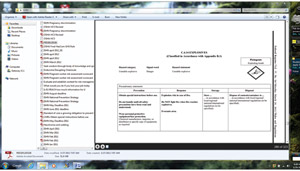
While classification of chemicals sets the stage and the consistent 16-section format safety data sheet will be a major vehicle to transmit information, label elements with mandatory phrases best reflect global harmonization. Example of label elements is shown in Figure 1.
ISHN0712_C3_fig1_300px.jpg
   Figure 1 - OSHA HazCom Label Elements (example)

Training and hazard classes

Section (h)(1) of the Hazcom standard allows employers to provide information and training either by categories (classes) of hazards or chemical-specific training, e.g. SDSs. Worksites with few chemicals will probably elect to train through SDSs while worksites with many chemicals may find training by hazard classes to be more expedient. Figure 1 is one of 30 hazard classes found in Appendix C.

Precautionary statements

You may determine how ready your worksite is for GHS by knowing which hazard classes your chemicals fit into and then comparing precautionary statements within label elements. If you have addressed all the precautions, then you’re ready for GHS. Precautionary statements were developed and approved by an international group of experts and describe measures that should be taken to minimize or prevent adverse effects that result from exposure to hazardous chemicals.

For example, if some of your worksite chemicals are classified as “Sensitization — Skin” (Appendix C.4.7), then a uniform program, locker room with showers, and special laundry service is expected. Why? One of the precautionary statements for prevention for this class of chemicals is, “Contaminated work clothing must not be allowed out of the workplace.”

Special knowledge
best practices ishn column table 1
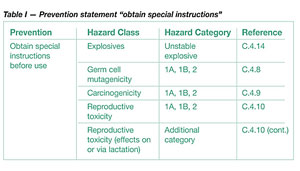
Table 1 - Prevention statement "obtain special instructions"


You may have to obtain special knowledge to be ready for GHS. For example, in Figure 1, one of the prevention statements for the class of unstable explosive is, “Obtain special instructions before use.” International experts have determined that unstable explosives are uniquely dangerous and require input from someone who may have expert knowledge about the hazard. Be aware that other dangerous categories of explosives, such as those that have a mass explosion hazard or severe projection hazard, do not require special instructions before use.

Special hazard classes

Table I shows each of the hazard classes in Appendix C that contain the “Obtain special instructions before use” prevention statement.

Put yourself in the mind of the GHS international experts. Why are chemicals that may be mutagens, may cause cancer, or have reproductive toxicity uniquely dangerous and on par for prevention with an unstable explosive? If your worksite has chemicals that fit into one of the hazard classes shown in Table I, special knowledge and a special worksite safety and health program are expected.

Exposed, concerned or feel unwell

Several hazard classes in Appendix C contain precautionary statements for response that recommends that medical advice/attention or a poison center/doctor be contacted if an employee is “exposed, concerned, or feels unwell” — each of which are subjective thoughts or symptoms. Examples are chemicals classified as Specific Target Organ Toxicity (C.4.11 and C.4.12).

Care must be taken during training to inform employees when help should be sought outside of the workplace. For example, if an employee swallows a chemical classified for Acute Toxicity — Oral (C.4.1), then an immediate call to a poison center/doctor is warranted. However, if an employee simply detects the odor of a chemical classified, for example, as Specific Target Organ Toxicity (C.4.11), the slight exposure doesn’t warrant a call for assistance outside the workplace.

It is not unusual for an employee to be “concerned” about a chemical, e.g. carcinogen (C.4.9), but you need to make clear during training what level of concern should cause an employee to “Get medical advice/attention.” Lastly, research shows that upwards of 80 percent of a population may not feel well at sometime during a month. Training should emphasize what health symptoms and signs relate to overexposure specific to chemicals being used.

Storage

Several classifications of chemicals, e.g. Toxic to Reproduction (C.4.10), have the precautionary statement for storage, “Store locked up.” You may take this precaution literally and put the chemical in a cabinet under lock and key. However, the intent of the recommendation is to prevent unauthorized access to the chemical. A secured workplace that requires an employee to have a badge or device to enter and where employees are supervised in work areas may qualify as “store locked up.”

Label elements in SDS

Label elements, e.g. mandatory phrases in Appendix C, will also appear in SDSs. To be ready for GHS, EHS pros should understand that the heart of Hazcom is found with information for label elements.

KEYWORDS: GHS hazard communication (hazCom)

Share This Story

Looking for a reprint of this article?
From high-res PDFs to custom plaques, order your copy today!

Dan markiewicz 200px
Dan Markiewicz, MS, CIH, CSP, RMP, is an independent environmental health and safety consultant and a long-time columnist. He can be reached at (419) 356-3768 or by email at dan.markiewicz@gmail.com.

Recommended Content

JOIN TODAY
to unlock your recommendations.

Already have an account? Sign In

  • forklift safety

    Exploring the latest technologies in forklift safety

    With more staff and more stock in warehousing now more...
    Facility Safety
    By: Josh Cramer
  • welding

    All about welder’s flash or arc eye

    A flash burn is a painful inflammation of the cornea,...
    Environmental Health and Safety
  • dangerous jobs

    The 10 most dangerous jobs in the U.S.

    On-the-job deaths have been rising — hitting the highest...
    Occupational Safety
    By: Benita Mehta
Manage My Account
  • eMagazine Subscriptions
  • ISHN Newsletter & Other Newsletter Alerts
  • Online Registration
  • Manage My Preferences
  • Subscription Customer Service

More Videos

Sponsored Content

Sponsored Content is a special paid section where industry companies provide high quality, objective, non-commercial content around topics of interest to the ISHN audience. All Sponsored Content is supplied by the advertising company and any opinions expressed in this article are those of the author and not necessarily reflect the views of ISHN or its parent company, BNP Media. Interested in participating in our Sponsored Content section? Contact your local rep!

close
  • man wearing the the Sundström SR200 Full Face Mask Respirator
    Sponsored byOHD

    5 Fit Testing Mistakes That Could Cost You

  • This image shows Magid AcuSpex polarized blue mirrored safety glasses.
    Sponsored byMagid Glove and Safety

    Construction PPE Guide: What Crews Need for Each Task

  • lone worker in confined space
    Sponsored byAlphasense Ltd.

    GET THE LEAD OUT of your Safety Oxygen Sensors!

Popular Stories

SpaceX 7 launch

OSHA Investigating Fatal Fall at SpaceX Starbase

Automated loading dock equipment

After March 2026 Rivian Death, Safety Managers Reassess Loading Dock Systems Under OSHA's Warehouse Emphasis Program

psychology in the workplace

Most Workplaces Measure Psychological Safety, Ignoring Psychosocial Risks

top 10 most dangerous jobs

Poll

Seasonal Readiness

With the federal heat stress prevention rule on the horizon, which area of your safety program needs the most attention?
View Results Poll Archive

Products

Surviving an OSHA Audit A Management Guide, 2nd Edition

Surviving an OSHA Audit A Management Guide, 2nd Edition

See More Products

ISHN Podcasts

Related Articles

  • ISHN0821-VelocityEHS-mainPic.jpg

    How to understand the complex intricacies of HazCom training

    See More
  • SUPPLIER PROFILE: Lifesaving AEDs are the heart of Heartsine's business

    See More
  • e-cigarettes

    The e-cigarette wars: Youthful users at heart of battles

    See More

Related Products

See More Products
  • 1119906652.webp

    Alive and Well at the End of the Day: The Supervisor's Guide to Managing Safety in Operations, 2E

See More Products

Related Directories

  • MSA - The Safety Co.

    WE KNOW WHAT'S AT STAKE. Unpredictable work environments are often part of the job. That's why it's critically important to have the right safety equipment at the moment it matters most. MSA's complete lines of safety solutions help protect those workers at the heart of your operation.
  • American Heart Association

  • New Pig

    The world leader in absorbent products, New Pig provides innovative products to help maintain cleaner, safer, more productive work environments.
×

Become a Leader in Safety Culture

Build your knowledge with ISHN, covering key safety, health and industrial hygiene news, products, and trends.

JOIN TODAY
  • RESOURCES
    • Advertise
    • Contact Us
    • Directories
    • Manufacturing Division
    • Store
    • Want More
  • SIGN UP TODAY
    • Create Account
    • eMagazine
    • Newsletters
    • Customer Service
    • Manage Preferences
  • SERVICES
    • Marketing Services
    • Reprints
    • Market Research
    • List Rental
    • Survey/Respondent Access
  • STAY CONNECTED
    • LinkedIn
    • Facebook
    • YouTube
    • X (Twitter)
  • PRIVACY
    • PRIVACY POLICY
    • TERMS & CONDITIONS
    • DO NOT SELL MY PERSONAL INFORMATION
    • PRIVACY REQUEST
    • ACCESSIBILITY

Copyright ©2026. All Rights Reserved BNP Media, Inc. and BNP Media II, LLC.

Design, CMS, Hosting & Web Development :: ePublishing