ISHN logo
search
cart
facebook twitter linkedin youtube
  • Sign In
  • Create Account
  • Sign Out
  • My Account
ISHN logo
  • NEWS
    • Today's News
    • Global Safety News
    • Government Regulations
  • PRODUCTS
    • Product Innovations
    • Featured Products
  • TOPICS
    • Environmental Health and Safety
    • Facility Safety
    • Workplace Health
    • Occupational Safety
    • PPE
    • More Topics
  • CONSTRUCTION
  • TECHNOLOGY
  • COLUMNS
    • Best Practices
    • Dave Johnson: What’s going on
    • Editorial Comments
    • Leading Safety
  • MULTIMEDIA
    • ISHN Podcast
    • Videos
    • Cold Stress Education Quiz
    • Webinars
    • White Papers
  • MORE
    • Buyer's Guide
    • Newsletters
    • Convention Companion
    • Polls
    • Events
    • ISHN Store
    • Sponsor Insights
  • EMAGAZINE
    • eMagazine
    • Archived Issues
    • Contact
    • Advertise
  • JOIN TODAY!
Today's Safety NewsEnvironmental Health and SafetyPPE

Oil and gas extraction workers exposed to respirable crystalline silica

Research examines work crew exposures to crystalline silica during hydraulic fracturing
August 8, 2013

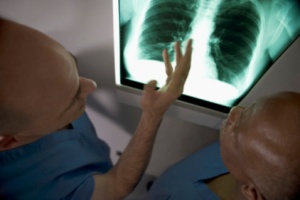
lungsA recent report published in the Journal of Occupational and Environmental Hygiene (JOEH) found respirable crystalline silica, a human lung carcinogen, to be an occupational exposure hazard for oil and gas extraction workers. The study is the first systematic investigation of worker exposure to crystalline silica during directional drilling and hydraulic fracturing, a process used to stimulate well production in the oil and gas industry.

Field researchers from the National Institute for Occupational Safety and Health (NIOSH) Western States Office (WSO) and the Division of Applied Research and Technology (DART) collected 111 personal breathing zone samples at 11 sites in five states over a 15-month period to evaluate exposures to respirable crystalline silica during hydraulic fracturing. Respirable silica is the portion of crystalline silica that is small enough to enter the gas-exchange regions of the lungs if inhaled and includes particles with aerodynamic diameters less than approximately 10 micrometers (μm).

“Certain work in this industry requires employees to be in areas where respirable silica levels may exceed defined occupational exposure limits like the OSHA Permissible Exposure Limit or the NIOSH Recommended Exposure Limits (RELs),” said Michael Breitenstein, with the NIOSH DART in Cincinnati, Ohio. “However, our study found that in some cases full shift personal breathing zone exposures exceeded 10 times the REL.”

Occupational exposures to respirable crystalline silica are associated with the development of silicosis, lung cancer, pulmonary tuberculosis, and other respiratory diseases. These exposures may also be related to the development of autoimmune disorders, chronic renal disease, and other adverse health effects.

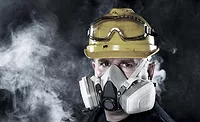
“Although half-mask, air-purifying respirators are most commonly used at hydraulic fracturing sites, due to the magnitude of the silica concentrations measured, half-masks might not be sufficiently protective,” said Eric J. Esswein of the NIOSH WSO in Denver, Colo. “In some cases, silica concentrations exceeded the maximum use concentration for that type of respirator.”

According to NIOSH, the risks of silica exposures for workers exposed at or above the REL (0.05 mg/m3) may be minimized by substituting less hazardous materials and using engineering controls to limit exposures. In cases when engineering controls are not sufficient to keep exposures below the REL, NIOSH recommends using appropriate respiratory protection, and making medical examinations available to exposed workers.

Click here to view the full study from the Journal of Occupational and Environmental Hygiene (JOEH).

JOEH is published jointly by ACGIH® and AIHA. JOEH enhances the knowledge and practice of occupational and environmental hygiene and safety. It provides a written medium for the communication of ideas, methods, processes, and research in the areas of occupational, industrial, and environmental hygiene; exposure assessment; engineering controls; occupational and environmental epidemiology, medicine, and toxicology; ergonomics; and other related disciplines.

KEYWORDS: Respiratory Protection safety in the oil and gas industry silica

Share This Story

Looking for a reprint of this article?
From high-res PDFs to custom plaques, order your copy today!

Recommended Content

JOIN TODAY
to unlock your recommendations.

Already have an account? Sign In

  • forklift safety

    Exploring the latest technologies in forklift safety

    With more staff and more stock in warehousing now more...
    Facility Safety
    By: Josh Cramer
  • welding

    All about welder’s flash or arc eye

    A flash burn is a painful inflammation of the cornea,...
    Environmental Health and Safety
  • dangerous jobs

    The 10 most dangerous jobs in the U.S.

    On-the-job deaths have been rising — hitting the highest...
    Government Safety Regulations
    By: Benita Mehta
Manage My Account
  • eMagazine Subscriptions
  • ISHN Newsletter & Other Newsletter Alerts
  • Online Registration
  • Manage My Preferences
  • Subscription Customer Service

More Videos

Sponsored Content

Sponsored Content is a special paid section where industry companies provide high quality, objective, non-commercial content around topics of interest to the ISHN audience. All Sponsored Content is supplied by the advertising company and any opinions expressed in this article are those of the author and not necessarily reflect the views of ISHN or its parent company, BNP Media. Interested in participating in our Sponsored Content section? Contact your local rep!

close
  • man wearing the the Sundström SR200 Full Face Mask Respirator
    Sponsored byOHD

    5 Fit Testing Mistakes That Could Cost You

  • This image shows Magid AcuSpex polarized blue mirrored safety glasses.
    Sponsored byMagid Glove and Safety

    Construction PPE Guide: What Crews Need for Each Task

  • lone worker in confined space
    Sponsored byAlphasense Ltd.

    GET THE LEAD OUT of your Safety Oxygen Sensors!

Popular Stories

SpaceX 7 launch

OSHA Investigating Fatal Fall at SpaceX Starbase

Automated loading dock equipment

After March 2026 Rivian Death, Safety Managers Reassess Loading Dock Systems Under OSHA's Warehouse Emphasis Program

psychology in the workplace

Most Workplaces Measure Psychological Safety, Ignoring Psychosocial Risks

top 10 most dangerous jobs

Poll

Seasonal Readiness

With the federal heat stress prevention rule on the horizon, which area of your safety program needs the most attention?
View Results Poll Archive

Products

Surviving an OSHA Audit A Management Guide, 2nd Edition

Surviving an OSHA Audit A Management Guide, 2nd Edition

See More Products

ISHN Podcasts

Related Articles

  • PPE

    OSHA Occupational Exposure to Respirable Crystalline Silica

    See More
  • HalenHardy to introduce respirable crystalline silica-removing, clothes cleaning MASHH mobile air shower at Shale Insight Conference

    See More
  • ClickSafety launches training to help construction leaders and workers meet new OSHA respirable crystalline silica standards, maintain safer work environments

    See More

Related Products

See More Products
  • Top Ten Pitfalls in OSHA Recordkeeping and How to Avoid Them

See More Products

Related Directories

  • SafetyLine Lone Worker

    SafetyLine Lone Worker helps companies monitor the status of workers who are remote, alone, or working in hazardous situations. We are an automated check-in monitoring and emergency notification service. SafetyLine uses its communications infrastructure to ensure that workers have comprehensive monitoring, 24/7, without the need for costly monitoring centers.
×

Become a Leader in Safety Culture

Build your knowledge with ISHN, covering key safety, health and industrial hygiene news, products, and trends.

JOIN TODAY
  • RESOURCES
    • Advertise
    • Contact Us
    • Directories
    • Manufacturing Division
    • Store
    • Want More
  • SIGN UP TODAY
    • Create Account
    • eMagazine
    • Newsletters
    • Customer Service
    • Manage Preferences
  • SERVICES
    • Marketing Services
    • Reprints
    • Market Research
    • List Rental
    • Survey/Respondent Access
  • STAY CONNECTED
    • LinkedIn
    • Facebook
    • YouTube
    • X (Twitter)
  • PRIVACY
    • PRIVACY POLICY
    • TERMS & CONDITIONS
    • DO NOT SELL MY PERSONAL INFORMATION
    • PRIVACY REQUEST
    • ACCESSIBILITY

Copyright ©2026. All Rights Reserved BNP Media, Inc. and BNP Media II, LLC.

Design, CMS, Hosting & Web Development :: ePublishing