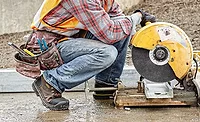
Safety footwear should be job-specific
Footwear 101
To better understand the work boot, let’s take a look at the structure of safety footwear.
Upper: This refers to the upper part of the boot. Traditionally made of durable leather, today’s uppers often feature durability and performance features like tough tech leather to further protect from abrasions. Some work boot styles feature hardwearing, lightweight nylon, a durable fabric often found in more lightweight, warm-temperature footwear.
Footbed: The footbed is the inside of the shoe that runs under the foot. Sometimes referred to as the insole, today’s footbeds feature performance advancements to improve comfort and wear.
Midsole: The midsole lies between the footbed and the outsole and provides shock absorption and support for the wearer. Today’s midsoles are traditionally made from Ethylene Vinyl Acetate (EVA) or Polyurethane (PU). EVA outsoles are soft and flexible but compact over time and wear. While PU outsoles of the past were harder and less comfortable, today’s advances in the manufacturing process are producing direct-inject PU midsoles that provide remarkable durability and comfort.
Outsole: The outsole is a crucial part of industrial and safety footwear, providing stability, traction and protection from on-site slips and falls. Industrial footwear features a variety of materials for outsoles ranging from rubber, PU and TPU. Available outsole types range from oil-, abrasion- and slip-resistant, static-dissipating, puncture-resistant and more.
Shank: The shank is part of the support structure and is located between the insole and outsole, providing rigidity and stability for the boot. Traditionally made of steel, the shank can also be made out of fiberglass and plastic materials.
Safety-toes: Workers have three options when it comes to toe-protection that satisfy ASTM safety requirements. Steel toes are the traditional choice for protective toecaps. Aluminum offers a lightweight option for protection but is thicker than its steel counterparts. Composite toes are typically comprised of carbon fiber, plastic or Kevlar® and do not transfer heat and cold. Composite toes are also a great option for workers passing through metal detectors or working in environments that need to remain metal-free.
The right boot
For those unclear on what they need, a simple conversation with the foreman, HR representative or safety manager can shed some light on safety needs. These needs can vary from types of jobs to work environments as many require different safety footwear that satisfies everything from ASTM-rated toe protection to more specialized needs like static-dissipating or puncture-resistant.
Ladder work: One of the biggest hazards when climbing a ladder is slipping off the ladder rung, which is a serious danger when using a six-foot or taller ladder. Ladder safety is paramount, but a boot that takes the job into consideration will help deliver a better experience for the wearer.
OSHA estimates that there are 24,882 injuries and as many as 36 fatalities per year due to falls on stairways and ladders used in construction zones.1
A defined heel can help prevent a worker from slipping off a wrung. Workers often on ladders should look for 90-degree heels that offer better stability on ladders. Many manufactures also incorporate ladder grips or ladder locks built into the sole. This raised rubber pad is designed to work with the grooves on the ladder to help provide additional safety.
Welding: Welders have unique challenges on the job site, facing sparks, fire and extremely hot materials. They should look for footwear that is either a pull-on or features a met-guard that covers the shoelaces and allows slag and sparks to roll or bounce off the footwear. The threads in laces and the tongue of the boot are typically comprised of fabric that increases the chances of sparking, catching fire or even having sparks and materials get into the boot, burning the foot and causing sometimes severe injury.
Welders should also look for outsoles that have higher heat ratings, to help reduce the chance of melting. These higher-performing outsoles are often made of rubber and mixes of nitrile, rubber and Kevlar.
Those in the welding profession should stay away from PU or EVA outsoles that have lower melting points.
Pull-on or Wellington boots work well in welding environments as they limit exposure of threads and laces. Footwear for welders should always feature an all leather upper, which will wear longer and resist burning unlike fabric counterparts.
Electricians: Electricians need safety footwear that is Electrical Hazard (EH) rated. It’s important for electricians to wear non-metallic and non-conductive footwear. These shoes prevent the wearer from completing the electric circuit to the ground and in some cases can help to ground a charge and eliminate the threat of electrocution. It is also important that electricians do not purchase Electro-static Dissipating (ESD) shoes, which allow current to pass through the shoes.
Carpenters and home builders: Construction sites are often covered with puncture hazards, such as shards of metal and popped nails. For individuals working in and around such environments, finding a work boot that features a puncture-resistant outsole will help to better protect the feet. Puncture-resistant boots feature a special plate between the insole and sole of the boot, providing the extra safety needed.
Wet conditions: In wet or slick conditions, such as indoor manufacturing or light industrial, workers would be well-served to seek out footwear that provides excellent non-slip outsoles. These outsoles are typically made from rubber and may exceed Mark II slip standards. Some manufactures take a serious look at how a boot performs in slick conditions, designing channels, ridges and depressions that divert liquid along with outsoles that increase surface area, ultimately providing better traction and increased stability on slippery surfaces.
Management: Managers and other company officials not typically on the job site or work floor may take for granted the need for proper safety gear. For those who may tour, supervise or visit these environments, having a pair of safety boots made from protective materials and possessing the safety and performance features needed on that particular job site may help prevent a work site injury.
Work boots today are incredibly versatile in both form and function. Those not typically accustomed to safety footwear can find silhouettes that resemble hiking boots, sneakers or even dress shoes, all without sacrificing safety.
Footnotes
1 https://www.osha.gov/Publications/OSHA3252/3252.html
Looking for a reprint of this article?
From high-res PDFs to custom plaques, order your copy today!