OSHA's HazCom Version 2.0: All about new safety data sheets, labeling changes and classifying hazardous materials
Essentially the goal of the change is that a cleaning worker using a U.S.-made cleaning chemical in, say, a Hong Kong hotel will understand how to use the product and what precautions to take, including what to do should an accident occur. These changes will impact all types of chemicals; however they will most specifically address those chemicals that OSHA classifies as hazardous. According to OSHA, a hazardous chemical is “any chemical which is classified as a physical hazard or a health hazard.”
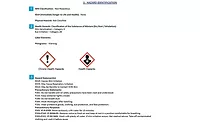
The Material Safety Data Sheet (MSDS), the backbone of OSHA’s Hazard Communication Standard for decades, is being replaced with the Safety Data Sheet (SDS). The new SDS will look the same wherever it is used and has 16 sections instead of 9:
Section 1, Identification includes product identifier; manufacturer or distributor name, address, phone number; emergency phone number; recommended use; restrictions on use.
Section 2, Hazard(s) Identification includes all hazards regarding the chemical and required label elements.
Section 3, Composition/Information on Ingredients includes information on chemical ingredients and trade secret claims.
Section 4, First-Aid Measures includes important symptoms/effects, acute, delayed; and required treatment.
Section 5, Fire-Fighting Measures lists suitable extinguishing techniques, equipment and chemical hazards from fire.
Section 6, Accidental Release Measures lists emergency procedures, protective equipment, proper methods of containment and cleanup.
Section 7, Handling and Storage lists precautions for safe storage and handling, including incompatibilities.
Section 8, Exposure Controls/Personal Protection lists OSHA’s Permissible Exposure Limits (PELs), Threshold Limit Values (TLVs), appropriate engineering controls and personal protective equipment (PPE).
Section 9, Physical and Chemical Properties lists the chemical’s characteristics.
Section 10, Stability and Reactivity lists chemical stability and possibility of hazardous reactions.
Section 11, Toxicological Information includes routes of exposure; related symptoms, acute and chronic effects; and numerical measures of toxicity.
Section 12, Ecological Information
Section 13, Disposal Considerations
Section 14, Transport Information
Section 15, Regulatory Information
Section 16, Other Information, includes the date of preparation or last revision.*
Changes for chemical labeling
Going through the HCS modifications, administrators will note that some items have not changed when it comes to chemical labeling while others have. For instance, one thing that has not changed is the requirement for administrators to develop, implement and maintain a written hazard communications program that includes a list of hazardous chemicals known to be used in workplaces as well as methods to inform employees of these hazards.
Other labeling practices that have not changed include the following:
• Ensure labels on incoming containers of hazardous chemicals are not removed or altered.
• Maintain SDS sheets on hazardous chemicals and ensure they are readily available.
• Ensure that employees are provided with training and information to protect themselves should an accident occur.
That said, following are some of the key changes according to an OSHA fact sheet, some of which will be implemented in stages over the next two or three years:
Hazard classification: Chemical manufacturers and importers of chemicals are required to determine if their products are hazardous, and if so, classify the hazards consistent with the new global hazard classification system. (Phased in beginning in 2015.)
Labels: Chemical manufacturers and importers must provide a label that includes a signal word, pictogram, hazard statement and precautionary statement for each hazard class and category. A pictogram consists of a symbol on a white background framed within a red, square-on-point border, designed to communicate a distinct hazard graphically. The product label must also include a product identifier. The purpose of the identifier is to provide a means of cross-referencing the SDS. (Phased in beginning in 2015.)
Information and training: To facilitate understanding of the new system, the new standard requires that workers be trained, starting December 1, 2013. Other training requirements include outlining steps workers should take to protect themselves from a potential hazard using the chemical, along with appropriate work practices, emergency procedures that should be followed, and personal protective equipment that should be worn when using the product.
Reasons for the changes
OSHA reports that more than 43 million American workers handle or work with hazardous chemicals every year. OSHA expects that these changes to the HCS will prevent at least 500 injuries and 43 fatalities per year. Additionally, OSHA believes the changes will result in the following benefits:
• Less confusion in the workplace as to how to handle hazardous chemicals
• Greater safety training to help prevent accidents and injuries
• Quicker, simpler and more consistent access to information on these products
• A potential cost-savings to American business of an estimated $475 million
• Fewer trade barriers by harmonizing hazard warning systems with those in other countries around the globe
OSHA acknowledges that these changes will take time to implement and may be somewhat costly for manufacturers because labels and product information must be changed. But it believes that in time the benefits of improved worker safety will far outweigh these hurdles.
Plus, it is possible that the standardized labeling may open new markets of opportunity for manufacturers. If so, sales in new markets may provide a return on the investment of changing and updating labels.
Looking for a reprint of this article?
From high-res PDFs to custom plaques, order your copy today!