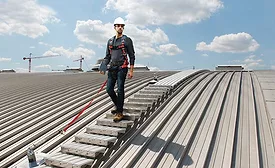
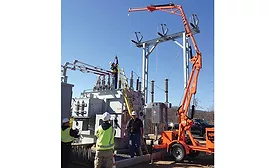
New year, new rule. As we ring out the old in 2016, we ring in the first major general industry OSHA update since the 1970s for walking-working surfaces (subpart D) and fall protection systems standards (subpart I) when a new ruling takes effect on January 17.1
Communication is defined as a connection between two beings. Whether it be ordering at a fast food drive-through, or a healthy debate between friends on why your sports team is the best, prior knowledge and clear communication are key in understanding others.
A chopper airlifted a man who had been injured while working on a wind turbine on August 22. The 31-year-old worker had been carrying out repairs on the turbine in the north of Lower Saxony, Germany, when a transport basket came loose from its fastenings and hit the man from behind, flinging him with great force several meters through the air.
In a product area that has evolved rapidly over the last decade, the ten-year-old standard guiding fall protection use was in need of an update.
That assessment by the American National Standards Institute (ANSI) led to the formation of a Z359 Committee, which developed new sub-standards that address fall restraint systems, work positioning systems, rope access systems, fall arrest systems and rescue systems.
A local energy-efficiency engineer who nearly plunged to his death when he fell almost four stories through a glass floor at Philadelphia's Rodin Museum in 2012 has been awarded a $7.25 million settlement, his lawyers recently announced.
Falls are among the most common causes of injury in the workplace. They can lead to severe injury, even death, but—with the proper precautions—they can be prevented. Without the proper precautions, same-level falls can occur during the simple act of walking, while falls to a lower level can occur from a ladder, scaffolding, roof, or other structure above the ground.
When it comes to ladder safety, avoiding fines and fatalities is a big concern. Three of OSHA’s top ten “serious” violations in 2015 were related to falls. Every day, one person dies in a ladder-related accident. Fall prevention is a focal point for safety leaders.
The World Steel Association (worldsteel) is asking the steel industry to carry out a safety audit on the five most common causes of accidents in time for Steel Safety Day on April 28th.
Falls are among the most common causes of fatal and nonfatal occupational injuries. Despite ongoing efforts, falls caused 724 deaths and 229,190 severe injuries at worksites across the nation in 2013.