Police in Orange County, Fla., have confirmed that a second Walt Disney World employee was injured in an industrial accident at the park, just hours after a different worker was killed in a separate accident.
Of the latest accident, Deputy Ingrid Tejada-Monforte of the Orange County police said the male employee suffered a fall at Disney’s Animal Kingdom Lodge at around 10:30 p.m., the Orlando Sentinel reported.
If you could prevent 29 worker deaths and 5,842 lost-workday injuries each year1, would you? Those estimates were a major reason OSHA updated 1971’s General Industry CFR 1910 regulations for Walking-Working Surfaces and Personal Fall Protection Systems at the end of 2016.
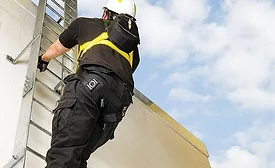
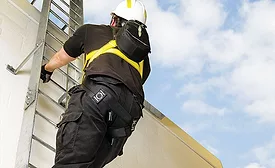
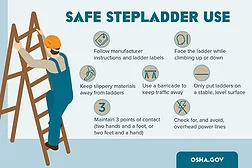
Because using a ladder is such a familiar skill, it can be easy to overlook the need for safe operating procedures in the workplace. However, ladders continue to be a contributing factor in more than 150 fatalities and 20,000 non-fatal workplace injuries each year.
Worker dies after northeastern Indiana industrial accident
FORT WAYNE, Ind. (AP) — Authorities say a worker has died in an accident at an industrial facility in northeastern Indiana. The Allen County sheriff’s department says the woman got stuck in a machine at Fort Wayne Plastics on Sunday afternoon.
Falling from height is one of the leading causes of work-related injuries and death. The U.S. Bureau of Labor Statistics documents nearly 750 fall-related fatalities a year and another 300,000 nonfatal falls. More surprising than even that? Every single fall is 100-percent preventable.
Employers faced with these fall hazards tend to ignore the three lines of defense and go straight to personal protective equipment to solve their fall issues. What is needed is an understanding of the revised OSHA rule on walking and working surfaces and related fall protection consensus standards.
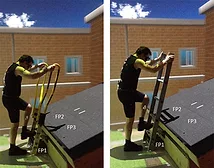
This month is National Ladder Safety Month, but ladder safety is a year-round priority at NIOSH where scientists study how to prevent ladder-related falls. In a new study published in the journal Applied Ergonomics, a “walk-through” ladder was comparable in safety to regular ladders tested in the NIOSH Virtual Reality Laboratory in Morgantown, West Virginia.
Not long ago, a cable installer in Texas was climbing a ladder to work on some overhead lines. To waterproof the cable splices, he and his colleague used a silicone-based product, which left residue on the gloves, and the ladder rungs. As the worker descended the ladder, he slipped on the slick rungs and fell more than 13 feet, hitting the concrete below headfirst – a fatal injury.
Falls from ladders account for about 20,000 injuries and 300 deaths in the U.S. each year, so it’s no surprise that ladder safety is getting its own month in March.