A Maine lumber mill has seen lower injury rates, lower turnover better employee morale and an improved safety culture since partnering with government agencies to help make inherently high-hazard work tasks safer.
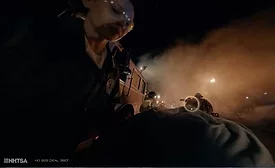
You are on a gurney, being wheeled toward an ambulance, past a burning car, a man in handcuffs, police officers, firefighters and other injured people. Suddenly, your condition takes a turn for the worse. You are being given CPR. An oxygen mask is placed over your face. Spoiler alert: it doesn’t look good.
The year has come full circle as we begin to enter winter months once again. Soon enough, businesses will reflect on the year’s accomplishments and potential areas for improvement. One area safety and operations leaders can master this season is workplace safety, as they find themselves shifting focus from summertime hazards to the risks brought on by harsh winter conditions.
A Tulsa, Oklahoma safety services company doesn’t just talk the talk. Having just achieved one million man-hours without a recordable injury, JCL Service Company apparently walks the walk, too.
Both divisions of the JCL company—JCL Safety Services and JCL Risk Services—reached this safety milestone by completing over one million man-hours without any of the following injury-related incidents occurring: days off work, restricted work, transfer to another job, medical treatment beyond first aid, loss of consciousness, or an injury resulting in death.
FAA: Make sure they're aimed at your house, not the sky
December 13, 2017
Each holiday season for the past several years, the Federal Aviation Administration (FAA) has received reports from pilots who said they were distracted or temporarily blinded by residential laser-light displays.
The FAA's concerns about lasers – regardless of the source – is that they not be aimed at aircraft in a way that can threaten the safety of a flight by distracting or blinding the pilots.
The US Department of Labor estimates that every day in the United States five to ten Arc Flash Explosions occur on the job. Arc Flashes are incredibly violent and devastating to any worker exposed to the instantaneous phenomenon. Most of the time the exposure will result in serious injury or even death. Electrical equipment is designed to withstand up to a certain amount of current.
Electrical contractors are responsible for the health and safety of employees who are exposed to a variety of hazards. Some of these hazards are obvious, such as electrical shock and electrocution. Others, such as musculoskeletal disorders (MSDs), back injuries, slips and falls, or automobile-related incidents may not be as obvious.
R.C. Bigelow ("Bigelow") is a family-owned company headquartered in Fairfield, Connecticut, that produces and markets blended teas. The company was founded in 1945 by Ruth Campbell Bigelow, who started her company with "Constant Comment" blended tea, which remains popular today. The R.C. Bigelow facility in Boise, Idaho, is one of two bagging, packaging, and distribution facilities. The company employs approximately 60 workers at the Boise facility and 320 corporate-wide.
The era of driverless vehicles appears to be rapidly approaching, raising a bevy of urgent questions about how to prevent the emergence of new hazards on the nation’s roads.
So, how much preparation have federal transportation authorities carried out to meet the challenge of the advent of self-driving cars and trucks? Not nearly enough, according to a new 44-page report by the Government Accountability Office, a Congressional watchdog agency.
Most general aviation fatal accidents are caused by in-flight loss of control – and many those are caused by factors related to engine failure. Between 2001 and 2010, engine maintenance errors were identified as a contributing factor in 35 of 70 randomly-selected accidents. The Federal Aviation Administration (FAA) would like to help decrease that number.