This year’s National Safety Congress & Expo in San Diego featured a tech hub of approximately 25 vendors that seemed a world away from the usual exhibits of PPE, training services and facility equipment.
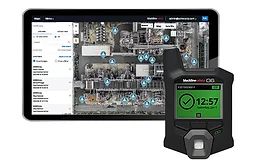
Blackline Safety Corp. launched a new connected wearable to transform single-gas detection. The all-new G6 personal gas detector – unveiled on Monday, September 19, 2022 at the National Safety Council (NSC) Safety Congress & Expo in San Diego – offers fast incident response time and a more efficient way to manage safety and compliance.
Blackline Safety Corp. announced it will unveil the G6 single-gas detector – setting a new standard in connected worker wearables – at the upcoming National Safety Council (NSC) Safety Congress & Expo, to be held September 19-21 at the San Diego Convention Center.
Blackline Safety Corp. has announced a $2 million (£1.3 million) deal with Coventry, England-based Severn Trent Water – UK’s second largest water company – for connected personal gas detection devices to protect its employees and support its digital transformation.
Lora Cavuoto, Ph.D., CPE, is an associate professor in the Department of Industrial and Systems Engineering (ISE) at the University at Buffalo in New York. She has been the director of the university’s occupational health and safety training program since 2017. ISHN talks to Cavuoto about ergonomics, wearables technology and mentoring students.
For most industries, safety is a cost overhead. Although essential, it can slow down productivity or even, in the event of a safety incident, lead to a complete stop while issues are resolved, and investigations carried out. However, if the approach to safety changes from a reactive one to proactive, it can become an aid to achieving greater efficiency, lower costs, and higher profit margins.
No matter what hustle culture might try to teach us, people are not machines. They get tired when overworked, and fatigue can create a safety hazard. This is especially true in industrial settings, where the presence of heavy machinery and other potential workplace hazards make alertness more critical for employees.
Field technicians are an integral and critically important part of the provision of technical services, whether it be for the installation, repair, or maintenance of machinery and equipment.
Owners and operators of refineries, chemical plants and manufacturing facilities must change the way employees work as quickly as possible, and it is clear yesterday’s traditional operating model of onsite availability has evolved – not just due to current circumstances, but because of “The Great Resignation,” retirement of experienced plant workers is creating a shortfall of key skills.