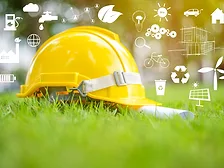
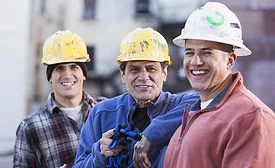
In many ways, sustainability is a safety professional's best friend. Sustainable practices are almost always inherently safer than unsustainable ones, and approaching your day-to-day operations from the perspective of sustainability will likely help you create a safer workplace.
Commercial buildings, including office spaces are responsible for over 40% operating expenses borne by the business. It is estimated that office and residential buildings will contribute to 8% of the total global energy by the year 2050. It is also estimated that commercial buildings all over the world alone will release 3,800 megatons of carbon by 2050.
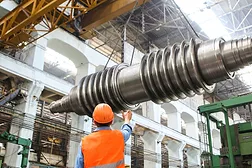
Today, sustainability is more than just an afterthought when it comes to cleaning parts, it is a necessity that affects both the environment and workers on the production line.
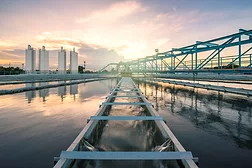
Many organizations are now actively working to improve community relations and prove to their neighbors, vendors, and customers that they are striving to be environmentally sensitive and promote sustainability. Reducing water consumption is one way they are accomplishing this.
Going green is one of the most desirable trends of modern industry. This is for good reason. The benefits both to the environment and to business make renewable energy and materials a positive for just about everyone.
Designed to drive peak performance in the areas of health, safety, risk, environmental, social and corporate governance (ESG) & operational excellence, the VelocityEHS Accelerate Platform is the starting point of an exciting journey that will change how EHS software delivers value to the organizations who adopt it.
Sustainable product sales have increased 40 percent since 2014 representing a gain of $43 billion. Sustainable product growth is not limited to just one market sector. Increased focus on sustainability for core industrial markets puts industrial PPE in the mix.
Although safety is the primary concern when purchasing Flame Resistant Clothing (FRC), consider the environmental impact of the manufacture of those garments. Adopting responsible manufacturing measures is not only the right thing to do, it’s good for business.
Corporate and governmental decision makers will soon have access to a new global protocol that is under development, one that aims to bring human capital into the mainstream of business decisions.
We know that most of us don’t like to be bounded by a set of rules around our actions and our behaviors; however, there is no sustainable safety culture if there is no operational discipline.