It seems like aircraft incidents have become more frequent, whether it’s a crash or disappearance. This should catch the attention of aircraft facilities and manufacturers.
The U.S. Department of Transportation’s Federal Aviation Administration (FAA) has announced a final rule aimed at enhancing the professional development of air carrier pilots. The Pilot Professional Development rule requires specific training for newly-hired pilots and supplemental training for captains.
While unions representing air traffic controllers and aviation safety inspectors are warning that the partial government shutdown is endangering the flying public, the Federal Aviation Administration (FAA) – which is in partial function mode – is assuring the public that safety “is the top priority.”
An airline crew’s failure to pay attention to important pre-flight information was behind a near-miss at San Francisco International Airport on July 7, 2017.
That’s the conclusion of a National Transportation Safety Board (NTSB) report on how an Air Canada flight mistakenly lined up with a taxiway instead of the runway it was cleared to land on. Four airplanes were on that taxiway, waiting for clearance to take off.
Drones have thoroughly worked their way into a variety of non-business uses, from videotaping weddings to capturing beautiful images of scenic tourist attractions, so it’s likely that they are also finding their way into the nation’s favorite summertime holiday.
The Federal Aviation Agency wants drone operators to keep safety in mind.
A fatigue crack was the cause of engine failure and a fire on a British Airways flight that ended prematurely, with passengers and crew fleeing a cockpit that was filling with smoke.
The September 8, 2015 flight from Las Vegas to London came to an abrupt end, after its pilot heard a loud “bang” during takeoff and aborted the flight.
A United Airlines flight made an emergency landing yesterday after the protective cowling on one of its engines detached from the plane and fell away.
Terrified passengers on board Flight 1175 from San Francisco to Honolulu reported a loud bang when the incident occurred, followed by severe shaking.
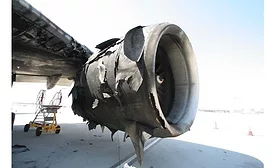
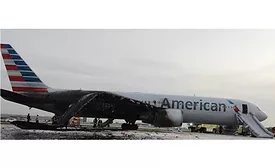
An internal defect in a commercial airliner engine caused an uncontained engine failure resulting in a fire and the emergency evacuation of all aboard, the National Transportation Safety Board (NTSB) said yesterday.
American Airlines flight 383, a Boeing 767 bound for Miami, was on its takeoff roll at Chicago O’Hare International Airport Oct. 28, 2016, when a turbine disk in the right engine failed, sending metal fragments through a fuel tank and wing structure.
Indecision and communication issues during an emergency on board an American Airlines flight put the lives of 161 passengers and nine crew members in jeopardy, but fortunately, there were no fatalities during the Oct. 28, 2017 episode.
That was one of the conclusions about the incident at Chicago O’Hare International Airport that was already released by the National Transportation Safety Board (NTSB).
Engine failure on an American Airlines plane that resulted in serious injuries to a passenger and substantial damage to the aircraft will be the subject of a National Transportation Safety Board (NTSB) meeting on Jan. 23, 2018. The Boeing 767-300 experienced an uncontained failure of the right engine during the take-off roll at Chicago O’Hare International Airport.